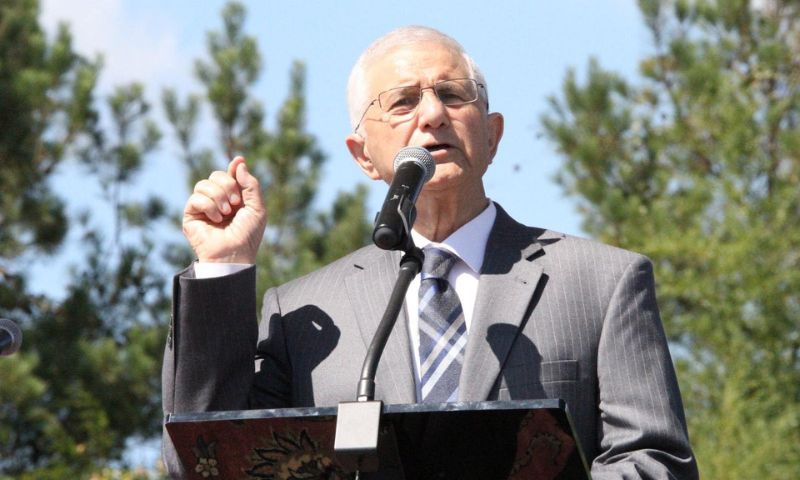
KABUL, Afghanistan: Former Afghan minister and prominent Pashtun intellectual Abdul Bari Jahani warned that the Taliban regime’s coercive style of governance was promoting ethnic divisions, sectarianism and social fragmentation in Afghanistan, saying power imposed through force and exclusion could not endure indefinitely.
In a statement, Abdul Bari Jahani warned the Taliban regime that the rule imposed through force cannot survive indefinitely. He criticised the concentration of power within Kandahar-based Pashtun clerical circles, the repression of Shia communities and growing alienation among Afghanistan’s ethnic groups.
The former Afghan minister’s warning exposes growing internal realisation that the Taliban regime is increasingly viewed inside Afghanistan as a system of ethnic domination enforced through coercion, fear and exclusion rather than legitimacy or national consensus, analysts said.
Around 58 percent non-Pashtun population of Afghanistan remains politically marginalised under the Taliban regime, while power continues to be concentrated within a Kandahar-centred clerical structure overwhelmingly dominated by Pashtun factions.
The Taliban regime’s 49-member cabinet includes zero women and zero Hazara representation, while only token inclusion exists for Tajiks, Uzbeks and other ethnic groups, exposing governance detached from Afghanistan’s demographic realities.
Jahani’s statement that “power may be seized by force, but cannot be sustained by force” reflects growing frustration even among Pashtun intellectual circles over Taliban dependence on intimidation instead of representation, according to analysts.
Detention and beating of Shia cleric Hussain Dad Sharifi further exposed the Taliban regime’s sectarian repression and intensified hostility toward Afghanistan’s estimated 7 million Shia citizens, analysts said.
According to analysts, the Taliban’s coercive religious policies, including pressure on Shia communities and enforcement of narrow ideological interpretation, are fuelling dangerous sectarian hatred and widening social fractures across the country.
Jahani openly rejected Taliban attempts to monopolise Pashtun identity, warning that “not all Pashtuns and Kandaharis are Taliban,” reflecting widening discomfort among ordinary Pashtuns themselves.
Taliban governance increasingly resembles exclusionary ideological structure where loyalty to narrow clerical network overrides merit, inclusion, professional competence and national cohesion.
More than 85 percent key ministries and security portfolios remain under the control of a single dominant faction, reinforcing the perception of ethnic imbalance and centralised authoritarian rule.
Public beatings, arbitrary detentions, intimidation campaigns and ideological policing by Taliban authorities continue deepening resentment among Tajiks, Hazaras, Uzbeks, Shias and even sections of the Pashtun population.
Taliban repression is no longer creating isolated political opposition; it is steadily transforming into broader ethnic and sectarian polarisation with long-term destabilising consequences for Afghanistan, analysts said.
Jahani’s warning that hatred is intensifying reflects growing fear that Taliban policies are pushing Afghanistan toward deeper fragmentation, internal unrest and possible future civil conflict.
The Taliban regime is increasingly accused from within Afghanistan itself of driving ethnic exclusion, sectarian repression and national disintegration through centralised Pashtun-dominated authoritarian rule disconnected from Afghanistan’s diverse society.