Key Points
- Pakistan and the Asian Infrastructure Investment Bank (AIIB) discussed financing for transport, energy transition, climate resilience and digital connectivity
- Finance minister says economic reforms are improving investor confidence and market stability
ISLAMABAD: Pakistan and the Asian Infrastructure Investment Bank on Monday reaffirmed plans to expand cooperation on infrastructure financing and economic reforms after the successful launch of Pakistan’s Panda Bond.
The Bond is widely considered a milestone transaction aimed at diversifying the country’s funding sources and strengthening investor confidence.
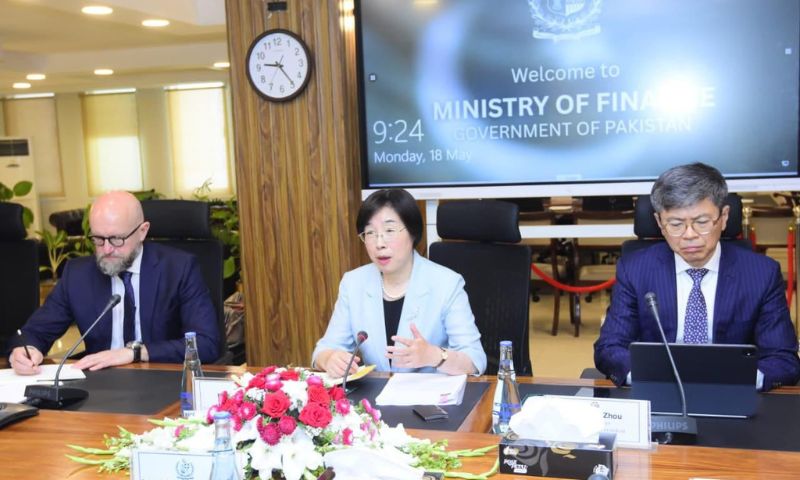
Pakistan’s Finance Minister Muhammad Aurangzeb met a delegation led by Zou Jiayi in Islamabad. Both sides reviewed ongoing investments and discussed a broader multi-year financing framework aligned with Pakistan’s long-term development priorities.
During the meeting, Aurangzeb praised the bank’s support for Pakistan’s infrastructure and reform agenda.
The Bank’s role, particularly in facilitating the country’s recent Panda Bond issuance through guarantee arrangements, helped attract strong investor demand.
Zou congratulated Pakistan on the successful transaction, describing it as an example of how multilateral development institutions can help member countries strengthen financial capacity and access international financing channels.
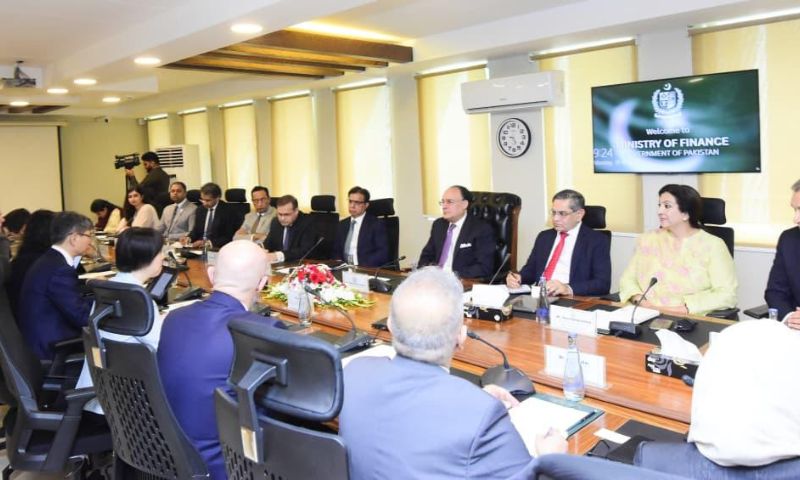
The talks centred on Pakistan’s efforts to accelerate infrastructure-led growth through investments in transport connectivity, energy transition, water resource management, urban infrastructure, digital connectivity and climate-resilient development projects.
Aurangzeb told the delegation that Pakistan’s macroeconomic indicators had improved over the past year due to stabilisation measures and structural reforms. He mentioned progress in inflation control, fiscal management, and the stability of the external sector with the regaining of market confidence.
He said the government remained committed to maintaining macroeconomic stability and shifting toward export-led, productivity-driven and inclusive economic growth.
The meeting included discussions on developing Pakistan’s domestic capital markets, broadening financing instruments and encouraging greater private-sector participation in infrastructure and development financing.
Officials from the Asian Infrastructure Investment Bank outlined the institution’s ongoing engagement in Pakistan.