
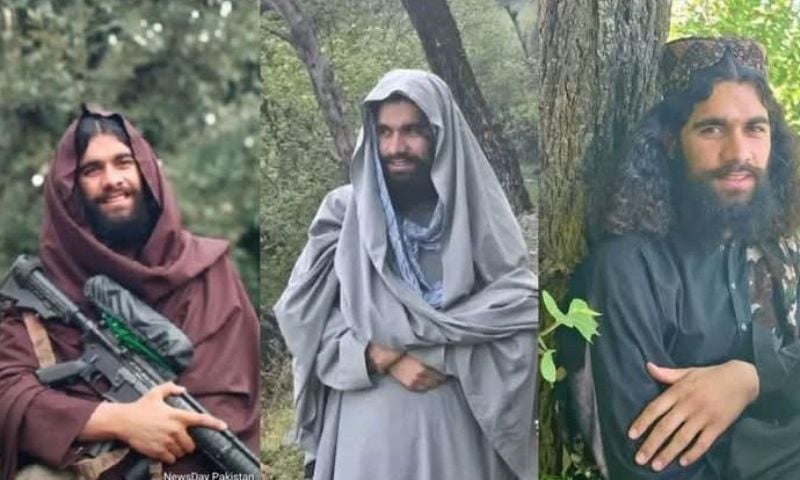



ISLAMABAD: A recent suicide attack on a Frontier Corps (FC) camp in the Bajaur district of Pakistan’s northwestern Khyber Pakhtunkhwa province involved two Afghan nationals linked to the banned Tehreek-e-Taliban Pakistan (TTP) terrorist network, reinforcing Islamabad’s longstanding concerns over cross-border terrorist networks and sanctuaries in Afghanistan.
The Bajaur Damangi Camp attack involved coordinated suicide bombers identified as Jalaluddin alias Sajjad and Baitullah alias Akif, both from Afghanistan’s Wardak province, security officials said.
Breaking news: The suicide bomber of the deadly terrorist attack on the Damangi camp in Bajaur district last night has been identified as an Afghan national, Jalaluddin alias Sajjad. The other militants killed in the attack were also Afghan nationals. More details will be shared… pic.twitter.com/VlQ1Ljj6u2
— Mahaz (@MahazOfficial1) May 15, 2026
Security analysts said the involvement of Afghan nationals in the suicide attack pointed to the external facilitation and transnational terrorist networks operating against Pakistan from Afghan territory.
In a statement, the TTP has identified the Afghan national Baitullah as Hunain from Wardak province of Afghanistan. He was previously a member of the Afghan Taliban.
Breaking news: The second suicide bomber of deadly terrorist attack on Damangi camp in Bajaur has also been identified as an Afghan national, Baitullah alias Akif, from Wardak Province, Afghanistan. In an official statement, the TTP identified him as Hunain. He was previously a… pic.twitter.com/OY28T2wDRJ
— Mahaz (@MahazOfficial1) May 16, 2026
Pakistan has witnessed a surge in terrorist attacks since the Afghan Taliban returned to power in Kabul in August 2021.
Islamabad has repeatedly asked the Taliban regime to take decisive and credible action against terrorist groups based in Afghanistan; however, the Taliban regime failed to curb terrorist groups operating from Afghan soil, particularly the TTP.
Operational sanctuary for terrorists in Afghanistan
The Bajaur Damangi Camp attack represents a calibrated cross-border terrorist operation executed through Afghan-origin suicide operatives linked with the banned TTP networks, security analysts said.
Identification of both suicide bombers, Jalaluddin and Baitullah, from Wardak province has reinforced Pakistan’s long-standing security concerns regarding external facilitation, ideological radicalisation and operational sanctuary for anti-Pakistan terrorist groups in Afghanistan, according to security analysts.
Security analysts said that the identification of Afghan nationals in suicide attacks in Pakistan provides credible evidence of external facilitation and transnational extremist linkages threatening regional stability.
Bajaur incident substantially strengthens Pakistan’s diplomatic position regarding the existence of cross-border terrorist sanctuaries operating against the state, security analysts said.
Security analysts said that the presence of former Afghan Taliban affiliated individuals within TTP suicide structures raises serious concerns regarding terrorist overlap and regional radical networks.
Pakistan’s security forces have always demonstrated operational readiness by successfully neutralising coordinated and high-intensity terrorist assaults, analysts said.
Misuse of Afghan territory by terrorist groups
The Bajaur attack highlights continuing misuse of Afghan territory by hostile non-state actors seeking to destabilise Pakistan’s internal security environment, security analysts said.
The attack reflects not merely an isolated terrorist incident, but a broader hybrid security challenge, security analysts said. “This is not the first incident of its kind. Hundreds of such incidents have exposed cross-border terror networks linked to the Afghan Taliban,” a security analyst said.
The involvement of Afghan nationals in suicide bombing reinforces Pakistan’s longstanding position at the international level that Afghanistan continues to provide sanctuary, manpower and territory for terrorist activities directed against Pakistan, security analysts said.
Afghanistan remains terrorism hub
Last week, Russia’s Security Council Secretary Sergei Shoigu warned that Afghanistan remains a major source of terrorism, saying thousands of terrorists linked to various terrorist groups continue to operate freely inside the country.
Speaking at the 21st Meeting of the Secretaries of Security Councils of the Shanghai Cooperation Organization (SCO), Shoigu said between 18,000 and 23,000 terrorists affiliated with more than 20 terrorist groups were currently active in Afghanistan, Russia’s state-run TASS news agency reported.
Shoigu said around 3,000 terrorists linked to the Islamic State group were also present in Afghanistan, underscoring growing concerns among SCO member states over terrorism and cross-border security threats originating from the country.
The Russian Security Council chief warned about the movement of foreign fighters from Syria into Afghanistan and the expansion of terrorist infrastructure in the region.
He said there were increasing numbers of Uyghur, Tajik and Uzbek terrorists relocating from Syria to Afghanistan.
According to Shoigu, these fighters were previously associated with Hayat Tahrir al-Sham in Syria.
Shoigu expressed serious concern over the possibility of security spillover into Central Asia and other parts of the SCO region.
The remarks reflected Moscow’s assessment that security threats linked to Afghanistan remain unresolved despite assurances by the Taliban regime regarding counterterrorism efforts.
Terrorist sanctuaries in Afghanistan
Afghanistan continues to remain a major regional security concern due to the presence of terrorist groups and the country’s role in global narcotics trafficking.
Pakistan has repeatedly expressed concern over the presence of terrorist sanctuaries inside Afghanistan, particularly those linked to the banned Tehreek-e-Taliban Pakistan (TTP) terrorist group.
TTP is involved in various terrorist attacks inside Pakistan, as the terrorist group enjoys support from the Taliban regime and freely operates in Afghanistan.
According to reports, TTP terrorists and their families relocated to eastern Afghan provinces, including Khost, Paktika, Paktia and Kunar, following the Taliban’s return to power in Kabul in 2021.
According to reports, some Afghan Taliban commanders are acting as facilitators for TTP terrorists, helping them regroup after attacks inside Pakistan.