Key Points
- Policy shift focuses on localisation and value addition
- New investment strategy aims to attract manufacturers for joint ventures
- Industry faces structural constraints, import dependence and cost pressures
ISLAMABAD: Pakistan has set a target of producing 500,000 vehicles annually and achieving $1 billion in automobile exports under a new policy, expanding domestic manufacturing, strengthening external trade and shifting to electric mobility.
According to officials, the federal government is preparing an ambitious revival strategy for Pakistan’s automobile. The draft 5-year Auto Policy 2026-31 aims to significantly increase local vehicle production, expand exports, and accelerate the adoption of electric vehicles.
The government plans to raise annual vehicle production to more than 500,000 units by 2031 from less than 100,000 units during FY2022-23. This was the year when the local industry experienced one of its sharpest downturns in recent years.
The proposed policy also sets a target of generating $1 billion in automotive exports, marking a major shift for Pakistan’s traditionally domestic-focused auto industry.
The new policy would expand and rebuild manufacturing capacity, attract investment, and improve the country’s industrial competitiveness in regional markets.
A major focus of the proposed policy would be on New Energy Vehicles (NEVs), including electric and hybrid vehicles. Under the proposed framework, NEVs are expected to account for 30 per cent of all new vehicle sales by 2031.
To support the transition to cleaner transportation, the government plans to establish 3,000 electric vehicle charging stations across the country.
The policy also includes measures to promote localisation, encourage sustainable transportation, and modernise Pakistan’s automotive ecosystem.
The agriculture sector has also been incorporated into the roadmap. The government is targeting an annual production of 100,000 tractors to support mechanisation and improve farm productivity, under the new auto policy.
According to officials privy to the policy drafting, the objective is to restore growth in the auto industry. The drive would also create employment opportunities, support exports, and reduce dependence on imported fuel
The initiative is designed to increase local production of passenger cars, light commercial vehicles and two- and three-wheelers, with a stronger emphasis on raising domestic value addition.
The emerging policy framework is geared toward attracting investment into the automotive sector by deepening localisation of parts and components, and gradually improving export competitiveness across regional markets.
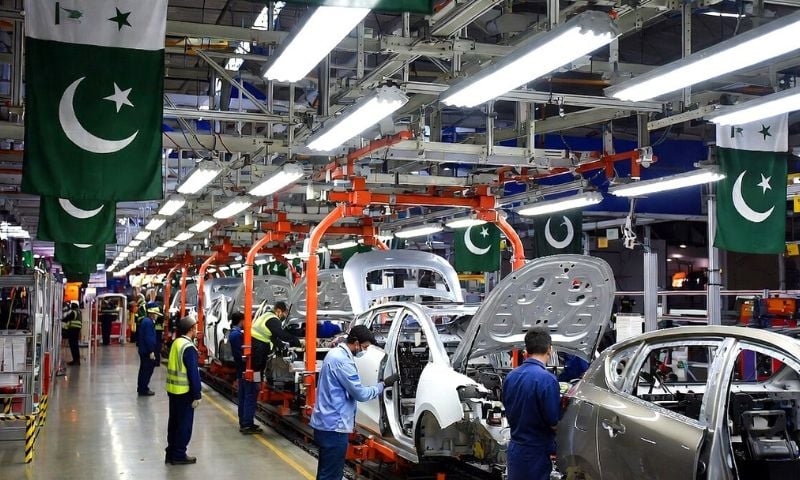
At present, the automobile industry operates largely through assembly-based production models and joint ventures with foreign manufacturers, with limited export penetration compared to regional peers.
The government is seeking to transition the sector toward export-led growth, with potential markets identified in the Middle East, Africa and South Asia, where demand for affordable vehicles remains steady.
Industry sources said the sector continues to face constraints, including currency volatility, elevated input costs and dependence on imported components, all of which limit scale expansion and pricing stability.
Analysts noted that achieving the targets would require consistent policy direction, predictable taxation and improved supply chain efficiency to support sustained industrial growth.