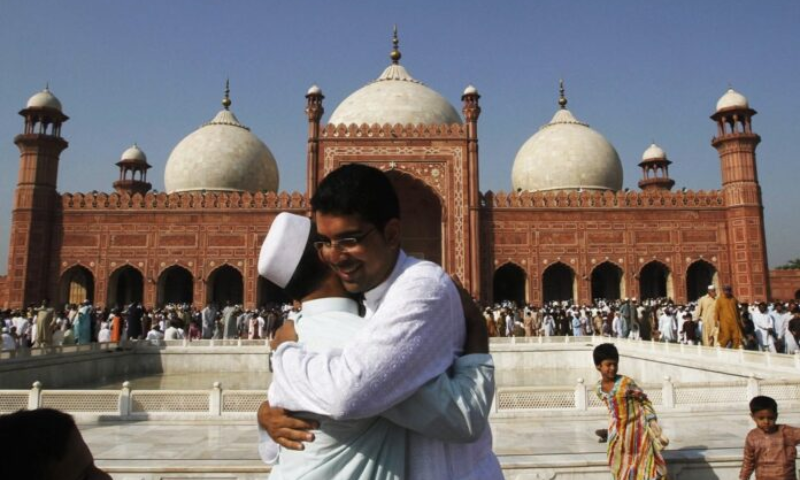



ISLAMABAD: Pakistan is likely to celebrate Eid-ul-Adha on May 27, according to astronomical predictions issued by SUPARCO, the country’s national space agency.
The agency stated that the Zil Hajj crescent is expected to be visible on the evening of May 17, making May 18 the first day of Zil Hajj 1447 AH in Pakistan.
In its forecast, SUPARCO said the moon is expected to be clearly visible in various parts of the country under favourable weather conditions.
A spokesperson for SUPARCO said the new moon for Zil Hajj 1447 AH is expected to be born at 1:01 am on May 17, providing the astronomical basis for the anticipated lunar calendar progression in Pakistan.
According to the details shared by the national space agency, both atmospheric and astronomical conditions are likely to remain favourable for the sighting of the Zil Hajj crescent on the evening of May 17.
The spokesperson explained that weather clarity and the moon’s position above the horizon are key factors that could support visibility in several parts of the country.
The agency further noted that coastal regions are expected to offer particularly strong chances of moon sighting, as there is likely to be an approximate 60-minute gap between sunset and moonset.
This extended visibility window significantly increases the possibility of observing the crescent with the naked eye or through optical equipment.
Based on these scientific projections, SUPARCO indicated that the first day of Zil Hajj is expected to fall on Monday, May 18, while Eid-ul-Adha is likely to be celebrated across Pakistan on May 27.
The agency added that its forecasts are prepared using modern astronomical calculations, satellite data, and lunar visibility models to assist relevant authorities in determining important Islamic dates.
However, SUPARCO clarified that the final and official announcement regarding the sighting of the Zil Hajj moon will be made by the Central Ruet-e-Hilal Committee, which is responsible for confirming the beginning of Islamic months in the country.
Eid-ul-Adha, also known as the Festival of Sacrifice, commemorates the willingness of Prophet Ibrahim (AS) to sacrifice his son in obedience to Allah’s command.
The festival is marked by the ritual slaughter of animals, with the meat traditionally distributed among family, friends, and the underprivileged.
Preparations for Eid are already underway, with temporary cattle markets set up in cities and towns across Pakistan to facilitate the purchase of sacrificial animals.
The faithful will offer sacrifices over the three days of Eid, in keeping with Islamic tradition.
During this period, government offices, banks, and most private institutions will remain closed.
Transport hubs are expected to see a significant increase in passenger traffic as people travel to their hometowns to celebrate the festival with families.