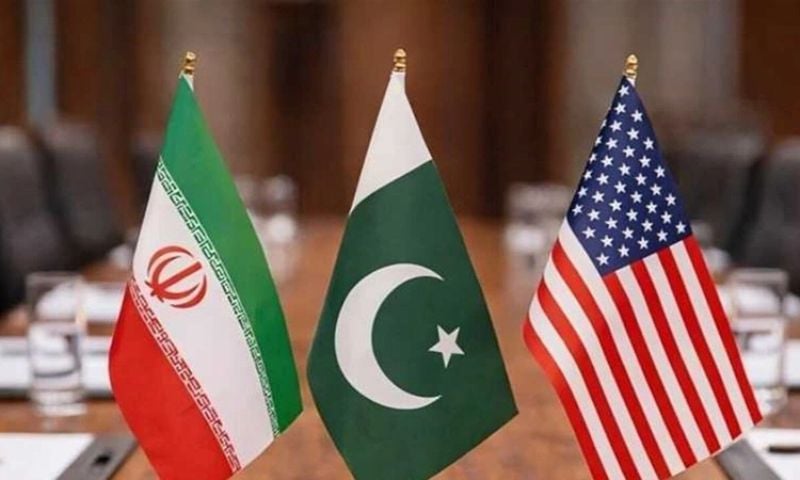



ISLAMABAD: Pakistan’s Prime Minister Shehbaz Sharif on Sunday confirmed that Islamabad had received Iran’s response to a US proposal to end the war in the region. Pakistan has continued diplomatic efforts to facilitate dialogue between Tehran and Washington and to de-escalate the ongoing conflict through diplomacy and dialogue.
Speaking at a ceremony held in Islamabad, Prime Minister Sharif mentioned Pakistan’s efforts for de-escalation between the US and Iran. He said that Pakistan’s Chief of Defence Forces and Chief of the Army Staff, Field Marshal Asim Munir, had informed him “a while ago” that Pakistan has received Iran’s response.
“I cannot go into more detail. I commend the efforts of Deputy Prime Minister Ishaq Dar and congratulate Field Marshal Asim Munir, who has dedicated himself [to this cause],” he said.
’آج مجھے فیلڈ مارشل بتارہے تھے کہ ایران کا جواب موصول ہو گیا‘وزیراعظم شہباز شریف#USIranTalks #Islamabad #PMShehbazSharif #FieldMarshal #BreakingNews #SamaaTV pic.twitter.com/sjq6rqimjZ
— SAMAA TV (@SAMAATV) May 10, 2026
Earlier, Iranian state media reported that Iran has sent its response to the latest US proposal to end the war in the region through Pakistan.
“The Islamic Republic of Iran sent today through Pakistani mediators its response to the latest text proposed by the United States to end the war,” Iran’s official IRNA news agency reported.
Iran has formally presented to Pakistani mediators its response to the latest US proposal aimed at ending the war of aggression against the country, a source familiar with the matter confirmed on Sunday.https://t.co/swlVezmisJ pic.twitter.com/pi4tt3MiBq
— IRNA News Agency ☫ (@IrnaEnglish) May 10, 2026
According to Iranian media, Tehran’s response is focused on “ending the war and maritime security”.
“It should be noted that the main focus of Iran’s response to the US proposal is on ‘ending the war and maritime security’ in the Gulf and the Strait of Hormuz,” the ISNA news agency said, without offering further details.
Pakistan brokered a ceasefire between Tehran and Washington on April 8 that halted the war involving the United States, Israel and Iran.
On April 11, Pakistan hosted high-stakes direct talks between the US and Iranian negotiators in Islamabad.
The Islamabad Talks concluded without a final agreement; however, they paved the way for further negotiations between Washington and Tehran to permanently resolve the conflict.
14-point proposal
According to US media reports, Washington had sent Iran a 14-point proposal outlining conditions for a potential agreement.
The plan reportedly requires Iran to pledge that it will not develop nuclear weapons and to suspend all uranium enrichment for at least 12 years.
According to the proposal, Tehran would also need to transfer an estimated 440 kilograms (970 pounds) of uranium enriched to 60 percent.
In exchange, the United States would ease sanctions, release billions of dollars in frozen Iranian assets, and lift its naval blockade of Iranian ports.
The proposal also suggests that both sides—currently in a naval standoff in the Strait of Hormuz—would reopen the strategic waterway within 30 days of signing any agreement.
Pakistan’s diplomatic efforts
Meanwhile, Pakistan has continued its diplomatic efforts for peace, backed by China and the Gulf countries.
Pakistan’s leadership increased their diplomatic outreach to the Gulf and regional countries in recent weeks, stressing dialogue and political engagement as the preferred path to de-escalation.
On Sunday, during a telephone conversation with Qatari Prime Minister and Foreign Minister Mohammed bin Abdulrahman bin Jassim Al Thani, Pakistan’s Prime Minister Shehbaz Sharif reaffirmed commitment to supporting regional peace, stability and dialogue.
I was delighted to receive a telephone call from my brother, H.E. Sheikh Mohammed bin Abdulrahman bin Jassim Al Thani, Prime Minister and Foreign Minister of the State of Qatar, earlier today.
We exchanged views on the evolving regional situation and reaffirmed our shared…
— Shehbaz Sharif (@CMShehbaz) May 10, 2026
The war started after the US and Israel launched strikes on Iran on February 28, prompting retaliatory action from Tehran against Israel and the Gulf countries.
The confrontation also contributed to disruptions in maritime traffic around the Strait of Hormuz.
A ceasefire brokered through Pakistani mediation came into effect on April 8, easing hostilities.
US President Donald Trump later announced an extension of the truce without specifying a deadline, while Pakistan-led diplomatic efforts towards a broader agreement continue.
Meanwhile, Washington has maintained pressure on Tehran through maritime measures in the Gulf.
Since April 13, the United States has enforced a naval blockade targeting Iranian shipping activity in and around the Strait of Hormuz.
Earlier this week, President Trump stated that the US military would temporarily suspend “Project Freedom”, an operation intended to ensure unrestricted commercial navigation through the strategic waterway.
Despite the pause, he stressed that the American blockade would remain “in full force and effect”.
Trump praises Pakistan
On Thursday, Trump credited Pakistan’s leadership for persuading Washington to pause “Project Freedom,” a US-led naval operation aimed at escorting stranded commercial vessels through the Strait of Hormuz.
Trump wrote on his social media platform Truth Social that the United States had paused “Project Freedom” following requests from Pakistan amid efforts to ease tensions in the Strait of Hormuz.
“Pakistan has been fantastic. And their leaders have been fantastic. The field marshal and the prime minister,” Trump said.
President Trump on why Project Freedom is Paused:
"Pakistan has been fantastic. And their leaders have been fantastic. The field marshal and the prime minister. And they asked us not to do it. We'll go back to it if we have to."
— Donald J Trump Posts TruthSocial (@TruthTrumpPost) May 8, 2026
Trump hints at US-Iran peace deal
Trump said on Thursday that a peace agreement between the US and Iran could be reached as early as next week through Pakistan-led diplomatic efforts.
In an interview with Fox News, Trump said progress had been made in negotiations with Iran but warned that military action could resume if Tehran refused to accept a deal that included reopening the Strait of Hormuz.
Pakistan has intensified diplomatic efforts to end the conflict between the US and Iran through diplomacy and dialogue.
Reuters reported on Thursday, citing sources and officials, that the US and Iran are edging closer to a limited, temporary agreement to halt their war.
Washington and Tehran are working toward a short-term memorandum rather than a comprehensive peace accord, reflecting continuing disagreements over Iran’s nuclear programme, Reuters reported while citing sources familiar with the negotiations.
The proposed arrangement is aimed at formally ending the conflict, stabilising the Strait of Hormuz and creating space for broader negotiations, Reuters reported.
Three-stage US-Iran peace framework
According to Reuters, the new framework would unfold in three stages: a formal declaration ending the war, measures to resolve the crisis in the Strait of Hormuz, and a 30-day negotiation period aimed at reaching a broader settlement.
A source briefed on the mediation process, cited by Reuters, said that a one-page memorandum formally ending the conflict was close, although differences remained between the two sides.
Washington and Tehran had scaled back expectations for a sweeping agreement as disputes persisted over Iran’s highly enriched uranium stockpiles, the future of its nuclear activities and the duration of any suspension of enrichment work, according to Reuters.
US news outlet Axios reported on Wednesday, citing official sources, that Washington and Tehran were nearing a preliminary deal to end the conflict and establish a framework for future nuclear negotiations.
Axios said the proposed memorandum could include 14 points under which Iran would halt uranium enrichment for at least 12 years and commit not to develop nuclear weapons, while the United States would ease sanctions and release frozen Iranian assets.
The report also said both sides would reopen the Strait of Hormuz within 30 days of signing the agreement.
CNN reported that Iran was expected to deliver its response to the latest US proposal to Pakistani mediators on Thursday.
A regional source quoted by CNN said the one-page proposal would trigger a 30-day negotiation period to resolve key disputes, including nuclear safeguards, frozen Iranian assets and maritime security in the Gulf.
Pakistan hosted the first direct talks between US and Iranian officials in Islamabad on April 11 and 12, following a Pakistan-brokered ceasefire announced on April 8.
Although the talks ended without a final agreement, both sides continued diplomatic engagement.
Hostilities between Washington and Tehran have since eased considerably, with Pakistan continuing to facilitate communication between the two sides.
Financial markets reacted positively to growing expectations of a diplomatic breakthrough.