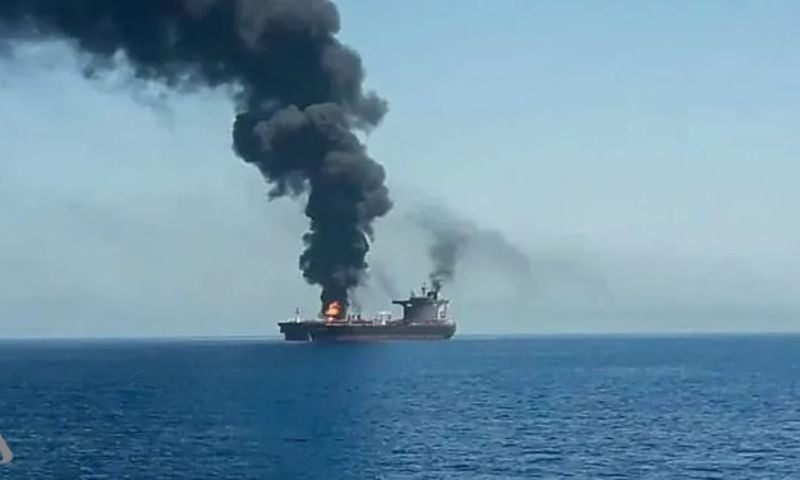



SEOUL/TEHRAN: Iran on Thursday strongly denied allegations that its armed forces were involved in an explosion that damaged a South Korean-operated cargo ship in the Strait of Hormuz earlier this week, amid escalating tensions in the strategically important maritime corridor.
In an official statement issued by the Iranian embassy in Seoul, Tehran dismissed claims connecting the Islamic Republic to the incident involving the vessel.
Official Statement of the Embassy of the Islamic Republic of Iran on Allegations Concerning Damage to a Korean Vessel in the Strait of Hormuzhttps://t.co/yYDvraItYR
— Iran embassy in Seoul (@IraninSKorea) May 7, 2026
“The Islamic Republic of Iran firmly rejects and categorically denies any allegations regarding the involvement of its armed forces in the incident involving damage to a Korean vessel in the Strait of Hormuz,” the embassy said.
The denial came after US President Donald Trump alleged on social media that Iran had opened fire on a Korean-operated ship and other targets during a US-led operation aimed at securing navigation through the Strait of Hormuz.
The vessel involved in the incident, the Panama-flagged HMM Namu, is operated by South Korean shipping company HMM. According to South Korean authorities, the ship was empty and anchored when an explosion triggered a fire on board.
South Korea’s foreign ministry confirmed that no casualties were reported in the incident and said the blaze had been successfully extinguished. The ministry added that the vessel would be towed to a nearby port where a full damage assessment and repair work would be carried out.
An HMM spokesperson said all 24 crew members remained safely on board the 35,000-tonne general cargo vessel following the incident.
The spokesperson added that the fire broke out in the ship’s engine room, but surveillance camera footage later confirmed that the flames had been brought under control.
The incident has further heightened concerns over maritime security in the Strait of Hormuz, a crucial global shipping route through which a significant portion of the world’s oil and commercial cargo passes each day.
Tensions in the region have intensified in recent weeks following competing military and maritime operations involving Iran and the United States, raising fears of wider instability that could further disrupt international shipping and energy supplies.