Key Points
- US circulates draft UN Security Council resolution on Strait of Hormuz
- Measure calls for halt to attacks, mining activity and transit restrictions
- Proposal includes disclosure and removal of sea mines and a humanitarian corridor
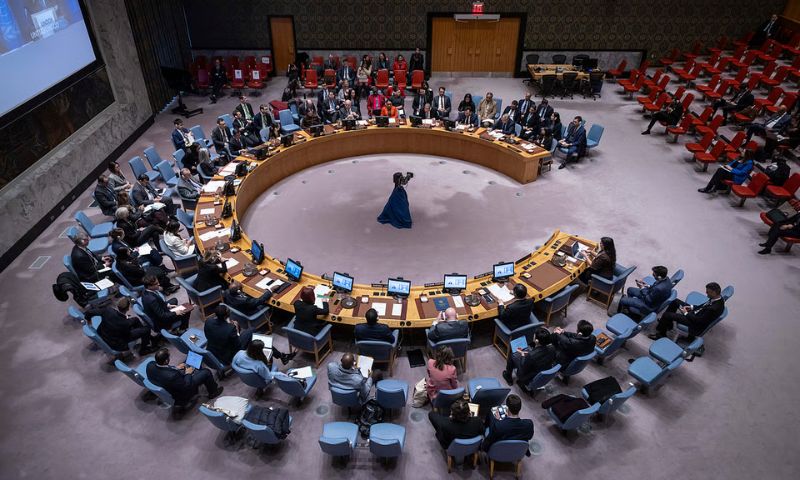
ISLAMABAD: The United States has circulated a draft resolution at the United Nations Security Council for free transit through the Strait of Hormuz, calling for an immediate halt to attacks on shipping and the removal of sea mines in one of the world’s most critical energy corridors.
According to a statement by US Secretary of State Marco Rubio, the proposal urges Iran to cease actions that threaten commercial navigation, including alleged attacks on vessels, deployment of sea mines and any restrictions on passage through the strait.
The United States Proposes a UN Security Council Resolution to Defend Freedom of Navigation and Secure the Strait of Hormuzhttps://t.co/f4OlmJsAGJ
— U.S. State Dept – Near Eastern Affairs (@StateDept_NEA) May 5, 2026
The draft text, prepared in coordination with regional partners, also calls on Iran to disclose the number and locations of mines laid in the waterway and to cooperate with international efforts for their removal to restore safe transit conditions.
“At President Trump’s direction, the United States, alongside Bahrain and our Gulf partners, Saudi Arabia, the United Arab Emirates, Kuwait, and Qatar, drafted a UN Security Council Resolution to defend freedom of navigation in the Strait of Hormuz,” the statement reads.
In addition to security measures, the resolution supports the establishment of a humanitarian corridor to facilitate safe passage for essential supplies and civilian shipping amid heightened regional tensions.
The United States has indicated it expects the resolution to be put to a vote in the coming days, seeking support from other council members and broader international backing.
The Strait of Hormuz remains a strategic chokepoint linking major oil-producing states to global markets, and any sustained disruption has immediate implications for energy supply chains and international trade flows.