


ISLAMABAD: Religious leaders and scholars from across Pakistan have reaffirmed their solidarity with the Pakistan Armed Forces, praising their role in safeguarding national security and responding to threats with determination and professionalism.
Expressing views at a meeting on Tuesday, religious scholars emphasised national unity, resilience, and continued support for the military in its ongoing efforts against terrorism and in defence of the country’s sovereignty.
The meeting was held at the Ministry of Religious Affairs and Interfaith Harmony under the chairmanship of Minister Sardar Muhammad Yousaf, marking the first anniversary of the victory against India in last year’s war.
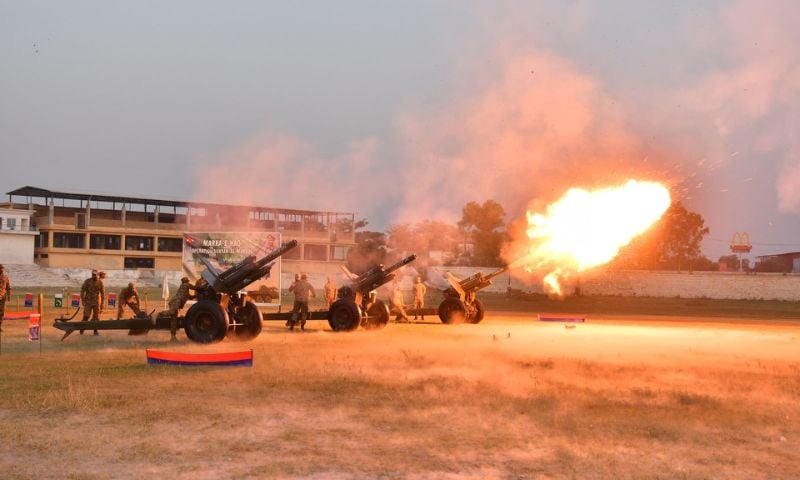
The scholars paid rich tribute to the Pakistan Armed Forces, praising their “courage, strategy, and professionalism” in responding to enemy aggression.
Participants said the military’s response during Operation Bunnianum Marsoos would be written in golden letters in history.
The scholars and religious leaders expressed strong national unity in the Army’s ongoing war against terrorism.
They emphasised that Pakistan’s stability and international standing had been strengthened under the leadership of Prime Minister Shehbaz Sharif and the military vision of Field Marshal Syed Asim Munir.
The participants further stated that the entire nation would stand united with the military against any future aggression and be ready to make every sacrifice for the protection of Pakistan’s sovereignty, integrity, and ideological boundaries.
The meeting also highlighted the importance of continued cooperation between religious scholars and state institutions in promoting national unity, religious harmony, and tolerance.
The scholars pledged to play an active role in strengthening internal stability and countering extremism through moderation and unity of the Ummah.
In a key decision, May 8 was declared a “Day of Gratitude” to commemorate the success of Operation Banyan al-Marsoos and to honour the resilience of the state.
The tensions between India and Pakistan escalated after a deadly attack in the Pahalgam area of Indian Illegally Occupied Jammu and Kashmir in April last year, which claimed the lives of 26 people.
India swiftly blamed Pakistan for the attack without presenting any credible evidence. Pakistan condemned the attack and strongly rejected the Indian government’s baseless accusations.
Pakistan also offered a neutral and transparent international investigation into the incident; however, India failed to respond to Islamabad’s offer and continued with its aggressive posture, jeopardising regional peace and security.
The four-day war between the two nuclear-armed neighbours began after India conducted missile strikes inside Pakistani territory, resulting in the deaths of multiple civilians and security personnel.
Pakistan gave a swift, strong, and decisive response to India. The Pakistan Air Force (PAF) shot down seven Indian aircraft, including Rafale jets, and successfully neutralised an S-400 air-defence system.
The conflict ended on May 10 when both countries agreed to a ceasefire mediated by the United States.