
Key Points
- California opens public roads to autonomous heavy-duty trucks under permit regime
- China accelerates deployment in mining and logistics, backed by 5G and industrial policy
- Autonomous haulage in mines reaches commercial scale with electric fleets
- Safety oversight tightens globally amid rapid technological rollout
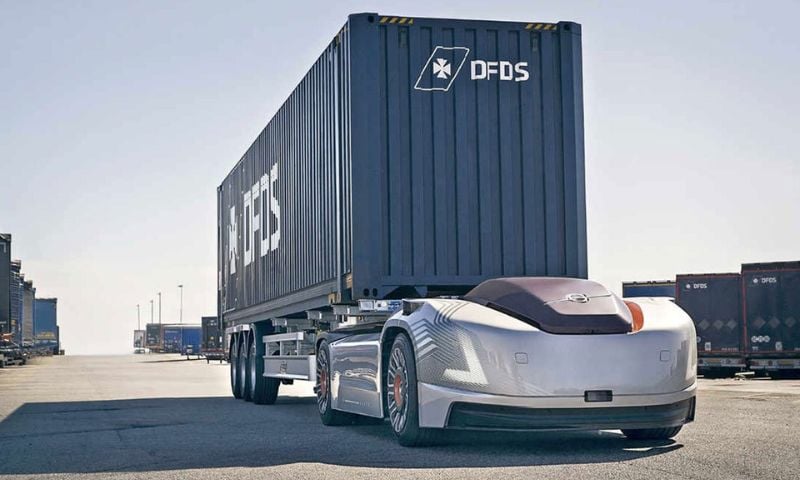
ISLAMABAD: A new regulatory push in California allowing autonomous heavy-duty trucks on public roads signals a global shift, with China rapidly deploying similar technologies across logistics and mining.
China is one step ahead in turning self-driving systems into a core industrial and mining capability rather than a passenger-mobility experiment.
The California framework, approved by state regulators, enables companies to test and deploy driverless heavy-duty vehicles exceeding 10,000 pounds under strict permit conditions.
New rules open the door to automated freight corridors in one of the world’s largest economies.
The move aligns the state with earlier adopters such as Texas and Arizona and marks a pivot toward commercial trucking as the next battleground in vehicle autonomy.
Across the Pacific, China is advancing on a parallel but more industrially integrated track.
Chinese firms are already operating autonomous heavy-duty trucks in real-world logistics networks.
Chinese companies such as Inceptio Technology have already reported large-scale deployments across national highways and partnerships with major logistics operators.
These systems have demonstrated measurable cost savings and safety improvements, reinforcing their commercial viability.
The most striking progress, however, is unfolding in mining, where autonomy is no longer experimental.
At large-scale sites such as Inner Mongolia’s Yimin mine, fleets of fully autonomous, battery-electric haul trucks are already operating continuously.
They are reportedly outperforming conventional diesel fleets in productivity benchmarks.
China has also pushed the technological frontier into extreme environments.
Autonomous haulage systems have been successfully tested at high-altitude mines exceeding 5,600 metres.
Chinese are using 5G-enabled coordination, multi-sensor perception, and cloud-based control systems to maintain operations in conditions unsafe for human workers.
These deployments highlight a key divergence in global strategy. In the United States, regulatory progress, such as California’s latest rules, is unlocking private-sector experimentation in freight.
In China, state-backed industrial ecosystems are embedding autonomy directly into heavy industry, particularly mining, where safety, labour constraints and efficiency gains provide immediate economic incentives.
At the same time, Chinese authorities are tightening oversight even as deployment accelerates.
Recent moves to strengthen safety audits and supervision of autonomous vehicle testing reflect a dual-track policy: rapid expansion paired with stricter regulatory control.
Beyond mining and trucking, heavy-duty autonomy is extending into construction and industrial equipment.
Global manufacturers are integrating advanced sensors, such as lidar, into quarry trucks and earthmoving machinery to reduce workplace accidents and enable round-the-clock operations.
Industry analysts say the shift toward heavy-duty applications reflects a fundamental recalibration of the autonomous vehicle sector.
Unlike passenger robotaxis, which operate in complex urban environments and face regulatory scrutiny, controlled settings such as mines, ports and highways offer clearer economic returns and faster scalability.
For global supply chains, the implications are significant.
Autonomous trucking promises lower freight costs and reduced driver shortages, even as mining automation enhances resource extraction and efficiency.
Together, these trends are reshaping the economics of logistics, energy and infrastructure.
For countries like Pakistan, the developments carry strategic relevance.
As regional connectivity expands and transit trade corridors evolve, the integration of autonomous freight systems could redefine competitiveness in logistics and industrial productivity.
Their importance is even greater in emerging routes linking South Asia, Central Asia and the Middle East.