


MOSCOW: Russian President Vladimir Putin on Monday told Iranian Foreign Minister Abbas Araghchi that Moscow would do everything it could to help secure peace in the Middle East, Russia’s state-run TASS news agency reported, as regional diplomatic efforts raise optimism for a durable agreement between Tehran and Washington.
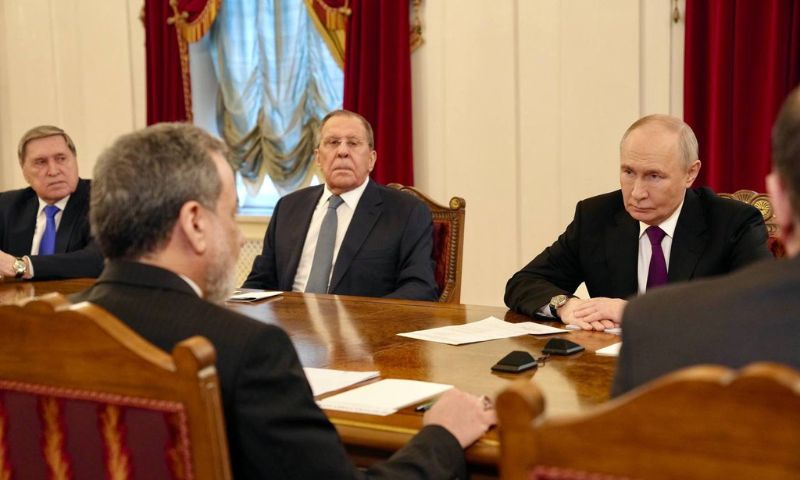
“For our part, we will do everything that serves your interests, the interests of all the people of the region, so that peace can be achieved as soon as possible,” Russian state media quoted Putin as telling Araghchi during their meeting.
Iranian Foreign Minister Araghchi on Monday held a meeting with Putin in Saint Petersburg, Iran’s government said in a statement.
📷 Iran’s FM @araghchi met and held talks with Russian President Vladimir Putin. #Iran #Russia #Diplomacy https://t.co/z07qrcJPeM pic.twitter.com/ybsdc7yVhJ
— Government of the Islamic Republic of Iran (@Iran_GOV) April 27, 2026
During the meeting, Putin said Russia hoped the Iranian people would weather what he described as a “difficult period” and that peace would prevail, according to Russia’s state-run RIA news agency.
Putin said that Russia would do everything in the interests of Iran and other countries in the Middle East region.
Addressing a meeting with FM @araghchi in St. Petersburg, President Putin said:
The people of Iran are bravely and heroically fighting for their sovereignty.Russia hopes that the people of Iran will get through this difficult period and that peace will be established. pic.twitter.com/A4L2gN076N
— IRNA News Agency ☫ (@IrnaEnglish) April 27, 2026
During the meeting, Araghchi said Iran maintains close consultations with Russia on regional issues.
The Iranian Foreign Minister’s visit to Russia follows trips to Pakistan and Oman to review the peace process and keep communication channels open.
Iranian Foreign Minister Abbas Araghchi holds meeting with Russian President Vladimir Putin pic.twitter.com/AMt0mmJp5k
— Mehr News Agency (@MehrnewsCom) April 27, 2026
The visit comes after Araghchi’s engagements in Oman and Pakistan, where mediators have been working to facilitate dialogue and reduce tensions in the region.
Diplomacy remains active
Iranian officials say the regional outreach is part of a broader effort to transform ongoing contacts into a more structured dialogue.
Messages exchanged through intermediaries have outlined Tehran’s positions on core issues, including maritime security and nuclear policy, signalling that communication channels remain active.
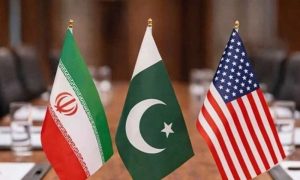
Syed Mohammad Ali, an independent political analyst in Pakistan, said indirect talks between the United States and Iran were continuing to move forward, despite Donald Trump’s decision not to send envoys to discussions that had been scheduled to begin this weekend.
“The delay in the second round of Islamabad talks must not be seen as a setback to ceasefire negotiations and peace efforts, which remain on track,” Ali told The Associated Press on Sunday.
Ali noted that longstanding tensions between Washington and Tehran cannot be resolved overnight, emphasising that the negotiation process “requires wisdom and patience from both sides.”
“This is a sensitive and complicated process, and there will be ups and downs, which are normal in such matters. But the good thing is that the ceasefire is holding, and both sides have a desire to end the conflict in a way that does not backfire at home,” Ali said.
Trump has also indicated openness to continued engagement, suggesting that talks could proceed through direct or indirect channels.
Discussions have additionally focused on safeguarding key global trade routes, particularly the Strait of Hormuz, underscoring the shared interest in regional stability and economic continuity.
Analysts say Araghchi’s multi-country tour reflects a coordinated push by regional and international actors to reinforce a ceasefire environment and lay the groundwork for longer-term arrangements.
While significant challenges remain, the ongoing diplomatic activity points to renewed efforts to move beyond crisis management towards a more stable relationship.