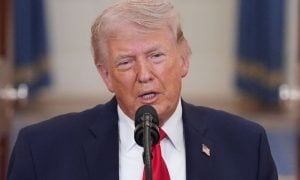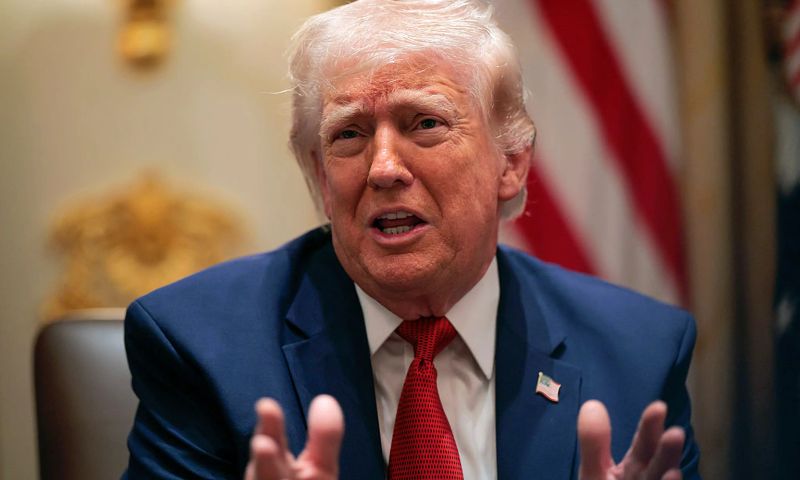



WASHINGTON: US President Donald Trump said on Sunday that Iran could contact Washington if it wanted to negotiate an end to the ongoing conflict, as diplomatic efforts continued to revive talks.
“If they want to talk, they can come to us, or they can call us. You know, there is a telephone. We have nice, secure lines,” Trump said in an interview on Fox News’ “The Sunday Briefing”.
The US President’s remarks come amid diplomatic efforts to resume direct talks between the US and Iran, with mediation efforts led by Pakistan.
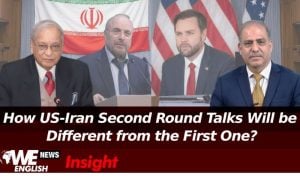
Earlier, Trump had cancelled a planned visit by US envoys, Steve Witkoff and Jared Kushner, to Pakistan, where a second round of talks had been expected following the first round of talks earlier this month.
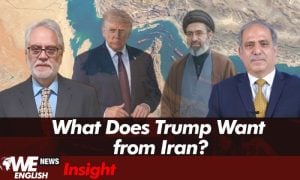
The US President said there was no point “sitting around talking about nothing”, adding that Washington held a stronger negotiating position.
“We have all the cards,” Trump said, reiterating that Iran must agree not to pursue nuclear weapons for any agreement to proceed.
“They know what has to be in the agreement. Very simple. They cannot have a nuclear weapon, otherwise there’s no reason to meet,” he added.
Trump on China’s role
Trump also commented on China’s involvement in the diplomatic efforts, saying Beijing could “help a lot more” but that he was not “overly disappointed”.
“I don’t think much. I think maybe helping, but I don’t think much they could,” he told Fox News, drawing comparisons with US support for other countries in conflicts.
Meanwhile, Pakistan has intensified diplomatic engagement to revive talks between Washington and Tehran.
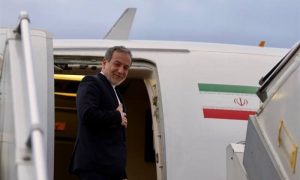
Iran’s Foreign Minister Abbas Araghchi returned to Islamabad on Sunday after a brief visit to Oman, Iranian media reported, and met Pakistani officials as part of ongoing diplomacy.
#BREAKING Iran's Foreign Minister Abbas Araghchi arrived in Islamabad after visiting Muscat
— Mehr News Agency (@MehrnewsCom) April 26, 2026
According to Iran’s ISNA news agency, Araghchi is conveying Tehran’s “positions and views on the framework of any understanding to completely end the war”.
Earlier, Araghchi described his Saturday’s visit to Pakistan as “fruitful”, praising Islamabad’s efforts to promote dialogue and reduce tensions.
Very fruitful visit to Pakistan, whose good offices and brotherly efforts to bring back peace to our region we very much value.
Shared Iran's position concerning workable framework to permanently end the war on Iran. Have yet to see if the U.S. is truly serious about diplomacy.
— Seyed Abbas Araghchi (@araghchi) April 25, 2026
Pakistan intensifies diplomatic efforts
Pakistan’s Prime Minister Shehbaz Sharif said his meeting with the Iranian foreign minister involved a “most warm, cordial exchange of views on the current regional situation”.
“We also discussed matters of mutual interest, including the further strengthening of Pakistan–Iran bilateral relations,” he said on X.
Deputy Prime Minister and Foreign Minister Ishaq Dar said Pakistan had emphasised “the importance of dialogue and diplomacy” during talks with the Iranian delegation.
Was pleased to meet H.E. Seyed Abbas Araghchi, Foreign Minister of Iran, and his delegation in Islamabad today. Had a most warm, cordial exchange of views on the current regional situation. We also discussed matters of mutual interest, including the further strengthening of… pic.twitter.com/ZGLQNuGOK6
— Shehbaz Sharif (@CMShehbaz) April 25, 2026
Araghchi termed his visit to Pakistan as fruitful, appreciating Islamabad’s efforts to promote peace and stability in the region.
In a post on X he acknowledged Pakistan’s positive role in supporting dialogue and reducing tensions.
“Very fruitful visit to Pakistan, whose good offices and brotherly efforts to bring back peace to our region we very much value,” he said.
“Shared Iran’s position concerning a workable framework to permanently end the war on Iran. Have yet to see if the U.S. is truly serious about diplomacy,” he added.
Indirect US-Iran talks progressing
Meanwhile, analysts say indirect negotiations between the US and Iran remain on track despite delays.
Islamabad-based security analyst Syed Mohammad Ali told The Associated Press that the postponement of talks should not be viewed as a setback.
Ali said indirect talks between the US and Iran were progressing despite Trump’s decision not to send envoys to talks that had been set to begin this weekend.
“The delay in the second round of Islamabad talks must not be seen as a setback to ceasefire negotiations and peace efforts, which remain on track,” Ali said.
Ali said ongoing tensions between Washington and Tehran cannot be eased overnight and the negotiation process “requires wisdom and patience from both sides.”
“This is a sensitive and complicated process, and there will be ups and downs, which are normal in such matters. But the good thing is that the ceasefire is holding, and both sides have a desire to end the conflict in a way that does not backfire at home,” Ali said.
Regional and international engagements
Diplomatic activity has also intensified across the region.
On Sunday, Araghchi held talks in Oman with Sultan Haitham bin Tariq al-Said in Muscat, discussing Pakistan-led diplomatic efforts to end the conflict, according to an Iranian foreign ministry statement.
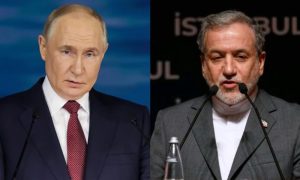
He is also scheduled to travel to Moscow, where he will meet Russian President Vladimir Putin, Iran’s ISNA news agency reported.
Tehran’s ambassador to Russia, Kazem Jalali, said the talks would focus on the latest status of negotiations, ceasefire efforts and regional developments.
Meanwhile, Iran’s foreign minister held a telephone conversation with Qatar’s Prime Minister Sheikh Mohammed bin Abdulrahman Al Thani to discuss ongoing diplomatic efforts, IRNA reported.
Egyptian Foreign Minister Badr Abdelatty also held separate calls with his Iranian and Qatari counterparts, stressing the importance of sustaining a ceasefire and pursuing a diplomatic path, according to Egypt’s foreign ministry.