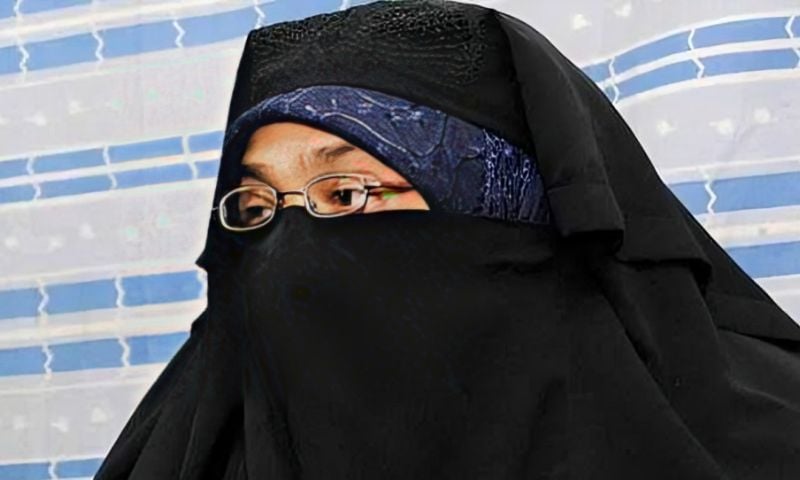
BRUSSELS: A Brussels-based non-governmental organisation, Kashmir Council Europe (KCEU), on Wednesday strongly condemned the sentencing of prominent Kashmiri leader and human rights activist Asiya Andrabi and two of her associates by an Indian court, calling the move “state terrorism” and a violation of fundamental rights.
Kashmir Council Europe is an independent non-governmental organisation dedicated to advocating for the right to self-determination for the people of Jammu & Kashmir.
In a statement issued from Brussels, KCEU Chairman Ali Raza Syed criticised the life sentence handed to Asiya Andrabi, head of Dukhtaran-e-Millat, as well as the 30-year prison terms given to her associates, Fahmeeda Sofi and Nahida Nasreen.
He rejected the ruling as baseless and a miscarriage of justice. He said the decision reflected continued human rights violations in Indian Illegally Occupied Jammu and Kashmir (IIOJK).
Kashmir Council EU
Sentencing Kashmiri Women is Indian State terrorism Chairman (KCEU) Ali Raza Syed has strongly condemned the sentencing of Kashmiri woman leader head of the org DEMAsiya Andrabi, to life imprisonment by a court in Delhi the sentencing of her two associate— Ali Raza Syed (@ARSyed1) March 25, 2026
Syed urged international human rights organisations to take immediate notice of the conviction of Kashmiri women in a “false case”.
He said the verdict formed part of broader repressive measures by India aimed at silencing dissent in the illegally occupied region. He added that “draconian laws” were being used to curb voices demanding the right to self-determination.
He also pointed to the continued detention of political leaders and activists, including Yasin Malik and Khurram Pervez, and called for their immediate release through international intervention.
Fahmeeda Sofi and Nahida Nasreen, to 30 years in prison each.
In a statement, rejecting this baseless sentence, the Chair of KCEU described these punishments as an act of Indian state terrorism. Ali Raza Syed stated that the verdict represents a miscarriage of justice .— Ali Raza Syed (@ARSyed1) March 25, 2026
Syed reiterated that the Kashmiri people were striving for their right to self-determination in line with United Nations Security Council resolutions and said their movement could not be suppressed through force.
‘Unjust’ sentencing of Kashmiri leader
Meanwhile, on Wednesday, Pakistan described the Indian court’s decision as a serious injustice and part of a broader pattern of suppressing dissent in Indian illegally occupied Jammu and Kashmir (IIOJK).
In a statement, Pakistan’s Foreign Office rejected the life sentence handed to Andrabi, along with 30-year prison terms for Fehmeeda Sofi and Nahida Nasreen.
🔊PR No.7️⃣3️⃣/2️⃣0️⃣2️⃣6️⃣
Pakistan Condemns Sentences Awarded to Aasiya Andrabi, Fehmeeda Sofi, and Nahida Nasreen; Calls for International Attention to Human Rights in Indian Illegally Occupied Jammu and Kashmir
🔗⬇️ pic.twitter.com/ukZzXz9z3Q— Ministry of Foreign Affairs – Pakistan (@ForeignOfficePk) March 25, 2026
The three women were convicted under India’s Unlawful Activities (Prevention) Act and other legal provisions, including charges related to conspiracy and alleged anti-state activities.
Andrabi, founder of the group Dukhtaran-i-Millat (Daughters of the Nation), was arrested in 2018 by India’s National Investigation Agency.
The organisation had previously been banned by Indian authorities. The sentencing follows their conviction earlier this year in a special court in New Delhi in a “false case”.
Islamabad expressed concern that the ruling reflects a continued erosion of civil liberties and political freedoms in Indian illegally occupied Jammu and Kashmir.
The Foreign Office said that the case is part of a wider trend of legal actions aimed at silencing voices advocating for Kashmiri rights.
The statement also raised questions about the fairness of the judicial process, pointing to issues related to due process, judicial independence, and compliance with international human rights standards.
Pakistan warned that such developments could further heighten tensions in the region and undermine efforts toward peace.
Pakistan called on the international community, including the United Nations and global human rights organisations, to take notice of the case and ensure accountability. It emphasised the need to safeguard fundamental rights such as freedom of expression and the right to a fair trial.
Reaffirming its long-standing position, Islamabad reiterated its support for the people of Jammu and Kashmir, stressing their right to self-determination in line with United Nations resolutions.