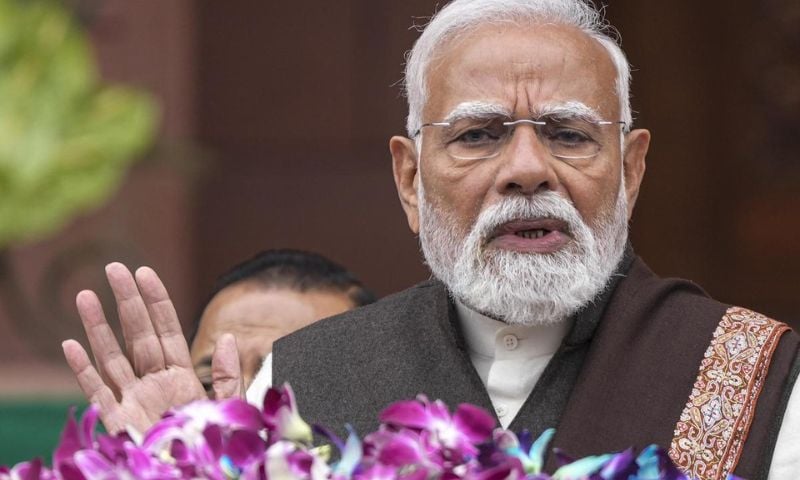
NEW DELHI: India’s main opposition party, the Indian National Congress, has sharply criticised Prime Minister Narendra Modi’s government following reports that Pakistan has stepped into a mediating role between the United States and Iran.
The criticism comes after Pakistan formally expressed its willingness to facilitate peace talks between Washington and Tehran.
The party described the development as a “serious diplomatic setback” for India, questioning the government’s foreign policy choices.
Prime Minister Shehbaz Sharif publicly stated that Pakistan is prepared to host negotiations aimed at de-escalating tensions in the Middle East, provided both the US and Iran agree.
His statement highlighted Pakistan’s intention to support dialogue in the interest of regional and global stability.
Multiple reports in leading international media outlets have identified Pakistan as one of the intermediaries being used between the US and Israel on the one side and Iran on the other.
If these reports are true, they represent a severe setback and rebuff to India – and it is…
— Jairam Ramesh (@Jairam_Ramesh) March 24, 2026
The proposal gained further traction after it was shared by US President Donald Trump on his social media platform, amplifying its international visibility.
Reacting to these developments, Congress leader Jairam Ramesh said that if Pakistan indeed assumes a mediator’s role, it would mark a clear diplomatic loss for India.
He attributed this situation to what he described as flawed leadership and foreign policy under Modi, taking a swipe at the prime minister’s global ambitions.
Ramesh also acknowledged Pakistan’s recent diplomatic momentum, noting that despite facing internal and external political and economic challenges, the country has managed to rebuild its international standing.
He argued that Pakistan’s narrative management and engagement with global powers have outpaced India’s efforts in recent months.
He further pointed to growing ties between Pakistan’s leadership and influential figures in the United States, citing multiple high-level interactions as evidence of strengthening relations.
The Congress leader also criticised Modi’s recent visit to Israel, calling it poorly timed given the escalating tensions in the Middle East. According to him, the visit undermined India’s ability to present itself as a neutral and credible mediator in the region.
The remarks underscore an intensifying political debate in India over the direction and effectiveness of its foreign policy, especially at a time when geopolitical shifts are redefining regional alliances and diplomatic influence.