Key Points
- Conflict spreads across Gulf, Israel, and wider Middle East.
- Iranian strikes hit Qatar LNG, Saudi and Kuwaiti refineries.
- QatarEnergy reports major damage to Ras Laffan LNG facility.
- Global energy markets shaken; oil and gas prices surge sharply.
- Benjamin Netanyahu claims strikes weakened Iran’s missile, nuclear capabilities.
- Abbas Araghchi vows “zero restraint” if attacked again.
- Global leaders urge restraint amid fears of wider regional war.
ISLAMABAD: The United States has fast-tracked more than $16 billion in military support to Gulf allies, approving emergency arms sales to the United Arab Emirates and Kuwait amid escalating tensions with Iran that threaten to spiral into a wider regional conflict.
US Secretary of State Marco Rubio cleared the package by invoking emergency provisions to bypass congressional review, authorising the transfer of advanced radar systems, missile defence platforms and air-to-air munitions.
Gulf under fire
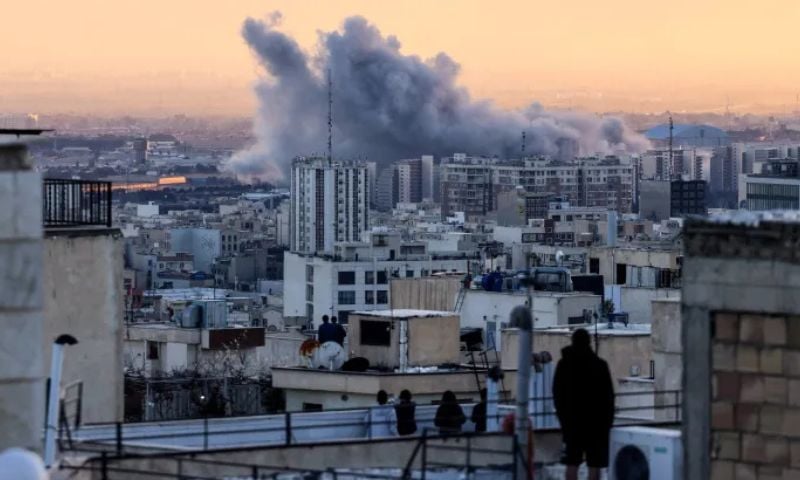
The move comes as the Middle East faces intensifying hostilities following a series of Iranian strikes on critical energy infrastructure across the Gulf, including Qatar’s Ras Laffan liquefied natural gas facility and refineries in Saudi Arabia and Kuwait.
The attacks sent shockwaves through global energy markets, with Brent crude briefly surging to $119 per barrel before easing, while European gas prices jumped sharply.
The volatility was further exacerbated by Iran’s move to block the Strait of Hormuz, a key artery for global oil supplies.
Qatar confirmed extensive damage to its energy facilities, with QatarEnergy saying repeated strikes on Ras Laffan had significantly disrupted operations.
Company officials indicated that nearly one-sixth of the country’s LNG export capacity had been knocked out, with repairs expected to take between three and five years.
Qatari Prime Minister Sheikh Mohammed bin Abdulrahman Al Thani said the attacks showed Iran had moved beyond its earlier position of limiting strikes to US-linked targets in the region.
Conflict widens
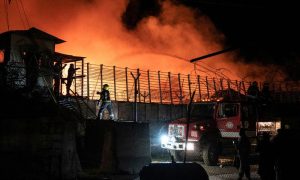
The conflict has rapidly widened, with attacks reported across multiple countries. In Saudi Arabia, a drone struck the Samref refinery in Yanbu, while in Kuwait, fires broke out at the Mina Abdullah and Mina Al-Ahmadi refineries following drone incidents. Explosions were also reported in Bahrain’s capital, Manama.
Inside Israel, an oil refinery in the port city of Haifa was reportedly hit after the military warned of incoming Iranian missiles. Iranian media described the strikes as part of an ongoing campaign of “successive punishment”.
Israeli Prime Minister Benjamin Netanyahu said Israel had acted independently in targeting Iran’s gas infrastructure linked to the South Pars field, but added that further such attacks had been paused at the request of US President Donald Trump.
Trump, while warning of a strong response if Iran continues attacks on Qatar, said there was no fixed timeline for ending the conflict and ruled out immediate plans to deploy US ground troops. However, US officials indicated additional forces could still be sent to the region if needed.
Iran’s warning
Meanwhile, Iran issued its strongest warning yet. The Khatam al-Anbiya military command threatened the “complete destruction” of Gulf energy infrastructure if Iranian facilities were targeted again. Foreign Minister Abbas Araghchi said Tehran would show “zero restraint” in responding to any further attacks.
Military exchanges have intensified alongside the rhetoric. Israel said it had carried out strikes on Iranian naval assets in the Caspian Sea, targeting vessels equipped with missile systems and surveillance capabilities, as well as a port command centre.
Casualties are continuing to rise. Reports from Iran’s northwestern city of Tabriz indicated multiple deaths following strikes attributed to US and Israeli forces, while a US-based rights group claimed that more than 3,000 people have been killed across Iran since the conflict began — figures that could not be independently verified.
In a significant development, a US F-35 fighter jet was forced to make an emergency landing after being hit by suspected Iranian fire, potentially marking the first successful strike on a US aircraft during the conflict.
Global alarm
Global powers have expressed growing concern over the escalation. European countries, including France, Germany and the United Kingdom, said they would work to ensure safe navigation through the Strait of Hormuz.
French President Emmanuel Macron called for direct talks between Washington and Tehran, warning against further escalation, while British Prime Minister Keir Starmer cautioned that attacks on critical infrastructure risk deepening the crisis.
NATO Secretary-General Mark Rutte and UN chief Antonio Guterres also urged restraint, warning that the conflict could spiral out of control with serious consequences for civilians and the global economy.
US Defence Secretary Pete Hegseth said there was no set deadline for ending the war, adding that the duration of the conflict would ultimately depend on decisions taken by Washington.