


WASHINGTON: The United States’ war with Iran could end within the “next few weeks,” US Energy Secretary Chris Wright said on Sunday, expressing confidence that global energy markets would stabilise once the conflict concludes.
Speaking on NBC’s “Meet the Press”, Wright said Americans were already feeling the impact of soaring energy prices triggered by the conflict but said that the situation would improve once the war ends.
“Americans are feeling it right now. Americans will feel it for a few more weeks,” Wright said.
“But at the end, we will have removed the greatest risk to global energy supplies. We’ll go to a world more abundant in energy, more affordable in energy, and less risky for American soldiers and commerce in the Middle East.”
When asked whether the conflict could end within weeks, Wright said that timeframe reflected his expectations.
Trump rejects talks with Iran
Despite Wright’s remarks, diplomatic prospects appear uncertain.
According to three sources familiar with the matter, cited by Politico, the administration of US President Donald Trump has rejected attempts to launch diplomatic negotiations aimed at ending the conflict.
Iran has also ruled out a ceasefire while military operations continue.
Iranian Foreign Minister Abbas Araghchi said Tehran had neither requested a ceasefire nor sought negotiations with Washington.
“No, we never asked for a ceasefire, and we have never asked even for negotiation,” Araghchi told CBS News, adding that Iran would continue defending itself.
He criticised the conflict as “a war of choice by President Trump” and rejected claims that Iran was fighting for survival, saying the country’s government remained “stable and strong enough” to defend its people.
Earlier, Trump said in an interview with NBC that Iran appeared ready to negotiate but that Washington would not accept current terms.
“Iran wants to make a deal, and I don’t want to make it because the terms aren’t good enough yet,” the US president said.
Strait of Hormuz blockade
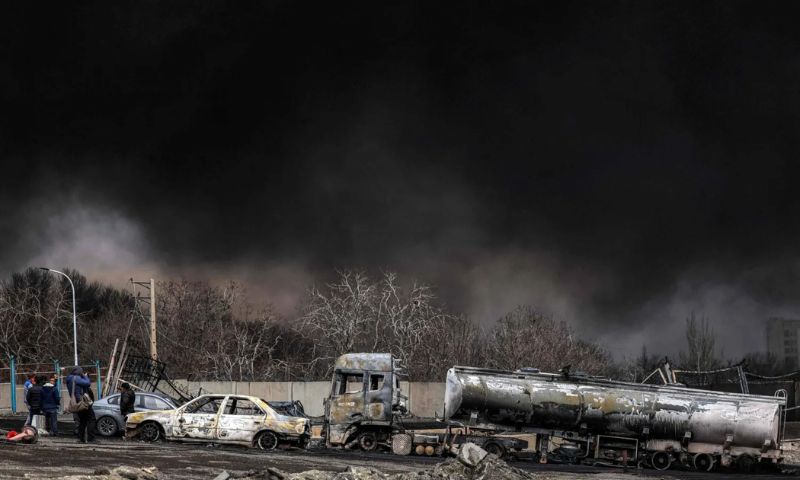
The conflict has triggered a global energy crisis after Iran effectively shut down the Strait of Hormuz, a critical shipping route through which about one-fifth of the world’s oil and liquefied natural gas normally passes.
The disruption has pushed crude oil prices above $100 per barrel, raising fears of further increases in fuel costs around the world.
Wright said tensions with China remained manageable and suggested Beijing could help reopen the strait.
“They’re the second largest economy in the world, and they’re a very important nation in the world,” he said.
“Opening the Strait of Hormuz is even more important for China than it is for the United States.”
Trump said on social media that several countries — including China, France, Japan, South Korea and the United Kingdom — could deploy naval vessels to help secure the waterway.
Measures to stabilise oil markets
The US government has begun taking steps to contain the economic fallout.
The International Energy Agency (IEA) announced that more than 400 million barrels of oil reserves would soon be released to global markets to counter price spikes caused by the conflict.
Stocks from the Asia–Oceania region will be released immediately, while supplies from Europe and the Americas are expected to follow later in March.
According to the IEA, global oil supply could decline by eight million barrels per day in March due to shipping disruptions, while Middle Eastern producers have cut output by at least 10 million barrels per day.
The United States has also agreed to release 172 million barrels of crude oil from the Strategic Petroleum Reserve as part of the emergency response.
In addition, the US Treasury recently eased some sanctions on Russian crude exports to help stabilise global markets.
The White House is also considering other measures, including temporarily waiving a century-old law that prioritises American vessels in maritime commerce, according to officials.
Wright said the administration hopes to bring petrol prices below $3 per gallon by summer, though he cautioned that uncertainty remains.
“There’s no guarantees in war,” he said.
Administration officials told Politico that the White House believes the US economy could withstand elevated oil prices for about four weeks, though prices may not return to pre-war levels even after the conflict ends.
Wright dismissed Iranian warnings that oil prices could surge to $200 per barrel, telling NBC viewers: “I would pay no attention to what Iran says.”