TEHRAN, Iran: Iran’s Foreign Minister Abbas Araghchi on Sunday urged other countries to refrain from any action that could widen the scope of the war with Israel and the United States.
In a phone call with French Foreign Minister Jean-Noel Barrot, Araghchi called on other countries to “refrain from any action that could lead to escalation and expansion of the conflict”, according to an Iranian foreign ministry statement.
گفتگوی تلفنی وزرای امور خارجه ایران و فرانسه
ژان نوئل بارو وزیر امور خارجه #فرانسه شنبه شب در تماس تلفنی با سید عباس عراقچی وزیر امور خارجه جمهوری اسلامی ایران در خصوص جنگ تحمیلی آمریکا و رژیم صهیونیستی علیه ایران و وضعیت جاری در منطقه گفتگو کرد.
وزیر امور خارجه کشورمان با… pic.twitter.com/4XOQw1pPJM
— وزارت امور خارجه (@IRIMFA) March 15, 2026
His remarks came after US President Donald Trump called for other nations’ warships to help protect world oil supplies passing through the Strait of Hormuz, which has been virtually blocked by the threat of Iranian attacks.
Strait of Hormuz tensions
The Strait of Hormuz, located between Iran and Oman, normally carries about one-fifth of the world’s oil and liquefied natural gas shipments.
The waterway has effectively been disrupted after Iran warned that it could block shipping in response to attacks by United States and Israel.
Trump said on Saturday that countries including China, France, Japan, South Korea and the United Kingdom should send warships to ensure the waterway remains open and safe for global trade.
In posts on his social media platform, Trump said the United States would take steps to reopen the route if necessary, including military action along Iran’s coastline.
— Rapid Response 47 (@RapidResponse47) March 14, 2026
Shipping traffic through the strait has dropped sharply, with shipping data firm Kpler reporting a 90 percent decline in vessel movements in early March following security threats and drone attacks.
— Karoline Leavitt (@PressSec) March 14, 2026
Major shipping companies including Maersk and Hapag-Lloyd have suspended operations in the Strait of Hormuz due to security risks.
US military bases
Araghchi also accused the United States of using regional military bases to launch attacks on Iran.
“We have ample evidence of this: satellite imagery and electronic surveillance demonstrate that US bases in this region are being used for attacks,” Araghchi told the Arabic-language news outlet Al-Araby Al-Jadeed.
He claimed that missiles had been launched from the United Arab Emirates to target Kharg Island, Iran’s main oil export hub.
Iranian officials also said Tehran was ready to form a regional investigative committee to examine attacks on various targets across the region.
According to Iran’s Fars News Agency, Araghchi said Tehran had not targeted civilian areas in neighbouring countries and suggested Israel could be responsible for attacks against civilian targets in some Arab states.
He added that diplomatic contacts with Qatar, Saudi Arabia, Oman and other regional states were continuing.
“Tehran welcomes any initiative that leads to a complete end to the war,” he said.
Iran launches drone strikes on Israel
Iran’s military said it carried out drone strikes on Israeli targets on Sunday.
In a statement carried by the official Islamic Republic News Agency, the army said it targeted security installations and police facilities in Israel.
The statement said the attacks included strikes on the “Lahav 433” special police unit and the “Gilat Defence” satellite communications centre.
Meanwhile, Israeli media reported that a fragment from an Iranian missile struck a residential building used by the US consul in Israel, though further details were not immediately available.
Israel expands strikes on Iran
Israel’s military said it had launched a new wave of “wide-scale” strikes targeting positions in western Iran.
The attacks came more than two weeks after US and Israeli forces began military operations against Iran on February 28, in what Washington described as efforts to degrade Tehran’s missile and defence capabilities.
According to the Pentagon, US and Israeli forces have struck more than 15,000 targets across Iran since the campaign began.
Iran’s health ministry said more than 1,200 people have been killed in the strikes.
The United Nations High Commissioner for Refugees estimates that up to 3.2 million people have been displaced within Iran as residents flee major cities including Tehran.
Hezbollah launches missile attack
In Lebanon, Hezbollah group said it fired an “advanced missile” at Israel’s Palmachim Airbase, located south of Tel Aviv.
The group said the attack was in response to continued Israeli strikes in Lebanon and clashes near the Lebanese-Israeli border.
Israeli forces have also targeted Hezbollah positions, including what they described as command centres belonging to the group’s elite Radwan Forces in Beirut.
According to regional media reports, Israeli strikes have killed at least 826 people in Lebanon since February 28.
Calls for de-escalation
Several governments have urged restraint amid fears that the conflict could spread across the region.
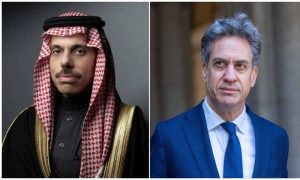
British Energy Security Minister Ed Miliband said it was essential to calm tensions.
“The plan now has to be to de-escalate the conflict,” Miliband told the BBC.
Meanwhile, Financial Times reported that European Union foreign ministers will discuss a possible expansion of the bloc’s EU Aspides Mission naval operation to include the Strait of Hormuz.
Trump rejects immediate peace deal
Trump said the United States is not ready to negotiate an end to the conflict with Iran.
Speaking to NBC News, the US president said Tehran had signalled interest in negotiations but that Washington would continue military pressure until stronger terms were offered.
“Iran wants to make a deal, and I don’t want to make it because the terms aren’t good enough yet,” Trump said.
He warned that US forces could launch further strikes on strategic targets, including Kharg Island, and suggested Washington might intensify operations along Iran’s southern coastline near the Strait of Hormuz.
Trump also questioned the status of Iran’s newly appointed supreme leader Mojtaba Khamenei, saying he was unsure whether the leader was alive.
Iranian officials have rejected such claims, insisting there are no issues regarding the country’s leadership despite Khamenei’s absence from public appearances.