



Key Points
- Pakistan, China envoys meet to discuss Afghan-based terrorist threats.
- Afghan soil increasingly used as safe haven for militant groups.
- TTP infiltration involves Afghan nationals, complicating regional security dynamics.
- ISKP and BLA also raise alarms for neighbouring countries.
- Recent cross-border clashes highlight urgency of diplomatic and security measures.
- Instability threatens Pakistan-China border security and China’s Belt and Road investments.
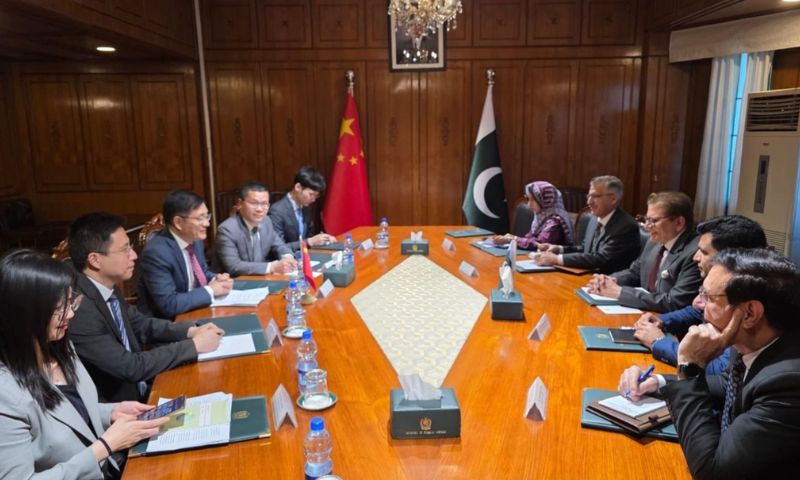
ISLAMABAD: Pakistan’s Special Representative for Afghanistan, Ambassador Mohammad Sadiq, said that he held a detailed meeting with his Chinese counterpart, Ambassador Yue Xiaoyong, focusing on the shared threats posed by terrorist groups operating from Afghan territory.
In a tweet late Thursday, Ambassador Sadiq said the two envoys discussed the danger posed by the Tehreek‑e‑Taliban Pakistan (TTP) to Pakistan and the Eastern Turkistan Islamic Movement (ETIM) to China.
The diplomats agreed that collective efforts were essential to ensure lasting peace and stability in the region.
Pakistan and China’s concerns reflect a broader unease among neighbouring states that elements hostile to their security are finding safe haven within Afghanistan — especially since the Taliban regained power in 2021.
Islamabad has repeatedly said that terrorist groups use Afghan soil to regroup, train and launch attacks across the border, and has pressed Kabul to take verifiable action to dismantle militant networks targeting Pakistan
Terror threats escalate
Among the organisations of concern is the TTP, which Islamabad holds responsible for operating sanctuaries inside Afghanistan and orchestrating frequent deadly attacks in Pakistan.
A reported surge in militant infiltration — with Afghan nationals increasingly present in TTP operations — has alarmed Pakistani officials and underlined the complexity of cross‑border violence.
China’s focus on the ETIM stems from longstanding security concerns in its western region. Beijing has consistently pushed for stronger counter‑terrorism cooperation in the region, underscoring that militants based in Afghanistan could threaten both Chinese nationals and strategic initiatives such as the Belt and Road Initiative (BRI).
Beyond the TTP and ETIM, Islamabad and other neighbouring capitals have raised alarms about the presence of other extremist groups, including the Islamic State Khorasan Province (ISKP) and the Balochistan Liberation Army (BLA) — both of which have been linked to attacks across nearby borders.
Regional stability and risks
For Islamabad, Beijing and other regional capitals, the overarching concern is that persistent militant activity linked to Afghan bases could undermine not just local security but broader economic cooperation and development agendas.
For China, continued instability threatens its investments and connectivity ambitions. For Pakistan, it represents a direct threat to domestic security and border stability.
As Ambassador Sadiq’s tweet underscores, both Pakistan and China see counter‑terrorism cooperation as essential — but translating shared concerns into sustained, effective action remains a central challenge for regional diplomacy in the months ahead.