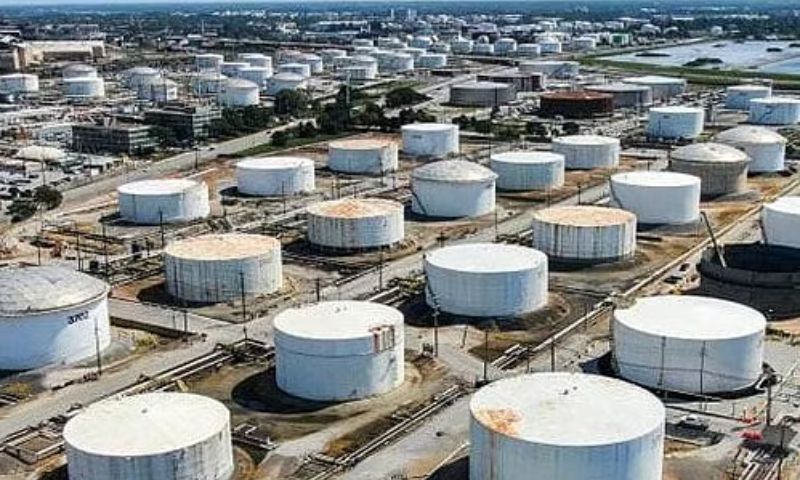
PARIS: The International Energy Agency (IEA) announced on Wednesday that it will release a record 400 million barrels of oil from member countries’ emergency reserves, marking the largest such intervention in the organisation’s history.
The move aims to stabilise global energy markets disrupted by the ongoing war in the Middle East.
The unprecedented release surpasses the 182.7 million barrels made available in 2022 following the Russia-Ukraine war.
IEA member nations currently hold more than 1.2 billion barrels in public emergency stocks, with an additional 600 million barrels held by industry under government obligation.
Disruptions at Critical Chokepoint
The crisis centres on the Strait of Hormuz, a narrow waterway through which approximately one-fifth of the world’s oil passes. Iran has effectively halted cargo traffic in the strait while targeting oil fields and refineries in Gulf Arab nations in retaliation for US and Israeli strikes.
“Without sufficient routes to market and with no more available storage, Middle East oil producers have started to reduce production,” said IEA Executive Director Fatih Birol.
“We have seen further attacks and damage to energy infrastructure. Refinery operations have also been disrupted, with major implications for jet fuel and diesel supplies in particular.”
Export volumes of crude and refined products currently stand at less than 10 percent of pre-war levels, according to the agency.
Coordinated International Response
Germany, Austria, and Japan have already confirmed they will release portions of their strategic reserves following the IEA request.
The German economy ministry announced it would provide 2.64 million tons from its stockpiles, with first deliveries expected within days.
Group of Seven energy ministers convened on Tuesday at the IEA headquarters in Paris to explore measures for reducing prices.
The G7, comprising Canada, the United States, France, Italy, Japan, Germany, and Britain, expressed support for using strategic reserves to address the situation.
Austrian Economy Minister Wolfgang Hattmannsdorfer confirmed his country’s participation, stating: “One thing is clear: in a crisis, there must be no crisis winners at the expense of commuters and businesses.”
Consumer Protection Measures
Both Germany and Austria announced accompanying regulations to prevent price gouging at the pump.
German gas stations will be limited to one price increase per day, while Austrian stations will face a three-per-week limit beginning Monday.
Historical Context
The IEA’s emergency reserve system was established in 1974 following the Arab oil embargo.
Previous releases occurred during the 1990-1991 Gulf War, after Hurricane Katrina in 2005, during the 2011 Libyan civil war, and twice following Russia’s invasion of Ukraine.
Birol emphasised that while the reserve release addresses immediate market disruptions, the fundamental solution remains reopening the Strait of Hormuz.
“The most important thing for a return to stable flows of oil and gas is the resumption of transit through the strait,” he said.