Key Points
- Toxic smoke from burning Iranian oil facilities may drift toward western Pakistan.
- PMD warns air pollution could rise in parts of Balochistan and Khyber-Pakhtunkhwa.
- Cities including Quetta, Chaman, Zhob and Peshawar may see deteriorating air quality.
- Oil fires release harmful pollutants such as hydrocarbons, sulphur dioxide and PM2.5 particles.
- Health experts warn vulnerable groups could face higher respiratory risks.
ISLAMABAD: Pakistan’s meteorological authorities have warned that toxic smoke generated by burning oil facilities in Iran may drift toward the country’s western regions, potentially worsening air quality in parts of Balochistan and Khyber-Pakhtunkhwa.
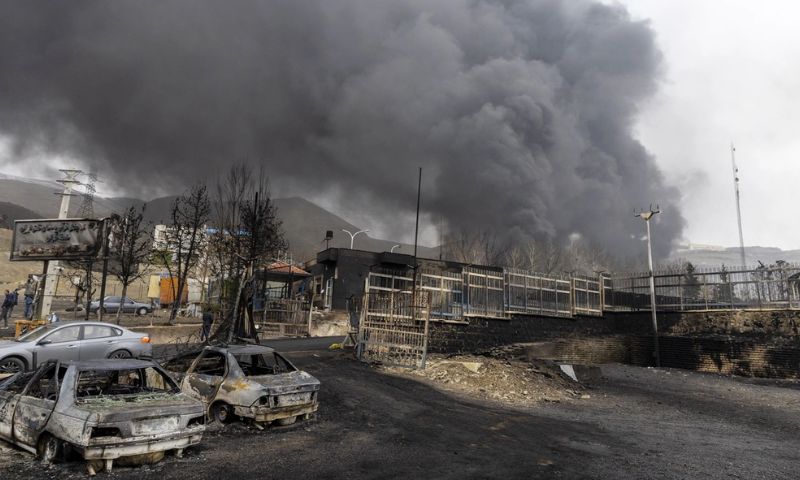
According to the Pakistan Meteorological Department (PMD), prevailing westerly winds could carry polluted air from Iran toward Pakistani border areas following recent strikes on oil installations in Tehran that triggered massive fires at storage depots and refineries.
For a third consecutive day on Wednesday, thick black smoke has been reported blanketing parts of the Iranian capital after the attacks ignited major oil infrastructure. The fires have released large amounts of hazardous pollutants into the atmosphere, raising environmental and health concerns across the region.
Meteorological officials say airborne contaminants from the fires are gradually moving eastward and could reach several Pakistani districts in the coming days. Cities that may be affected include Quetta, Chaman, Zhob, Chagai, Peshawar and Dera Ismail Khan.
According to media reports, witnesses in Tehran described unusually dark skies and rainfall containing visible traces of pollutants. Some residents reported black stains appearing on vehicles, balconies and clothing after the rain, while others complained of breathing difficulties due to the heavy smoke.
In response to the deteriorating conditions, Iran’s Red Crescent Society has advised residents to remain indoors, wear protective masks, avoid exposure to rainwater and turn off air-conditioning systems to limit the intake of polluted air.
Environmental experts explain that fires at oil facilities release a mixture of dangerous compounds into the atmosphere. These include hydrocarbons, sulphur dioxide and nitrogen oxides — pollutants known to significantly degrade air quality and pose serious health risks.
Meteorologists warn that fine particulate matter, particularly PM2.5 particles produced during large industrial fires, can travel thousands of kilometres through atmospheric wind systems. These microscopic particles are capable of penetrating deep into the lungs and bloodstream.
Experts further note that Balochistan’s arid climate and frequent dust storms could accelerate the dispersion of these pollutants once they enter Pakistan’s atmosphere, increasing the likelihood of deteriorating air quality in the region.
While the PMD said the probability of “black rain” occurring in Pakistan remains low, authorities caution that the Air Quality Index (AQI) in affected areas could rise noticeably, increasing the risk of pollution-related health complications.
The warning is particularly concerning for Quetta, a city that already faces persistent air pollution challenges during certain seasons.
Medical professionals say vulnerable groups — including children, the elderly, pregnant women and people with asthma or other respiratory conditions — could be especially at risk if pollution levels increase.
Exposure to polluted air may trigger respiratory illnesses, eye irritation and cardiovascular complications.
Authorities in Balochistan and Khyber-Pakhtunkhwa have placed hospitals and health institutions on alert as a precaution. Meanwhile, the Pakistan Meteorological Department has directed its regional monitoring offices to collect rainwater samples to determine whether contamination from airborne pollutants occurs.
Regional environmental impact
Large oil fires can release massive amounts of soot and toxic gases that spread across borders through atmospheric wind currents, making them a regional environmental concern rather than a localized one.
Health Risks of PM2.5
Fine particulate matter known as PM2.5 is particularly dangerous because it can enter the bloodstream through the lungs, increasing the risk of heart disease, stroke and chronic respiratory conditions.
Possible short-term precautions
Public health experts recommend limiting outdoor activity, using high-quality masks, keeping windows closed during heavy pollution episodes and monitoring local air quality updates.
Environmental monitoring
Authorities may continue sampling rainwater and measuring air pollution levels to determine whether toxic particles from the Iranian fires reach Pakistani territory.