DUBAI, United Arab Emirates: Iran intensified its military pressure across the Gulf region on Tuesday, launching new drone and missile attacks that triggered air defence responses in several Arab countries and heightened fears of a broader regional conflict.
Air raid sirens were reported early in the morning in Dubai in the United Arab Emirates and in Bahrain, signaling incoming aerial threats. Regional defence forces quickly moved to intercept the attacks.
Saudi Arabia announced that its air defences had destroyed two drones over its oil-producing eastern region, while Kuwait’s National Guard said it intercepted and shot down six drones headed toward its territory.
The latest attacks are part of Iran’s expanding campaign during the ongoing war that erupted on February 28. In addition to targeting Israel and American military bases in the Middle East, Tehran has increasingly focused on energy infrastructure in Gulf countries, raising concerns about global oil supplies, according to AP.
The conflict has also disrupted shipping through the strategically critical Strait of Hormuz, a narrow waterway connecting the Arabian Gulf to the Gulf of Oman and the Indian Ocean. Roughly one-fifth of the world’s oil passes through this route, making it one of the most vital energy corridors in the world.
Iran’s actions have effectively halted tanker traffic in the strait, according to maritime authorities, while attacks on merchant vessels in nearby waters have resulted in the deaths of at least seven sailors, the International Maritime Organization reported.
The disruption has rattled global energy markets. Brent crude oil briefly surged to nearly $120 per barrel on Monday amid fears of supply shortages before retreating. By Tuesday, prices were hovering around $90 per barrel — still about 24 percent higher than levels recorded before the war began.
The escalating conflict has also led to uncertainty about how long the war could continue. US President Donald Trump, who earlier suggested that the conflict might last several weeks, attempted to calm concerns on Tuesday by describing the war as a “short-term excursion.”
However, statements from Iranian officials suggest the confrontation could drag on. Ali Mohammad Naini, a spokesperson for Iran’s paramilitary Revolutionary Guard, said Tehran would decide when the war ends.
Meanwhile, Kamal Kharazi, a senior foreign policy adviser to Iran’s supreme leader, told international media that Iran is prepared for a prolonged conflict and sees little opportunity for diplomacy unless international pressure forces the United States and Israel to halt their military operations.
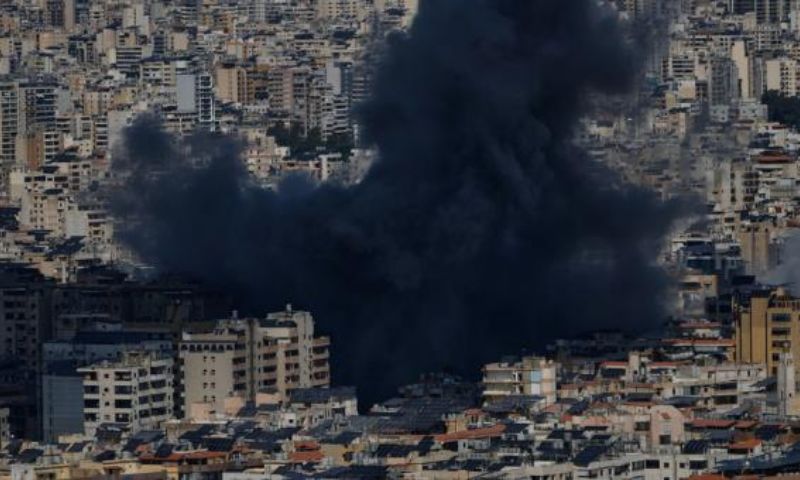
The violence has spread beyond the Gulf as allied groups across the region become involved. Israel has carried out repeated strikes against Hezbollah targets in Lebanon, while the Iran-backed group has retaliated with missile attacks into Israeli territory.
In Iraq, pro-Iran militias have stepped up attacks on American military bases since the conflict began. Early Tuesday, an airstrike targeted a position belonging to the 40th Brigade of the Popular Mobilization Forces near the northern city of Kirkuk.
Iraqi officials reported that five fighters were killed and four others wounded in the strike. The identity of the force responsible for the attack was not immediately confirmed.
The growing regional war has taken a heavy toll on lives and infrastructure. Officials say more than 1,200 people have been killed in Iran since the fighting began, while casualties in Lebanon have reached nearly 400. Israel has reported at least 11 deaths, and seven US service members have also been killed during the conflict.
Beyond the battlefield, the war has disrupted daily life across the Middle East. Bombings have targeted military installations, government buildings, energy facilities, hotels and even civilian infrastructure, forcing millions of residents to seek shelter. Foreign nationals have also begun leaving major regional business centres amid rising security concerns.
Financial markets, which have experienced sharp volatility since the conflict began, showed early signs of stability on Tuesday as Asian markets opened with modest gains following a late recovery in US trading.
Despite those signs of calm, analysts warn that continued attacks on energy infrastructure and shipping lanes could further destabilize global markets if the conflict continues to widen.