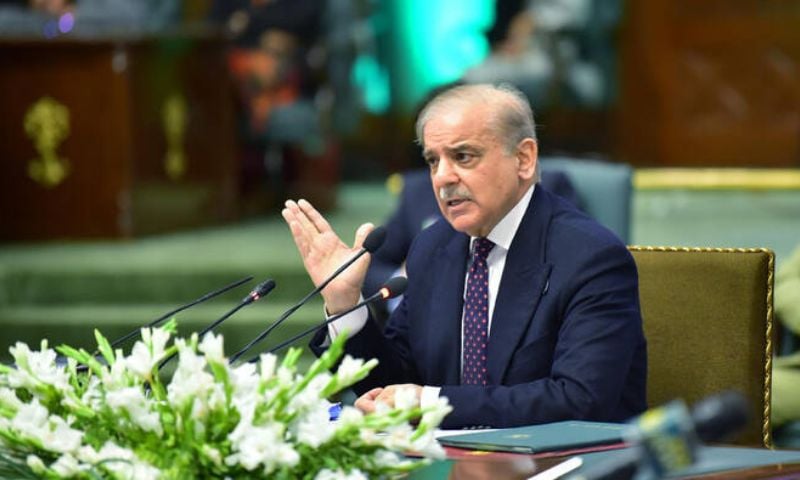
ISLAMABAD: Pakistan on Monday night announced sweeping austerity measures — including fuel cuts for government vehicles, a work-from-home policy, a four-day work week for offices, and temporary school closures — to limit the economic impact of the war involving the United States, Israel, and Iran as surging global oil prices threaten to put additional pressure on Pakistan’s economy.
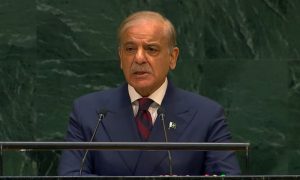
Addressing the nation, Prime Minister Shehbaz Sharif said the government had been forced to take “difficult decisions” as global crude prices surged following the widening conflict between the United States, Israel, and Iran.
“The entire region is currently in a state of war,” the prime minister said. He added that Pakistan was making diplomatic efforts to help defuse the regional tensions.
The government’s announcement came after oil prices jumped sharply in global markets due to disruptions linked to the conflict.
Crude prices climbed to nearly $120 per barrel as tensions escalated after US and Israeli strikes killed Iran’s Supreme Leader Ali Khamenei, triggering retaliatory attacks by Tehran across the region.
Iran has also closed the Strait of Hormuz following the strikes, halting a major share of global oil shipments through the narrow waterway.
The disruption has tightened global supplies and pushed energy markets into volatility. Oil prices have recorded their strongest weekly gains since the early months of the Covid-19 pandemic in 2020.
Prime Minister Sharif said Pakistan, which relies heavily on imported oil and gas from Gulf countries, could face economic strain if the conflict continued.
“The price of crude oil in the international market has suddenly jumped from around $60 to more than $100 per barrel,” he said.
“If things continue in this manner, the situation could get out of hand.”
Cost-cutting and fuel conservation measures
The prime minister said the government had convened a meeting with both federal and provincial authorities to discuss an austerity plan aimed at reducing public sector expenditure and conserving fuel.
Under the measures, fuel allocations for government vehicles will be reduced by 50 percent for the next two months, PM Sharif said.
Prime Minister Sharif said 60 percent of vehicles used by government departments would also be taken off the roads during the same period.
Members of the federal cabinet, including ministers, advisers and special assistants, will forgo their salaries for two months. Salaries of parliamentarians will be cut by 25 percent during the period.
Moreover, two days’ salary of BS-20 government officials, who earned more than Rs300,000, would be used for the people.
He also announced a 20 percent reduction in operational expenditures of government departments, excluding salaries.
The government has imposed a ban on the purchase of vehicles, furniture and air conditioners for official departments, PM Sharif said.
The prime minister said that foreign trips by ministers and officials will also be restricted except for visits considered essential to national interests. “Only extremely necessary visits for national interest will be allowed,” he said.
PM Sharif said government offices would increasingly rely on teleconferencing and online meetings in order to conserve fuel. Official dinners and Iftar gatherings have also been banned.
He said that to reduce government expenses, seminars and conferences would be hosted on government premises instead of hotels.
Pakistan shuts schools, orders work from home
PM Sharif said that to conserve fuel, decisions had also been taken for the public and private sectors. He said that apart from essential services, 50 percent of staff in both public and private sectors would work from home, except in essential sectors.
The prime minister also announced that government offices would operate four days a week, though the decision would not apply to banks.
He said that all schools would also have two holidays, and all higher educational institutions would begin online classes.
He added that all schools would be closed for two weeks starting at the end of the current week as part of the energy conservation measures. He also warned traders against hoarding essential commodities to exploit the situation.
He said that directives had been issued in this regard to all provincial governments.
He urged the nation to demonstrate unity and responsibility in dealing with the crisis. “Our nation needs unity and a strong sense of responsibility,” he said.
Fuel price increase
The austerity plan follows a sharp increase in domestic fuel prices.
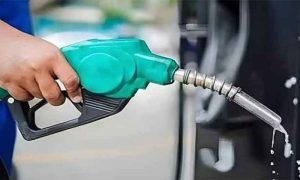
The government raised petrol and diesel prices by Rs55 per litre — roughly a 20 percent increase — on Friday. Officials say further increases may follow if global oil prices remain elevated.
The price hike has already pushed up transport fares and the cost of essential goods across the country.
PM Sharif acknowledged that the increase in petroleum prices had been “undoubtedly a very difficult decision”.
“We tried to take the middle road so that the burden on you is less,” he said. Highlighting the economic pressures faced by the country, he said that Pakistan was close to default some time back. However, the government, setting aside political differences, gave preference to the people.
“I was advised to raise petrol prices much more than what was eventually announced, but I chose a middle path so that the burden on people would be less,” he said.
Security concerns and diplomacy
The prime minister also highlighted security challenges facing the country, particularly along its western border.
He said Pakistan continued to face terrorism on its western borders and that the armed forces were responding to threats and attacks by terrorist groups operating from Afghanistan.
“Our armed forces are dealing with the situation effectively,” he said, adding that military operations were being carried out under the leadership of Chief of Defence Forces Field Marshal Syed Asim Munir.
PM Sharif also condemned the attacks on Iran that resulted in the death of Khamenei, while criticising retaliatory strikes on Gulf countries.
“I have held detailed discussions with leaders of brotherly countries and conveyed that Pakistan stands shoulder to shoulder with them in this difficult time,” he said.
Economy recovering from crisis
The prime minister noted that Pakistan had faced severe economic pressures in recent years and had come close to sovereign default before stabilising its finances.
“We set politics aside and made difficult decisions,” he said. “The people supported us and demonstrated patience.”
Sharif said inflation had begun to decline, the rupee had stabilised and electricity prices had been reduced in recent months.
He assured citizens that the government would try to shield them from the worst economic effects of the Middle East conflict.
“In the coming days, oil prices may increase further,” he said.
“But I will try that the burden does not fall on you. Efforts are ongoing day and night.”
Concluding his address, PM Sharif said that the world was facing a host of “new challenges”. He said that at this delicate turn, the country needed to show unity now more than ever.