The war between Iran, the United States, and Israel is entering a dangerous phase, with no clear path toward de-escalation.
As military operations expand across multiple fronts — from the Gulf to Lebanon — the conflict is increasingly affecting global energy markets, regional security dynamics, and the strategic balance of power in the Middle East.
The consequences of the ongoing war involving Iran, the United States, and Israel are therefore being felt far beyond the battlefield.
What began as a military confrontation is rapidly evolving into a crisis with global economic and strategic implications.
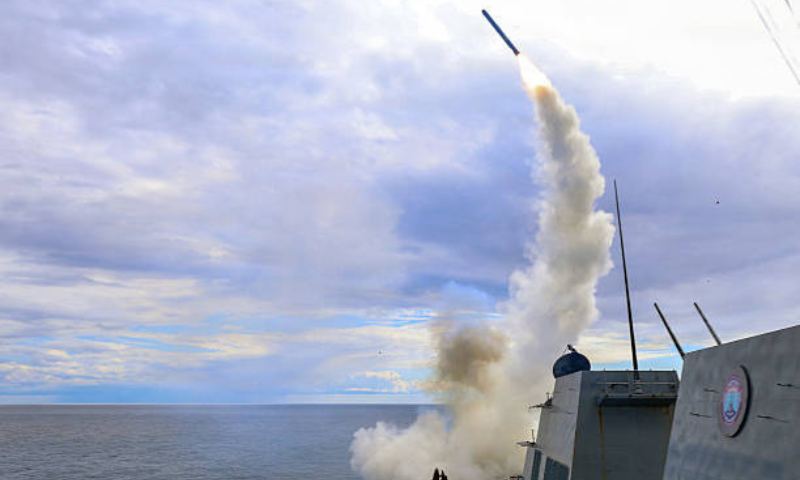
The situation that has emerged following the US and Israeli attacks on Iran continues to intensify. Bombardment of Iranian territory has escalated significantly, while retaliatory strikes from Tehran are spreading across the wider region.
With attacks continuing from both sides, the conflict is entering a dangerous and unpredictable phase.
Escalating Military Operations
US President Donald Trump warned that American bombardment of Iran could intensify further. He also suggested that Washington might expand its targeting to include additional elements of Iran’s leadership structure.
At the same time, another significant development has emerged. Washington and Israel are now examining the possibility of deploying special forces inside Iran.
According to foreign media reports, such operations would aim to locate and secure Iran’s hidden uranium stockpiles, potentially transferring them to the United States or Israel.
This development was reported on the eighth day of the war. By that stage, more than a week had passed since the beginning of hostilities.
According to available estimates, the United States and Israel have already carried out roughly 4,000 sorties over Iranian territory. The strikes have inflicted substantial psychological, economic, and physical damage.
Dozens of Iranian cities and towns have been targeted, resulting in widespread destruction. Reports indicate that approximately 1,350 people have been killed so far, including women and children.
Iran Expands the Battlefield
The overall pattern of the war suggests a clear dynamic: the United States and Israel continue to bombard Iran, while Iran is responding through missile and drone strikes that extend across the region.
Tehran has expanded the battlefield by targeting what it describes as American interests in the Middle East. Iranian attacks have struck locations in the United Arab Emirates, Bahrain, Saudi Arabia, Qatar, and Kuwait, countries that host US military assets or logistical facilities.
These attacks remain ongoing.
Tehran’s Messaging and Washington’s Response
Iranian President Masoud Pezeshkian addressed the situation in a recent statement. He acknowledged that Iranian strikes had affected neighbouring countries and offered an apology to those states.
At the same time, he justified the attacks by arguing that the strikes were aimed primarily at US military targets operating from those territories.
In effect, his statement combined apology with justification. Pezeshkian also announced that Iran would halt attacks on neighbouring states, but events quickly complicated that position.
Shortly after his remarks, President Trump responded publicly, interpreting the Iranian statement as an apology. Following those comments, the bombing of Iranian targets resumed.
The result is a situation that appears to be deteriorating rather than stabilizing. The regional atmosphere has become increasingly volatile.
Limited International Mediation
One striking feature of the current crisis is the near absence of effective international mediation. Several European countries have shown little willingness to become directly involved in the war.
Spain, for example, has declined participation altogether.
The United Kingdom has offered limited assistance to the United States but has avoided deeper military involvement. Trump, in responce has criticized Britain for its reluctance to play a larger role.
Strain on Air Defence Systems
Meanwhile, the United States is confronting significant logistical challenges. Both American and Israeli air defence systems are under heavy strain as they attempt to intercept large numbers of Iranian missiles.
Reports suggest Washington may now redeploy some of its air defence systems from South Korea to the Middle East. If confirmed, this move would have strategic implications beyond the immediate conflict.
The United States previously positioned these systems to defend South Korea against potential threats from North Korea. Moving them to the Middle East would raise concerns in Seoul about its own security environment.
Strategic Signals to US Allies
This development also sends two broader strategic signals.
First, many observers in the Arab world believe the current military operations are fundamentally aimed at protecting Israel. US Secretary of State Marco Rubio has openly acknowledged the central importance of Israel’s defence.
Second, some American allies — both Arab states and countries like South Korea — may increasingly conclude that Washington prioritizes Israel’s security above all others. Whether this perception is fully accurate remains open to debate, but the impression is clearly taking hold in parts of the international community.
A War Without a Clear Endgame
After eight days of fighting, the scale of destruction is already visible. What remains unclear, however, is how the war will end.
Every war begins with an implicit or explicit endgame — a strategic vision of what victory will look like and how the conflict will conclude. Yet in this case, the endgame remains ambiguous.
Shifting US War Objectives
The narrative surrounding US war aims has shifted repeatedly. Initially, Washington framed its actions as an effort to halt Iran’s nuclear program. Later, the justification expanded to include counterterrorism concerns and criticism of Iran’s domestic political system.
More recently, President Trump has stated that nothing short of Iran’s “total surrender” would be acceptable. This would imply the complete dismantling of Iran’s military capabilities.
Even if Iran were to disarm — a highly unlikely scenario — it remains unclear what political structure would replace the current system. The United States has offered little clarity on what a post-war Iran would look like.
Meanwhile, Israeli air operations continue.
As a result, the strategic objectives of the war remain deeply uncertain. Neither Washington, Tel Aviv nor Tehran has clearly defined what conditions would constitute victory.
Iranian Retaliation and Information Control
Iran, for its part, continues to retaliate. Iranian missiles have repeatedly targeted Israeli territory. Air-raid sirens sounded across several parts of Israel early Sunday morning as another wave of Iranian missiles approached.
The full extent of the damage inside Israel remains difficult to assess. The Israeli government has imposed strict media restrictions on coverage of military damage.
Nevertheless, reports indicate that Iranian strikes have caused significant losses.
Energy Shock and the Strait of Hormuz
Another major development concerns the global oil market. Kuwait has announced that it has effectively halted oil production due to disruptions in maritime transport.
The closure of the Strait of Hormuz — a critical chokepoint for global energy flows — has stopped many oil shipments.
As a result, oil prices have surged worldwide.
Iran has continued its missile and drone campaign against regional targets, while Gulf countries and Israel face growing economic and financial damage.
The Lebanon Front
The war has already expanded geographically. It has spread from Israel into Lebanon, where Israeli forces carried out additional strikes.
Attacks on Iran’s Energy Infrastructure
Another significant escalation occurred when Israel targeted a major Iranian fuel depot near Tehran. The facility, located in the Shahran district, contains eleven large storage tanks that supply fuel for both civilian and military use.
Two of these tanks are now burning following Israeli strikes.
The attack has triggered new fears internationally. If Israel begins systematically targeting Iran’s oil infrastructure, Tehran may retaliate by attacking energy facilities across the Gulf.
Such a scenario could produce a severe global energy crisis.
Strategic Implications of Energy Targets
Analysts note that the Shahran depot stores fuel primarily for domestic consumption. It supplies both Iran’s military and its civilian population.
For this reason, some observers interpret the strike as evidence that Israel is preparing for a prolonged conflict.
By damaging Iran’s logistical infrastructure, Israel may be attempting to weaken Tehran’s capacity to sustain military operations.
Untouched Critical Oil Infrastructure
Yet it is important to note that Iran’s most critical oil infrastructure has not yet been targeted. The country’s main export terminal is located on Kharg Island, which handles roughly 90 percent of Iranian oil exports.
Major refineries in Abadan, Bandar Abbas and Isfahan have also not been struck.
If those facilities were attacked, the conflict would escalate dramatically.
Iran currently produces around 2.8 million barrels of oil per day. Disrupting this output could significantly destabilize global energy markets.
Pressure on Iranian Society
Within Iran, the situation is already becoming increasingly difficult. Internet access has been heavily restricted, and daily life is growing more challenging as the conflict continues.
Some analysts believe that one objective of the bombing campaign may be to weaken Iran’s military capabilities while simultaneously increasing pressure on the civilian population.
Such pressure could potentially trigger internal political change.
This aligns with the broader concept of regime change, which some policymakers in Washington have openly discussed.
Iran’s Capacity to Endure
Yet the ultimate outcome of the war remains uncertain.
A central question is how long Iran can withstand sustained bombardment.
Some Iranian officials claim the country could endure six months of conflict. Others suggest Iran’s capacity may extend for only two months.
The true answer remains unknown.
A War of Choice vs A War of Survival
Strategically, the nature of the war differs significantly for each side.
For the United States and Israel, this is a war of choice — a conflict they decided to initiate.
For Iran, however, the war represents a struggle for survival.
If Iran fails to resist, the political system that has governed the country for more than four decades could collapse. What would replace it remains highly uncertain.
Western policymakers themselves acknowledge the unpredictability of such a scenario.
Russia and China Enter the Strategic Equation
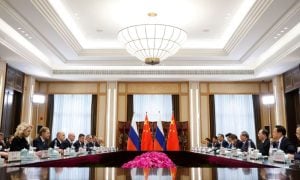
Recent reporting by The Washington Post indicates that Russia may be providing some level of assistance to Iran. China also appears to be moving closer diplomatically to Tehran.
China’s foreign minister recently condemned the US and Israeli attacks and called for an immediate end to the war.
Satellite Navigation and Missile Accuracy
Iran’s missile accuracy has also attracted attention. Some analysts believe Tehran’s recent shift away from the American GPS system toward China’s BeiDou satellite navigation network has improved the precision of its weapons.
The BeiDou system uses a constellation of roughly fifty satellites and is considered by some experts to rival or exceed Western navigation systems.
Iranian drones and missiles may now rely on this network, potentially explaining the accuracy of recent strikes.
Intelligence Doubts on Regime Change
Meanwhile, American intelligence assessments have introduced further doubts about the feasibility of regime change.
According to reporting by The Washington Post, the US National Intelligence Council warned that even a large-scale military assault would have little chance of dismantling Iran’s governing system.
Opposition groups within Iran remain fragmented and lack the organizational capacity to seize power.
Institutional Resilience of the Iranian System
The Islamic Republic has also developed a robust succession mechanism. If one leader is killed, another quickly assumes authority.
This leadership continuity has already been demonstrated following the death of Ayatollah Ali Khamenei.
The structure of Iran’s military command system also contributes to its resilience. Command authority is decentralized, meaning field commanders can continue operations even if senior leaders are removed.
In addition, there is currently no widespread popular uprising against the Iranian government.
According to American intelligence assessments, these factors make regime change extremely unlikely.
The Strategic Outlook
Even if Washington were able to weaken Iran militarily, it would struggle to reshape the country’s political system.
Furthermore, Iran’s regional network of allied groups — often described as proxies — would remain active.
As a result, even a dramatic political shift in Tehran might not fundamentally alter the regional balance of power.
For now, the conflict continues without a clearly defined endgame.
The war’s objectives remain uncertain, the strategic outcomes unclear, and the risks of further escalation growing by the day.