ISLAMABAD: The conflict involving Iran, the United States, and Israel has entered its second week, with escalating missile and drone exchanges across the Middle East, attacks on Gulf states hosting US military facilities, and continued Israeli operations in Lebanon.
On Monday, fresh strikes and interceptions were reported across several parts of the region as the fighting showed no sign of easing.
The war began on February 28 with surprise strikes by Israel, followed by the United States, on Iranian military and strategic infrastructure. Since then, fighting has spread across the region, raising fears of a broader Middle East confrontation.
Iranian strikes on Gulf states
Several Gulf countries reported new aerial attacks early Monday, with Bahrain suffering the most significant casualties.
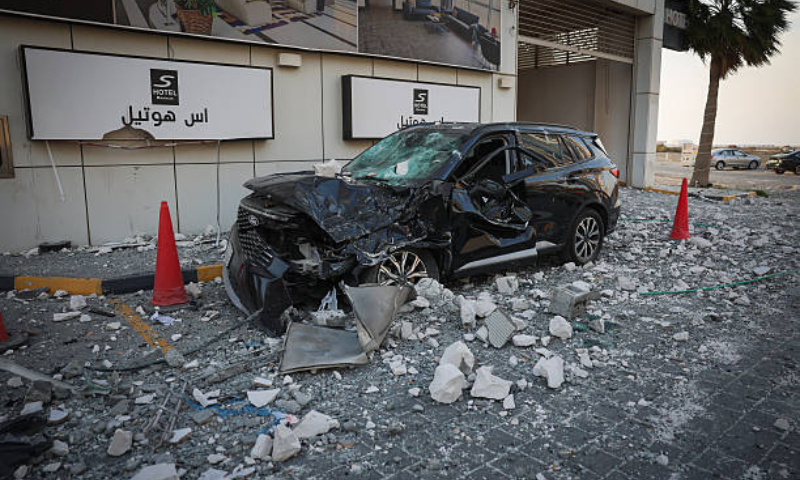
Iranian drone strikes hit the Sitra area, about five kilometres south of the capital Manama, wounding at least 32 civilians, four of them seriously, according to Bahrain’s National Communication Centre.
Children were among those injured, including a two-month-old infant, two young boys, and a 17-year-old girl. Officials said the attacks struck residential areas near energy infrastructure and caused significant damage.
Kuwait also reported incoming fire, with the National Guard saying it intercepted a drone early Monday at a protected facility.
Authorities said the interception was carried out as part of efforts to secure vital infrastructure.
The Saudi defence ministry said Monday it had thwarted a drone attack targeting an oil field in the kingdom’s east, near the Emirati border.
“Four drones heading towards the Shaybah oil field were intercepted and destroyed,” a defence ministry statement said.
Qatar’s Ministry of Defence also said its armed forces intercepted a missile attack on Monday morning, though no details on damage were immediately released.
These strikes mark an expansion of the conflict to multiple Gulf states that host US military installations and have become increasingly involved since Washington joined Israel’s campaign against Iran.
Leadership change in Iran
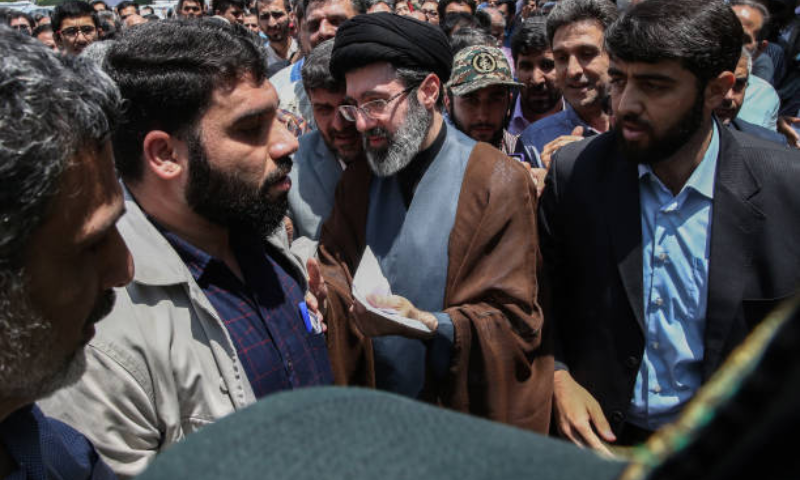
Amid the fighting, Iran named Mojtaba Khamenei as the country’s new supreme leader following the death of his father, Ayatollah Ali Khamenei, in US and Israeli airstrikes.
The 56-year-old cleric was selected by Iran’s Assembly of Experts, the body responsible for appointing the country’s top religious and political authority. With the appointment, Mojtaba Khamenei becomes Iran’s commander-in-chief and the highest authority in the Islamic Republic.
He is widely known to maintain close ties with the Islamic Revolutionary Guard Corps (IRGC), which plays a central role in Iran’s military and political system.
Iranian missile strikes on Israel
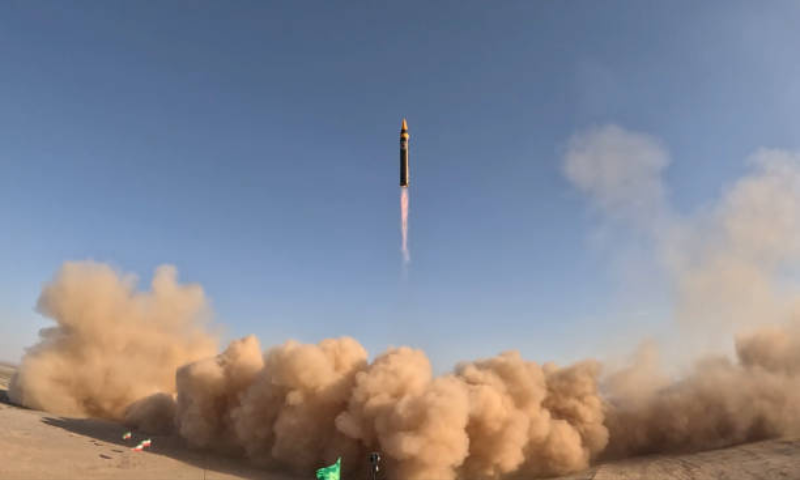
Shortly after the leadership announcement, Iran launched a fresh wave of missiles toward Israel.
State broadcaster IRIB said the attack represented the “first wave of missiles under Ayatollah Seyyed Mojtaba Khamenei.” The broadcaster also released an image of a missile bearing the slogan “At Your Command, Sayyid Mojtaba,” reflecting support for the newly appointed leader.
Tehran had earlier warned that the United States would “pay” for launching attacks on Iran, despite President Masoud Pezeshkian previously saying Iran would refrain from striking Gulf states if their territory was not used to launch attacks.
US-Israeli strikes on Iran
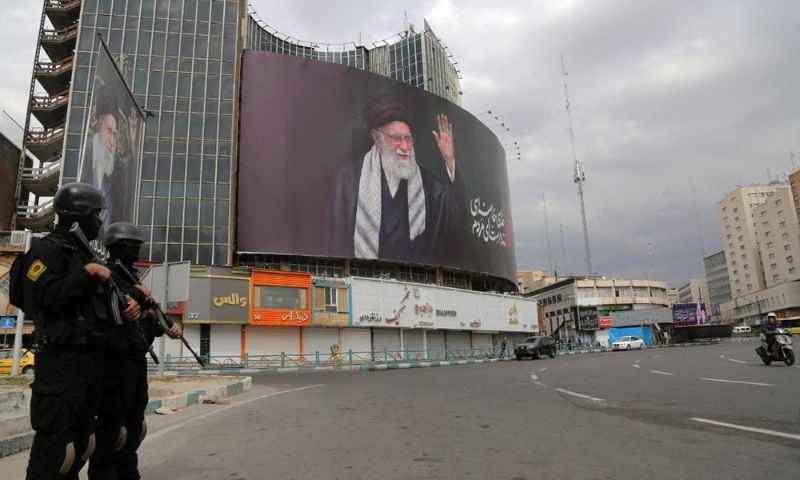
The United States and Israel have continued large-scale strikes across Iran, targeting military bases, command centres, and energy infrastructure.
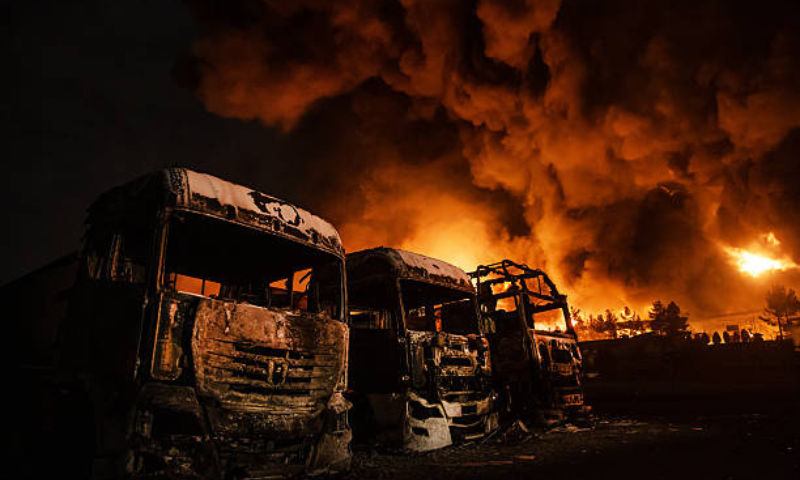
For the first time, oil storage depots and refining facilities have been struck. Local media footage over the weekend showed a massive fire at the Shahran oil depot on the outskirts of Tehran.
Israel’s military later said it targeted fuel storage sites linked to Iranian armed forces.
Civilian infrastructure has also been affected. Water desalination plants in Iran and Bahrain were reportedly hit during the recent exchanges, raising concerns that millions of people could face disruptions to basic services.
Iranian state media say at least 1,332 people have been killed in the country since the strikes began.
Seventh US Service Member Killed

The United States military said on Sunday that a service member has died from injuries sustained during an Iranian attack on American troops in Saudi Arabia, bringing the number of US personnel killed since the start of the war with Iran to seven.
US Central Command (CENTCOM) said the service member died on Saturday night from wounds received during Iran’s initial wave of attacks across the region on March 1.
The latest casualty raises the number of US troops killed since the start of combat operations against Iran to seven.
Six of the casualties were Army reservists killed in a drone strike on a US command centre at a port facility in Kuwait on March 1.
Fighting expands in Lebanon
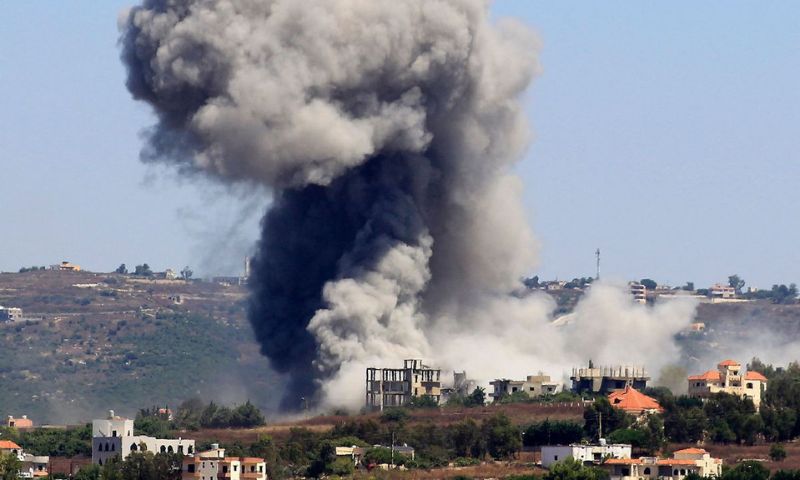
Meanwhile, fighting has intensified on the Lebanese front.
Fierce clashes were reported after Israeli forces carried out a helicopter-borne landing in eastern Lebanon’s Bekaa region near the town of Nabi Sheet, where Hezbollah maintains a strong presence.
According to Hezbollah, around 15 Israeli helicopters entered Lebanese airspace from the Syrian side of the border and deployed troops in the area. The group said its fighters engaged the forces on the ground using artillery and other weapons.
Lebanon’s state news agency also reported heavy clashes in the area as local fighters attempted to repel Israeli troops.
In Beirut, an explosion was heard on Monday in the southern suburbs, a Hezbollah stronghold. Israel’s military said it had struck infrastructure belonging to the group.
Lebanon’s health minister said Israeli strikes across the country had killed 394 people over the past week, including 83 children and 42 women.
Israel said two of its soldiers were killed in combat in southern Lebanon, the first fatalities among its forces since the latest offensive began on March 2.
Oil prices surge as Strait of Hormuz disrupted
The war has also shaken global energy markets.
Oil prices surged sharply as trading resumed Monday, rising nearly 20 percent and pushing crude above the $100-per-barrel mark. Brent crude climbed close to $110 per barrel, while US benchmark West Texas Intermediate rose to about $109.
Industry officials say production from Iraq’s major southern oilfields has dropped by about 70 percent amid the crisis.
Shipping through the Strait of Hormuz — one of the world’s most important oil routes — has also been severely disrupted, with tanker movement nearly halted due to the escalating conflict.
Diplomatic tensions intensify
There are a few signs that the conflict could ease soon.
US President Donald Trump said Washington would not accept negotiations with Iran unless it agreed to “unconditional surrender,” while regional states have urged de-escalation as the war threatens to spread further across the Middle East.
Trump says ending war ‘mutual’ decision with Israel
US President Donald Trump told news website The Times of Israel that ending the war would be a “mutual” decision taken with Israeli Prime Minister Benjamin Netanyahu, but that Washington will have the final say.
Asked whether he would decide when to end the war, Trump told the publication: “I think it’s mutual… a little bit. We’ve been talking. I’ll make a decision at the right time, but everything’s going to be taken into account.”
Israeli and US officials have said their offensive aims to stop Iran from developing nuclear weapons, and expressed hope that it would produce regime change.
Asia stocks plunge
Stock markets in South Korea and Japan fell sharply in early trade on Monday after oil prices soared above $100 per barrel for the first time in almost four years.
Macron speaks with Iran president
French President Emmanuel Macron said he spoke with Iranian counterpart Masoud Pezeshkian and urged a halt to strikes on other countries in the region.
It is the first known contact by a Western leader with Pezeshkian since the war began.
HRW: Israel used white phosphorus
Human Rights Watch accused Israel of “unlawfully” using white phosphorus over residential parts of the southern Lebanese town of Yohmor last week.
White phosphorus, a substance that ignites on contact with oxygen, can be used as an incendiary weapon and can cause fires, horrific burns, respiratory damage, organ failure, and death.