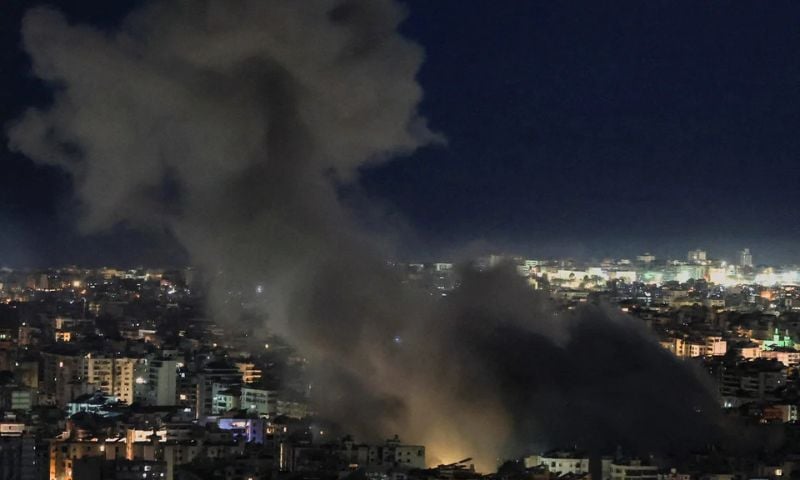
TEHRAN, Iran: Iran’s Revolutionary Guards said on Sunday the country could sustain an intense war with the United States and Israel for at least six months, as Israeli forces launched fresh strikes in Iran and Lebanon and the widening conflict sent shockwaves across the Middle East and global energy markets.
The war, which began after large-scale US and Israeli strikes against Iran on February 28, has now entered its second week and triggered attacks across several countries, including Saudi Arabia, UAE, Qatar, Jordan, Iran, Kuwait and Lebanon.
Israeli strikes targeted fuel facilities in Tehran and senior Iranian commanders in Beirut, while Iranian drones and missiles struck several areas across the Gulf.
Regional governments have warned that the conflict risks destabilising the wider Middle East and disrupting global oil supplies.
Israel launches fresh strikes
The Israeli military said it launched a new wave of strikes “across Tehran” on Sunday after targeting Iranian fuel infrastructure the previous day.
In a statement, the military said it struck “a number of fuel storage facilities in Tehran” used to operate Iranian military infrastructure.
“The military forces of the Iranian terrorist regime make direct and frequent use of these fuel tanks to operate military infrastructure,” the Israeli military said.
“Through them, the Iranian regime distributes fuel to various consumers, including military entities in Iran.”
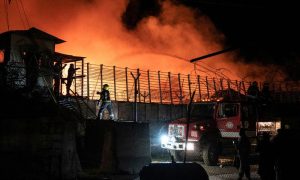
BREAKING: 🇮🇷 Fires continue to burn at the Shahran oil depot in Tehran after overnight US-Israeli strikes targeted fuel storage facilities. #Iran #Tehran #BreakingNews #IranIsraelWar #USIran #MiddleEast #OilDepot #Airstrikes #Geopolitics pic.twitter.com/Anvwy9ZP9w
— WorldNewsRank (@WNewsRankX) March 8, 2026
Explosions were reported in Tehran and in the nearby city of Karaj, according to local reports.
Israel also carried out a strike targeting “key commanders” of the Quds Force — the foreign operations arm of Iran’s Revolutionary Guards — at a hotel in central Beirut popular with tourists.
Lebanon’s health ministry said at least four people were killed when an Israeli strike hit an apartment in the Ramada hotel building in the heart of Beirut.
It was the first strike to hit the centre of the Lebanese capital since Israel–Hezbollah hostilities resumed last week.
The overall death toll from Israeli attacks in Lebanon since Monday has reached about 300 people, according to Lebanese authorities.
Iran can fight for months
Iran’s Revolutionary Guards said the country’s forces were capable of sustaining an intense war with the United States and Israel for at least six months.
Iranian President Masoud Pezeshkian said earlier remarks suggesting Tehran might suspend attacks on Gulf states had been “misinterpreted by the enemy”.
“It has repeatedly been said we are brothers and must have good relations with neighbours,” Pezeshkian said, according to state television.
“However, we are forced to retaliate to attacks but this does not mean we have a dispute with a neighbouring country or want to upset their people.”
Pezeshkian also apologised to regional states affected by Iranian strikes on US facilities.
“I personally apologise to neighbouring countries that were affected by Iran’s actions,” he said.
Drone attacks hit Gulf states
Meanwhile, the war has spread across the Gulf, with Iran launching drones and missiles toward several regional states.
Saudi Arabia said its air defences intercepted at least 15 drones that attempted to strike the diplomatic quarter in the capital Riyadh.
The Saudi defence ministry said the drones were destroyed within the kingdom’s airspace and no injuries were reported.
المتحدث الرسمي لـ #وزارة_الدفاع: إحباط محاولات استهداف بثلاث مسيّرات بعد إسقاطها في مدينة الرياض. pic.twitter.com/5cOHatBLIF
— وزارة الدفاع (@modgovksa) March 8, 2026
In Kuwait, officials said Iranian drones targeted fuel storage tanks at Kuwait International Airport early on Sunday.
Firefighters have brought the fire at the fuel storage tanks of Kuwait International Airport under control. Crews are still working to contain another fire at the headquarters of the Public Institution for Social Security.
Furthermore, U.S. forces also recorded the moment an… pic.twitter.com/DVNnuvYonq
— Basha باشا (@BashaReport) March 8, 2026
“Kuwaiti Air Defences are currently responding to hostile missile and drone threats,” the country’s defence ministry said on social media platform X.
Kuwait Ministry of Defense says they "are still dealing with a wave of hostile drones that have penetrated the country's airspace…air defense systems and warplanes are still engaging hostile aerial targets" https://t.co/ZQYwz7mp3Q pic.twitter.com/x7UCZDG17Z
— Steve Lookner (@lookner) March 8, 2026
The Kuwaiti military later said it intercepted at least three ballistic missiles that entered the country’s airspace.
Infrastructure suffered damage from debris falling after interceptions, authorities said.
Footage circulating on social media showed a high-rise building in Kuwait City engulfed in flames.
Iran’s Revolutionary Guards also targeted US forces stationed at a base in Bahrain, Iranian state media reported.
Energy markets shaken
The conflict has intensified concerns about global energy supplies.
Tehran accused the United States and Israel of striking an oil depot in the Iranian capital on Saturday.
The strike fuelled fears about supply disruptions in the Strait of Hormuz, a vital maritime corridor through which about one-fifth of global oil and gas shipments pass.
Kuwait’s national oil company said it had begun cutting crude production amid the growing security threat to regional energy infrastructure.
Earlier production cuts had also been reported in Iraq and Qatar.
Global oil prices have surged to multi-year highs while stock markets have fallen sharply.
Analysts say the conflict is already disrupting logistics and international business links across the region.
Iran’s ambassador to the United Nations, Amir Saeid Iravani, said US-Israeli strikes have killed at least 1,332 Iranians and wounded thousands.
Iranian attacks have killed 10 people in Israel.
At least six US service members have also been killed since the war began, according to US officials. Their remains arrived on Saturday at an Air Force base in Delaware.
US officials also told Reuters that American forces were likely responsible for an apparent strike on a girls’ school in Iran that killed 153 children.
However, US President Donald Trump said Iran was responsible.
“We think it was done by Iran because they are very inaccurate with their munitions,” Trump told reporters on Saturday. “They have no accuracy whatsoever.”
US Defence Secretary Pete Hegseth said the incident remained under investigation.
Intelligence report questions regime change
A classified assessment by the US National Intelligence Council concluded that even a large-scale military campaign would be unlikely to dismantle Iran’s political system, according to a report by The Washington Post.
The analysis examined scenarios including the killing of senior leaders and strikes against state institutions.
Intelligence officials assessed that Iran’s leadership and the Revolutionary Guards would likely maintain continuity through established succession mechanisms.
The report also suggested opposition groups inside Iran lack the organisation necessary to seize power in the event of leadership disruption.
The assessment raises questions about President Trump’s stated objective of removing Iran’s leadership and installing a new government aligned with Washington.
Meanwhile, huge explosions were reported in parts of Tehran as Israel said it had struck Iranian missile sites and command centres.