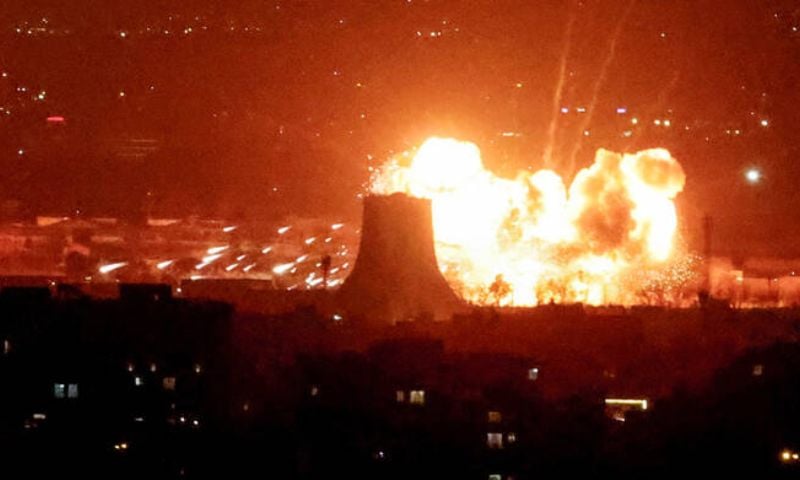
MANAMA: Artificial intelligence is increasingly being used to create misleading visuals related to the ongoing conflict in the Middle East, contributing to the spread of misinformation online.
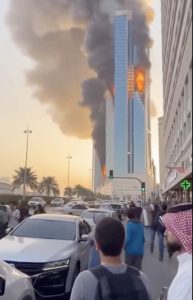
According to AP News, a widely shared video on social media appeared to show flames, smoke and debris rising from the top of a high-rise building in Bahrain as crowds looked on. Users claimed the building had been struck during an Iranian attack amid the conflict involving Iran, the United States and Israel. However, the footage was later found to be AI-generated and not real.
Experts say advances in artificial intelligence have made it easier to produce convincing but false content during conflicts.
“The content that’s coming from state actors tends to be a little better targeted,” said Melanie Smith, senior director of policy and research on information operations at the Institute for Strategic Dialogue. “They have a very clear kind of narrative structure and the videos are just used to support some kind of statement they want to make about the conflict and about the kind of geopolitical situation writ large.”
AI-generated material
Analysts warn that AI-generated material is helping to accelerate the spread of misinformation in ways that were not possible during earlier conflicts. When combined with coordinated disinformation campaigns and censorship by state-linked actors, it creates a wider information gap in which accurate details can become harder to verify.
Meanwhile, social media platforms have begun introducing measures to address the issue. Nikita Bier, head of product at X, said the platform would suspend users from its revenue-sharing programme if they post AI-generated content related to armed conflicts without clearly disclosing that it was created using artificial intelligence.