


WASHINGTON: When the United States led the 1991 Gulf War, President George H.W. Bush emphasized the strength of a broad international coalition that included countries from Europe, the Middle East, and Asia.
More than a decade later, when President George W. Bush invaded Iraq in 2003, the operation faced intense global criticism but still relied on several long-standing American allies.
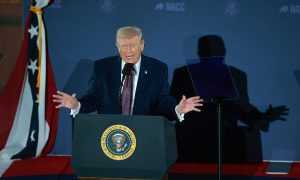
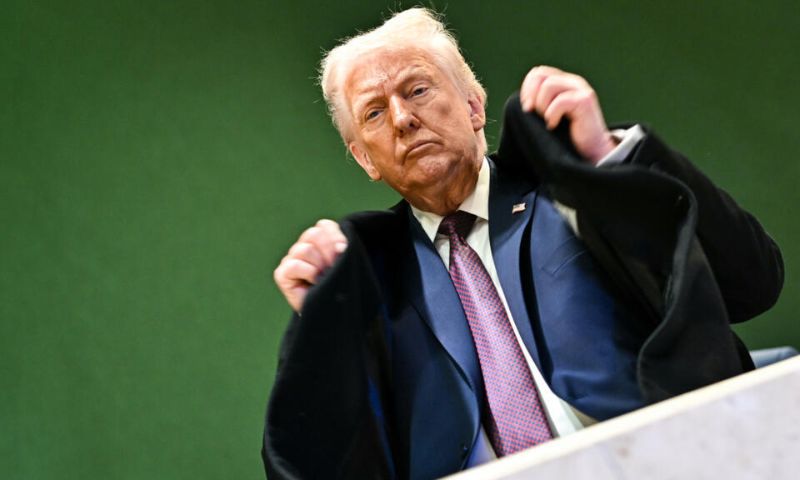
Today, the geopolitical landscape appears markedly different. In the current war involving Iran, President Donald Trump has taken military action with far less international support, acting primarily in coordination with Israel and with limited efforts to build a broader coalition, reports AFP.
Israel had long urged Washington to confront Iran militarily, arguing that Iran’s policies posed a strategic threat in the region. When the United States launched the attack, Israel stood as its principal partner in the operation.
However, beyond this partnership, Washington has struggled to gather widespread diplomatic backing.
Instead of seeking consensus among allies, the administration has focused largely on pressuring governments to cooperate and criticizing those that declined to participate.
Tensions with Traditional Allies
According to AFP, relations with several traditional partners became strained during the lead-up to the conflict.
President Trump publicly criticized Britain, describing the country as “very, very uncooperative,” and questioned the leadership of Prime Minister Keir Starmer.
The British government allowed U.S. warplanes to use two military bases but limited their use strictly to defensive operations, emphasizing that it did not support attempts at “regime change from the skies.”
Spain also resisted Washington’s request to use its bases for offensive operations. After Spanish Prime Minister Pedro Sánchez declined the request, Trump threatened to suspend trade relations with Madrid.
These tensions highlighted a growing divide between Washington and some European governments over the legitimacy and strategy of the military campaign.
Bypassing International Institutions
The United States and Israel launched their military campaign without seeking authorization from the United Nations, a step that drew criticism from analysts and several governments.
Kristina Kausch, deputy managing director at the German Marshall Fund, said the move signaled a significant shift in Washington’s approach to international norms.
According to her assessment, the decision conveyed the message that the United States believed it could act independently of international legal frameworks without needing to justify the action through global institutions.
She added that the longer-term diplomatic impact would depend largely on how the conflict unfolds and whether the consequences prove destabilizing.
European governments have also been unsettled by broader U.S. policies under Trump, including disputes with allies and controversial proposals such as the suggestion that the United States could seek control over Greenland, an autonomous territory of Denmark.
“America First” and a Nation-State Focus
Trump’s foreign policy has consistently emphasized the idea that the United States should act independently when its national interests are at stake.
During his presidency, Washington withdrew from or reduced participation in several international organizations and agreements, arguing that multilateral frameworks often limited American strategic freedom.
Nadia Schadlow, who served as deputy national security adviser during Trump’s first administration, said the Iran conflict illustrates the limits of international institutions in preventing wars.
She argued that while organizations like the United Nations provide platforms for dialogue and cooperation, they cannot stop military conflicts when a country believes its security interests require decisive action.
According to Schadlow, the decision-making process likely prioritized operational security and the element of surprise over prolonged diplomatic consultations.
Mixed International Reactions
While many countries expressed concern about the escalation, a few governments offered support for Washington’s position.
Leaders in Argentina and Paraguay backed the military action, as did Australian Prime Minister Anthony Albanese, whose country has historically fought alongside the United States in several major conflicts.
Albanese said the action was intended to prevent Iran from developing nuclear weapons, while Canada’s Prime Minister Mark Carney voiced similar concerns but also called for efforts to reduce tensions and prevent further escalation.
Several European leaders took more cautious positions. French President Emmanuel Macron said the attack risked violating international law, while German Chancellor Friedrich Merz expressed hope that the conflict would end quickly and not expand further.
A Controversial Naval Strike
One incident that drew particular attention occurred in the Indian Ocean. A U.S. naval strike sank an Iranian warship shortly after it had completed a goodwill visit to India. The attack took place off the coast of Sri Lanka and reportedly killed at least 84 sailors.
The operation followed statements by U.S. Defense Secretary Pete Hegseth, who had argued that restrictive rules of engagement could hinder military effectiveness.
The strike raised diplomatic sensitivities because the vessel had recently visited an Indian port, highlighting the complexity of military operations in regions where multiple strategic partners operate.
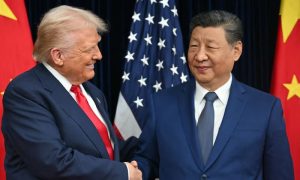
Possible Strategic Gains for China
While Iran has historically maintained close relations with both Russia and China, neither country directly intervened militarily in response to the conflict.
However, analysts suggest that the war could still have indirect consequences for global power dynamics.
Jacob Stokes, a senior fellow at the Center for a New American Security, noted that U.S. forces are consuming significant quantities of military equipment, including missiles and precision-guided munitions.
These resources could otherwise be critical in a potential future conflict in the Asia-Pacific region, particularly in scenarios involving Taiwan, which China claims as its territory.
At the same time, Beijing can observe American operational tactics and capabilities during the conflict, potentially gaining valuable insights into U.S. military strategies.
Stokes said Chinese strategists have historically viewed periods when the United States is heavily engaged in Middle Eastern conflicts as opportunities to expand influence elsewhere.
“If the United States becomes deeply tied up in another prolonged Middle East conflict,” he said, “it could create strategic space for China to strengthen its position globally.”
A Changing Global Order
The current conflict underscores a broader shift in international relations.
Unlike earlier American-led wars that relied on extensive alliances, the campaign against Iran reflects a more unilateral approach to foreign policy. Support from some partners exists, but the absence of a large coalition highlights the changing dynamics of global power and diplomacy.
Whether the conflict strengthens or weakens Washington’s global standing will depend not only on the outcome of the war but also on how its political, economic, and strategic consequences unfold in the months and years ahead.