


TEHRAN: Iran’s Health Ministry said the death toll from joint US and Israeli attacks on the country has risen to 926.
Health Ministry spokesperson Hossein Kermanpour said 6,186 people had been wounded in strikes.
In a statement posted on X, Kermanpour said 2,054 of the wounded were currently receiving treatment in hospitals.
Another 3,545 people had been treated and discharged, while 552 received medical care at the scene of the attacks.
He added that doctors had performed 502 surgical operations on the wounded so far.
Casualties breakdown
Women accounted for 13 percent of those killed, while men made up 87 percent, according to the ministry.
Kermanpour said 180 of the victims were under the age of 18, including three children younger than five.
The youngest fatality was a one-year-old child in Tehran.
Among the wounded, 301 were under the age of 18, and 39 were younger than five.
The youngest injured person was a six-month-old boy, while the oldest was a 91-year-old man.
The latest figures come after the United States and Israel launched a large-scale offensive against Iran on Saturday, striking Tehran and other major cities.
Iranian officials say the attacks killed several senior figures, including Supreme Leader Ayatollah Ali Khamenei and top military commanders.
Tehran has since launched repeated waves of drones and missiles aimed at Israel as well as Gulf states hosting American military facilities.
Israel’s military said Thursday it had conducted “broad-scale” air strikes against targets in Tehran, though it did not provide details about the sites hit.
The raids followed earlier Israeli attacks on dozens of facilities linked to Iran’s internal security forces and the Basij paramilitary organisation in the capital.
Fresh Iranian missile launches
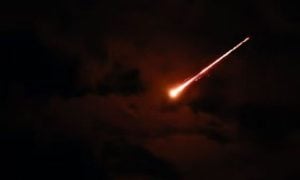
Iran fired another salvo of missiles toward Israel early Thursday, triggering air raid sirens in several areas including Tel Aviv, according to Israeli military statements and Iranian state media.
There were no immediate reports of casualties.
Israeli Prime Minister Benjamin Netanyahu’s office said Israel and the United States had achieved “historic gains” in the war.
Fighting spreads to Lebanon
The conflict has also intensified in neighbouring Lebanon.
An Israeli air strike struck Hezbollah’s stronghold in southern Beirut early Thursday after residents were warned to evacuate the area.
Elsewhere in the capital, three people were killed when Israeli strikes hit vehicles along the road leading to Beirut’s airport, Lebanon’s health ministry said.
Authorities had earlier reported that at least 72 people had been killed and more than 83,000 displaced since the latest confrontation between Israel and Hezbollah erupted.
Missile intercepted near Turkish airspace
A ballistic missile launched from Iran and travelling through Iraqi and Syrian airspace toward Turkey was intercepted by NATO air defence systems, Turkish officials said.
The Turkish defence ministry did not specify the missile’s intended target.
The interception came as Iran continued missile strikes across the region in response to the US-Israeli campaign.
Trump hails US military operations
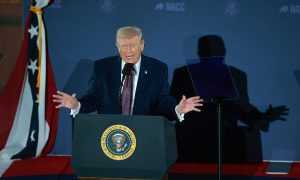
US President Donald Trump praised the performance of American forces in the conflict.
“We’re doing well on the war front, to put it mildly. Somebody said on a scale of 10, where would you rate it? I said about a 15,” Trump told a gathering of technology executives.
China offers mediation
China said it would send a special envoy to help mediate the escalating crisis.
Foreign Minister Wang Yi said Beijing supported Iran’s right to defend its sovereignty but urged both Washington and Israel to halt their attacks.
Rising tensions in the Gulf
The war has triggered diplomatic tensions across the region.
Qatar’s Prime Minister Sheikh Mohammed bin Abdulrahman Al Thani criticised Iran’s foreign minister during a phone call, accusing Tehran of attempting to draw neighbouring countries into the conflict.
Turkey also summoned Iran’s ambassador after a missile — apparently aimed at a military installation in Cyprus — landed on Turkish territory.
Shipping disruption
The fighting has also begun affecting international trade routes.
Danish shipping company Maersk said it had suspended bookings in the Gulf following a security assessment.
The company had earlier halted ship movements through both the Suez Canal and the Strait of Hormuz, a vital corridor for global oil shipments.
Other shipping firms have announced similar measures.
Strait of Hormuz tensions
The Omani navy rescued 24 crew members from a container vessel struck by missiles in the Strait of Hormuz.
Iranian forces meanwhile claimed they had taken “complete control” of the strategic waterway.
The claim followed remarks by Trump that the US Navy was prepared to escort oil tankers through the strait if necessary.
Iranian warship sunk near Sri Lanka
The conflict has also reached the Indian Ocean.
At least 80 people were killed after a US submarine torpedoed and sank an Iranian naval vessel near Sri Lanka, according to the island nation’s deputy foreign minister.
US Defence Secretary Pete Hegseth confirmed during a Pentagon briefing that an American submarine had sunk the ship.
“An Iranian warship that thought it was safe in international waters — instead it was sunk by a torpedo,” Hegseth said.
He described the incident as the first time since World War Two that a US submarine had sunk an enemy vessel in such a manner.
Sri Lanka’s navy said it had received a distress call from the Iranian vessel IRIS Dena before it sank around 40 kilometres south of the island.
Documents aboard the ship suggested roughly 180 crew members had been on board.
Sri Lankan forces rescued 32 injured sailors and transported them to a hospital in Galle, about 115 kilometres south of Colombo.
Two naval ships and an aircraft were deployed to assist in the rescue operation.
“We responded to the distress call under our international obligations, as this is within our search and rescue area,” navy spokesman Buddhika Sampath said.
Officials said hopes of finding additional survivors were diminishing as search operations continued.
US signals deeper strikes
At the Pentagon, Hegseth described the results of US operations so far as “incredible, historic really”.
“They are toast, and they know it,” he said, referring to Iran’s leadership.
“This was never meant to be a fair fight, and it’s not a fair fight,” he added. “More and larger waves are coming. We are just getting started.”
He said US forces would extend operations deeper into Iranian territory in the coming days.
Chairman of the Joint Chiefs of Staff Dan Caine said future strikes would increasingly target sites further inland.
Heavy aerial exchanges continue
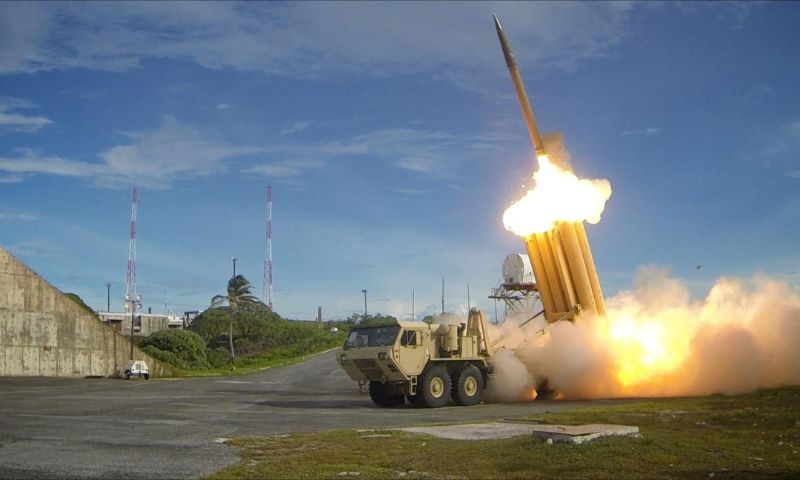
Iran’s Islamic Revolutionary Guard Corps said it had destroyed a second US Terminal High Altitude Area Defense (THAAD) missile defence system in the region using precision-guided missiles.
It said the radar of another THAAD system deployed at a US base in the United Arab Emirates had been destroyed earlier.
“The destruction of the anti-missile systems has provided our forces with greater freedom to successfully hit their targets,” the IRGC said in a statement carried by Sepah News.
There has been no confirmation from Washington or the UAE.
Iran’s army also said its air defence units had shot down six Israeli Hermes drones during the past 24 hours in several provinces including Isfahan, Kermanshah, East Azerbaijan, Khuzestan and Tehran.
Officials said that since the war began, Iranian forces had downed 35 advanced drones belonging to what they described as hostile forces.
Meanwhile Israel’s air force said it had dropped more than 5,000 munitions on Iran since the start of the campaign, focusing heavily on targets around Tehran.
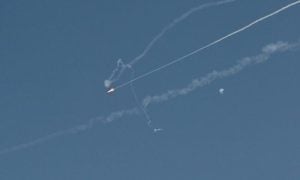
The Israeli military also said it had detected further missiles launched from Iran and that its air defence systems were working to intercept them.