JERUSALEM: The Israeli opposition has announced plans to boycott Indian Prime Minister Narendra Modi’s address in the Knesset during his visit starting Wednesday, top Israeli daily Haaretz reported on Tuesday.
The opposition, led by Yair Lapid, is protesting Knesset Speaker Amir Ohana’s decision not to invite Supreme Court President Isaac Amit to attend the special parliamentary session, a customary practice.
Lapid has called on Prime Minister Benjamin Netanyahu to ensure Amit’s invitation. In a post on X, he said: “We want to be in the session; we need to be in the session. Prime Minister Netanyahu must instruct Ohana to allow us to participate.”
שב ומפציר בראש הממשלה נתניהו להורות ליו״ר הכנסת לא להחרים את נשיא בית המשפט העליון ולאפשר לאופוזיציה להשתתף בישיבה החגיגית לכבוד ראש ממשלת הודו נרדרה מודי.
הפריימריז של אוחנה לא חשובים יותר מהיחסים עם בעלת ברית גדולה שהיא אחת המדינות החשובות בעולם. אנחנו רוצים להיות בישיבה,…
— יאיר לפיד – Yair Lapid (@yairlapid) February 23, 2026
He warned that excluding Justice Amit would also mean a boycott of the opposition and emphasized that the boycott was not intended to embarrass India, stating: “We do not want India to be embarrassed, with the leader of a nation of one and a half billion people standing here before a half-empty Knesset.”
According to Haaretz, the Indian embassy was reportedly “in a panic” over the unfolding dispute.
In response, Speaker Ohana said he would invite former lawmakers to fill the seats of boycotting opposition members. He also urged Lapid not to damage Israel’s foreign relations with “one of the most significant powers in the world,” describing the boycott as an “illegitimate weapon in a political struggle.”
The confrontation comes amid the Israeli government’s efforts to advance legislation aimed at overhauling the judiciary’s powers, a move that has triggered ongoing political tensions.
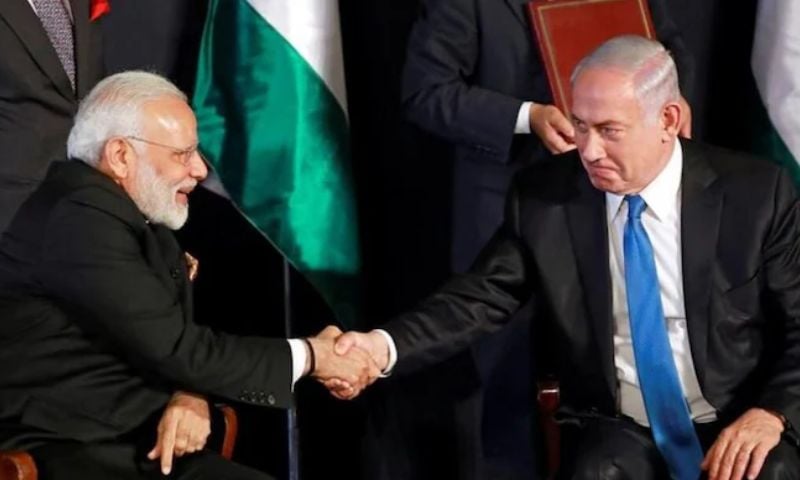
Modi’s 2017 visit to Israel marked the first-ever trip by an Indian prime minister, widely seen as reshaping the trajectory of bilateral relations. Netanyahu made a reciprocal visit to India in 2018, further consolidating political and strategic engagement.
The Indian government is facing mounting criticism ahead of Prime Minister Narendra Modi’s visit, with human rights groups accusing New Delhi of drawing closer to Tel Aviv despite the ongoing war in Gaza.
Israel’s military campaign, now entering its third year, has caused widespread devastation and drawn intense international scrutiny.
Gaza-based health authorities say more than 72,000 Palestinians have been killed and over 171,000 wounded, many of them women and children, while the United Nations estimates that nearly the entire population of 2.1 million has been displaced at least once, amid persistent shortages of food, water, and medicine despite a fragile truce.
Critics argue that Modi’s visit — expected to focus on defence, technology, and strategic cooperation — risks signaling political endorsement at a time when global pressure on Israel is intensifying.