


KEY POINTS
- President Pezeshkian vows Iran will not bow to pressure over its nuclear programme.
- Trump considers a limited strike while ordering a major Middle East naval build-up.
- Iran’s Foreign Minister says a draft agreement with Washington could be ready in two to three days.
- Geneva talks focus on keeping Iran’s nuclear programme peaceful.
- Trump sets a 10–15 day deadline for a nuclear deal, warning of “bad things”.
- US Congress seeks to limit Trump’s authority for strikes without approval.
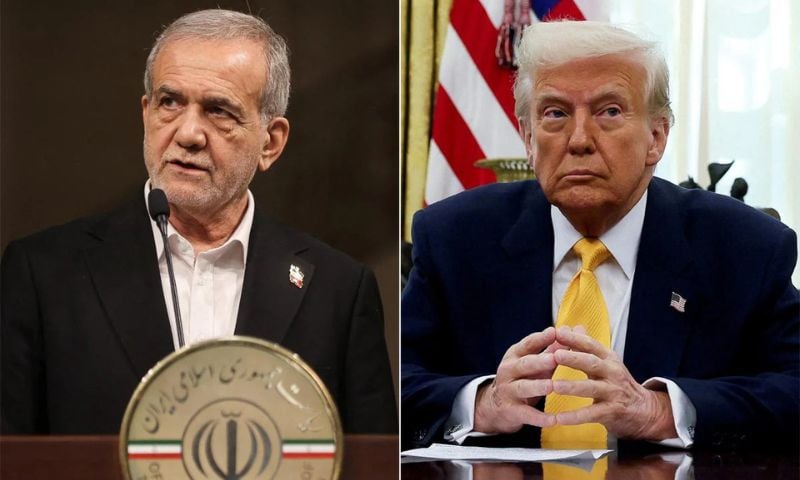
TEHRAN, Iran: Iranian President Masoud Pezeshkian said on Saturday that Tehran would not bow to pressure from world powers, as the United States warned of potential military action over Iran’s nuclear programme.
“World powers are lining up to force us to bow our heads … but we will not bow our heads despite all the problems that they are creating for us,” Pezeshkian said in a speech broadcast live on state television.
The comments follow US President Donald Trump’s warning that he was considering a limited strike on Iran, after ordering a major naval build-up in the Middle East aimed at pressuring Tehran to reach a deal over its nuclear programme.
US-Iran nuclear talks
Iranian Foreign Minister Abbas Araqchi said a draft proposal for a potential agreement with Washington could be ready within days, following indirect talks in Geneva earlier this week.
After the talks in Geneva, Tehran said the two sides had agreed to submit drafts of a potential agreement, which Iranian Foreign Minister Abbas Araghchi told US media would be the “next step”.
“I believe that in the next two, three days, that would be ready, and after final confirmation by my superiors, that would be handed over to Steve Witkoff,” he said, referring to Trump’s main Middle East negotiator.
Araqchi told US broadcaster MS NOW that the discussions focused on ensuring Iran’s nuclear programme “is peaceful and would remain peaceful forever,” without the United States demanding a complete suspension of uranium enrichment.
“We have not offered any suspension, and the US side has not asked for zero enrichment,” Araqchi said, contradicting statements from American officials.
On Thursday, Trump gave Iran a deadline of 10 to 15 days to reach a deal on its nuclear programme or face what he called “really bad things”.
Asked on Friday whether he was considering a limited strike, Trump said at the White House: “I guess I can say I am considering it.”
“They better negotiate a fair deal,” he added.
The White House later said the president had been clear that Iran “cannot have nuclear weapons or the capacity to build them, and that they cannot enrich uranium”.
A second White House official said Trump’s foreign policy agenda had delivered “wins for the American people” and insisted that all actions put “America First”.
US military build-up
Trump has ordered a significant US military deployment in the region, including the aircraft carrier USS Gerald R. Ford entering the Mediterranean Sea, transiting the Strait of Gibraltar on Friday.
Washington had already stationed the USS Abraham Lincoln and escort vessels in the Gulf in January.
Two US officials told Reuters that military planning had reached an advanced stage.
Options under review include targeting specific Iranian individuals and potentially pursuing leadership changes if authorised by Trump.
However, a senior White House official said there is no unified support within the administration for launching an attack.
The debate highlights political divisions in Washington over the risk of another Middle East conflict.
US Congress weighs war powers
Trump’s focus on Iran has drawn concern from advisors urging him to focus on domestic economic issues ahead of November’s midterm elections.
Republican strategists warned that a prolonged conflict could alienate voters sceptical of foreign engagements.
A senior White House official noted that advisers wanted to avoid a “distracted message” to undecided voters, emphasising domestic concerns such as the cost of living.
Republican campaign officials intend to focus on tax cuts and measures to lower housing and prescription drug costs.
Lawmakers in Congress have proposed legislation to restrict Trump’s authority to launch military action against Iran without explicit congressional approval.
Democratic Senator Tim Kaine and Republican Senator Rand Paul introduced a resolution last month to block hostilities unless authorised by Congress.
In the House of Representatives, Republican Thomas Massie and Democrat Ro Khanna said they would seek a vote next week on similar legislation.
“Trump officials say there’s a 90 percent chance of strikes on Iran. He can’t without Congress,” Khanna wrote on X.
Republican leadership in both chambers has so far blocked such efforts, arguing that Congress should not constrain the president’s national security powers during heightened tensions.
Diplomatic urgency
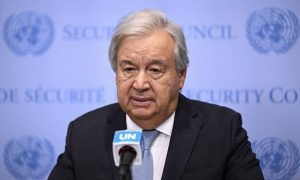
United Nations spokesperson Stephane Dujarric urged both sides to continue diplomatic engagement, warning against heightened rhetoric and military escalation.
Araqchi stressed that military action would complicate negotiations and could delay a diplomatic resolution.
The United States and Israel bombed Iranian nuclear facilities and military sites in June, after which Trump renewed threats of further strikes.
US military assets have reportedly been repositioned in the region in preparation for potential sustained operations lasting weeks, if diplomacy fails.