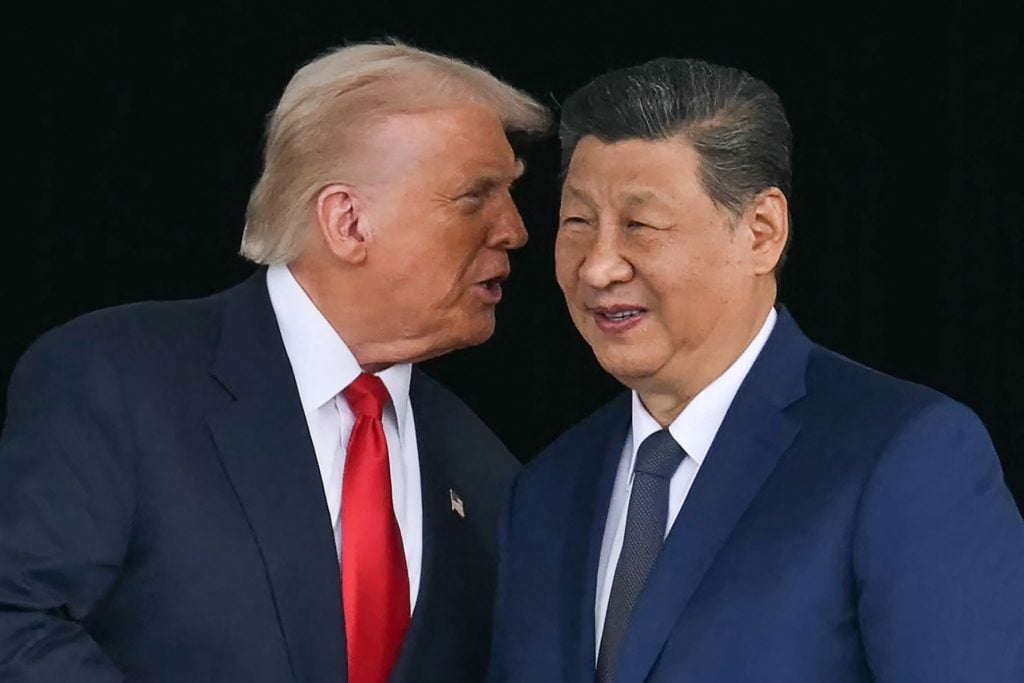
WASHINGTON: US President Donald Trump will travel to China for a three-day visit beginning March 31, the White House confirmed Friday, in what is expected to be a pivotal moment for fragile US-China trade relations.
The trip — ending April 2 — will focus heavily on talks with Chinese President Xi Jinping, particularly around extending a trade truce that had paused further tariff escalation between the world’s two largest economies.
Supreme Court Blow to Trump’s Tariff Strategy
The announcement comes just hours after the US Supreme Court struck down Trump’s global tariff campaign imposed under the International Emergency Economic Powers Act (IEEPA), ruling that the president overstepped his authority.
The 20% tariffs on Chinese exports to the US — tied to national emergency claims over fentanyl distribution and trade imbalances — now face legal uncertainty.
However, other duties on Chinese goods imposed under Section 301 and Section 232 trade laws remain in place.
At a press conference, Trump said he would move forward with a new 10% global tariff for 150 days, signaling his intention to continue leveraging trade tools despite the legal setback.
Ruling Raises Questions for Bilateral Ties
The Supreme Court’s decision injects fresh uncertainty into US-China relations, which had recently stabilized after Trump reduced tariffs in exchange for Chinese measures — including action against illicit fentanyl flows and a pause in export restrictions on critical minerals.
Analysts say Beijing may view the ruling as weakening Trump’s negotiating position.
Scott Kennedy, a China economics expert at the Center for Strategic and International Studies, said the tariff defeat likely “cements his weakness in their eyes,” noting that Beijing’s leverage over rare earth mineral exports remains a key pressure point.
Trade, Taiwan, and Strategic Tensions
The upcoming visit will mark the first in-person talks between Trump and Xi since their October meeting in South Korea, where both sides agreed to the temporary trade truce.
While Taiwan was largely sidestepped during that meeting, Xi recently raised concerns over US arms sales to the self-governed island.
China considers Taiwan part of its territory, a claim rejected by Taipei. The United States maintains formal diplomatic ties with Beijing but remains Taiwan’s most important arms supplier under US law.
A ‘Wild’ Visit Ahead
Trump, known for his dramatic diplomacy, hinted at the significance of the trip.
“That’s going to be a wild one,” he told foreign leaders in Washington. “We have to put on the biggest display you’ve ever had in the history of China.”
Beijing has not officially confirmed the visit dates.
Trump’s last visit to China was in 2017, making this his first return trip in nearly a decade — and one that could redefine trade, tariffs, and geopolitical calculations between Washington and Beijing.