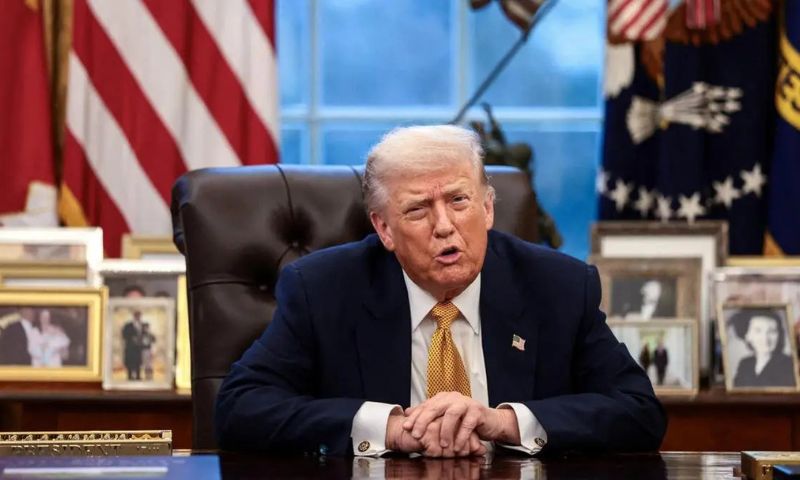



WASHINGTON, DC: President Donald Trump has announced plans to impose a new 10 percent global tariff on US trading partners, hours after the Supreme Court of the United States struck down the legal basis for his earlier sweeping trade measures.
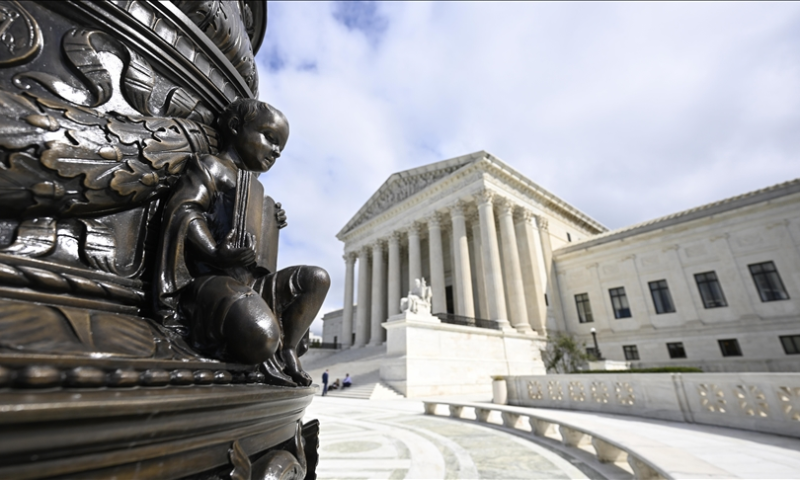
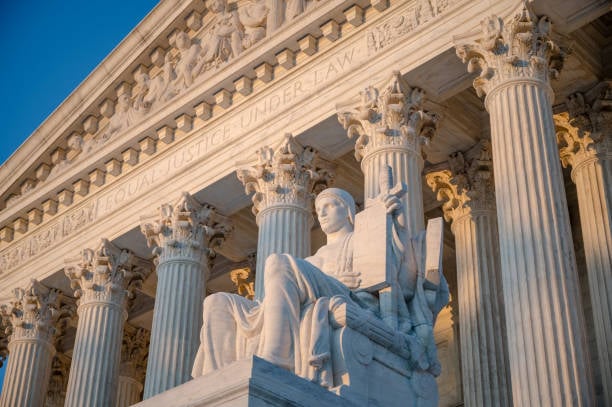
In a 6–3 decision on Friday, the conservative-majority court ruled that the 1977 International Emergency Economic Powers Act (IEEPA) does not grant the president authority to impose tariffs.
The judgment marks one of the most significant judicial setbacks for Trump since he returned to the White House last year.
“IEEPA contains no reference to tariffs or duties,” Chief Justice John Roberts wrote in the majority opinion, concluding that Trump’s use of the law to levy import taxes exceeded presidential authority.
The US Constitution assigns Congress — not the president — the power to impose taxes and tariffs. The court noted that had lawmakers intended to grant such sweeping powers under IEEPA, “it would have done so expressly.”
Trump signals ‘alternative authorities’
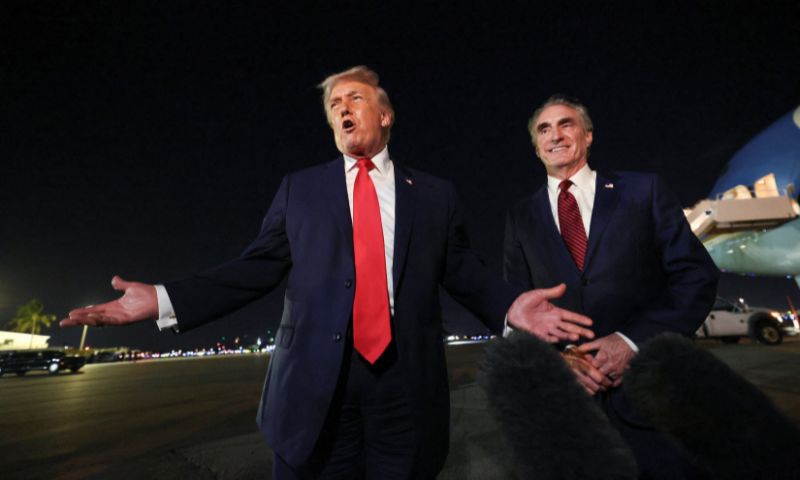
Speaking to reporters after the ruling, Trump said he would continue his tariff strategy under different legal provisions.
“All the deals — we’re just going to do it a different way,” he said, insisting that trade agreements negotiated under the threat of tariffs would remain intact. He specifically referenced India, saying, “The India deal is on.”
Trump also argued that the court’s decision ultimately clarified presidential trade powers rather than weakened them. “In order to protect our country, a president can actually charge more tariffs than I was charging in the past,” he said.
The president praised Justice Brett Kavanaugh, the only Trump appointee to side with him, who dissented alongside Justices Clarence Thomas and Samuel Alito. Three conservative justices joined the court’s liberal members in the majority.
Trade war tool curtailed
Trump has made tariffs a central pillar of his economic and foreign policy, launching a global trade war during his second term that unsettled financial markets and strained ties with allies.
He became the first US president to invoke IEEPA to impose tariffs, arguing that national emergencies — including drug trafficking and trade imbalances — justified extraordinary action. The law has historically been used to freeze assets or sanction adversaries, not to set tariff rates.
The case was brought by businesses and 12 US states, most led by Democrats, who argued that Trump had overstepped executive authority.
Economic stakes
Economists at the Penn Wharton Budget Model estimated that more than $175bn had been collected under tariffs imposed via IEEPA — funds that may now need to be refunded.
The Congressional Budget Office projected that if all tariffs remained in place, they could generate roughly $300bn annually over the next decade. US net customs duty receipts reached a record $195bn in fiscal year 2025, according to Treasury Department data.
However, the administration has not released updated tariff revenue figures since mid-December 2025.
Treasury Secretary Scott Bessent and other officials have indicated the administration may rely on other statutory authorities, including national security provisions and laws permitting retaliatory measures against countries deemed to engage in unfair trade practices.
Analysts note, however, that these alternatives may lack the breadth and speed that IEEPA offered.
Global reaction cautious
Canada welcomed the ruling, with International Trade Minister Dominic LeBlanc saying it affirmed that the tariffs were “unjustified.” However, sector-specific duties on steel, aluminium, and automobiles remain in force.
The European Union said it was studying the decision carefully. EU trade spokesperson Olof Gill said Brussels remained “in close contact” with Washington, emphasising that businesses depend on stability and predictability in transatlantic trade.
The United Kingdom also said it would assess how the ruling could affect its trade arrangements with the US.
Markets respond
Financial markets reacted positively to the ruling. Major US stock indexes rose immediately after the decision, while Europe’s STOXX 600 extended gains. Shares of European luxury brands, including LVMH and Hermès, climbed following the announcement.
US Treasury yields edged higher, and the dollar weakened after the court’s decision, though it remained on track for its strongest weekly performance since October.
Gold prices retreated from earlier highs as investors reassessed risk.
Despite the legal setback, Trump signalled that tariffs will remain central to his approach to global trade, suggesting the dispute between the executive and judiciary over the limits of presidential power is far from over.