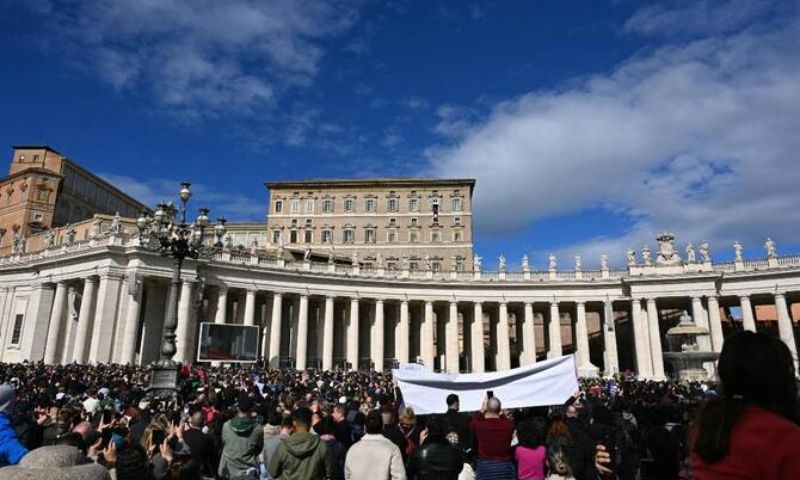
WASHINGTON: The Vatican will not participate in US President Donald Trump’s proposed “Board of Peace,” Cardinal Pietro Parolin — the Vatican’s Secretary of State and chief diplomat — said Tuesday, stressing that international crises should be handled through the United Nations.
Parolin, the second-highest-ranking official in the Holy See after the pope, said the Vatican declined involvement due to the initiative’s “particular nature,” reiterating its long-standing position that the UN should lead efforts to manage global conflicts.
According to Reuters, Pope Leo, the first US-born pope and a critic of some Trump policies, was invited to join the board in January but will not take part. The pope has repeatedly spoken out about conditions in Gaza and rarely joins international boards.
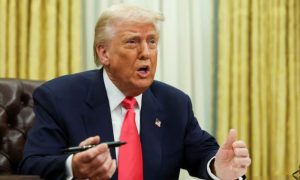
The initiative, launched under Trump’s Gaza plan that produced a fragile October ceasefire, was initially intended to oversee Gaza’s temporary governance. Trump later said the body—chaired by him—would expand to address global conflicts. Its first meeting is set for Thursday in Washington to discuss Gaza’s reconstruction, Reuters reported.
Italy and the European Union said they would attend only as observers. Rights experts have criticized the board as resembling a colonial structure and for excluding Palestinian representation, warning it could undermine the UN.
“Trump’s Board of Peace” refers to a proposed US-led initiative linked to President Donald Trump’s Gaza plan, reportedly designed to oversee temporary governance and reconstruction efforts in the territory following a ceasefire.
Unlike formal multilateral mechanisms under the United Nations, the board is described as a US-chaired body operating outside the UN framework, with a broader mandate that could extend to other global conflicts.
Critics argue that its structure and composition raise concerns about representation and legitimacy, while supporters frame it as a pragmatic mechanism to manage post-conflict stabilization and rebuilding.