DHAKA: Voting began across Bangladesh on Thursday in the country’s first general election since a dramatic student-led uprising in 2024 toppled longtime prime minister Sheikh Hasina, marking a pivotal test of the South Asian nation’s return to democratic rule.
Polling stations opened under heightened security following a tense election eve marked by arrests, large cash seizures, social media warnings, and scattered violence in several districts.
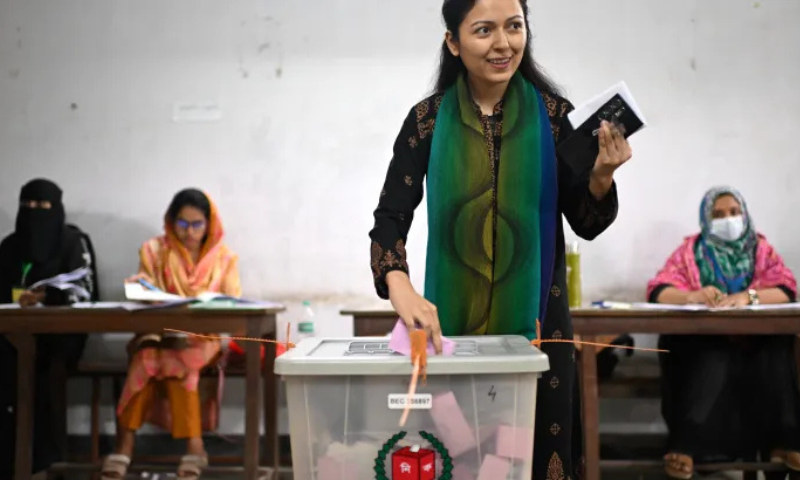
Queues formed outside polling stations in the capital, Dhaka, as voting opened in the closely watched election in the South Asian nation of 170 million people.
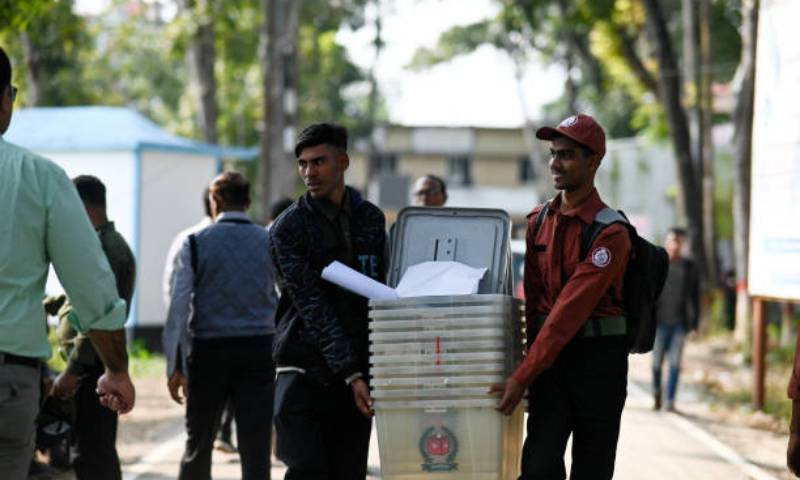
More than 300,000 soldiers and police have been deployed nationwide, with UN experts warning ahead of the vote of “growing intolerance, threats and attacks” and a “tsunami of disinformation”, particularly targeting millions of young first-time voters.
“I voted in 1991, and today, after many years, I cast my vote here,” said Nur Alam Shamim, 50, who was among the first to vote at New Model Degree College in the Dhaka-10 constituency.
Shithi Goswami, 21, a student at Dhaka City College, arrived early to avoid the crowds.
“This was my first vote, and I hope after everything we went through in the last few years, now is the time for something positive,” she said.
Tarique Rahman, 60, says he is confident his Bangladesh Nationalist Party (BNP) can return to power — but he faces a strong challenge from the Muslim-majority country’s largest Islamist party, Jamaat-e-Islami.
Jamaat chief Shafiqur Rahman, 67, has mounted a disciplined grassroots campaign and, if victorious, could head the first Islamist-led government in constitutionally secular Bangladesh.
Nearly 127 million eligible voters are casting ballots to elect 350 members of the Jatiya Sangsad (National Assembly), in what analysts describe as a defining moment for the world’s eighth most populous country.
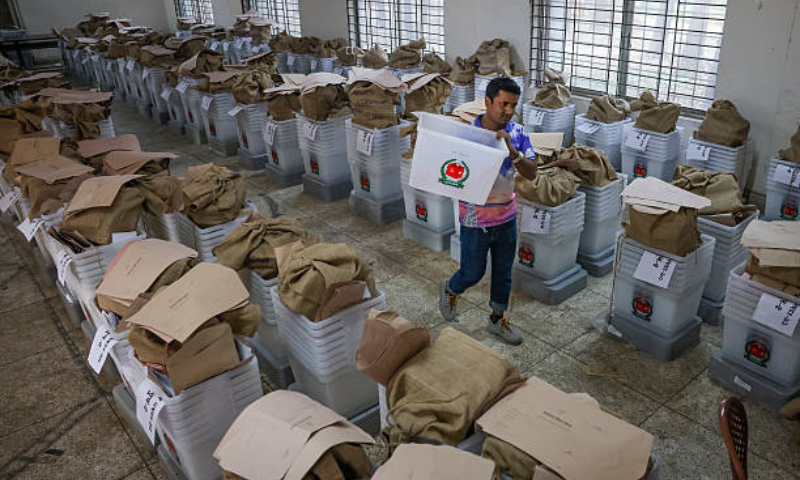
Counting will begin by hand after polls close at 4:30 pm (1030 GMT). In previous elections, results have trickled in hours later — though this time officials must also tally referendum ballots alongside parliamentary votes.
“The significance of this day is far-reaching,” interim leader Muhammad Yunus, who will step down once the new government takes office, said in a televised address before the vote.
“It will determine the future direction of the country, the character of its democracy, its durability, and the fate of the next generation.”
The 85-year-old Nobel Peace Prize winner has led the South Asian nation since Sheikh Hasina’s 15-year rule ended with her ouster in August 2024. His administration has barred her Awami League from contesting the polls.
Hasina, 78, was sentenced to death in absentia for crimes against humanity over the deadly crackdown on protesters during her final months in power and remains in neighbouring India.
Yunus has also championed a sweeping democratic reform charter aimed at overhauling what he called a “completely broken” system of government and preventing a return to one-party rule.
Bangladesh voters directly elect 300 members, while the remaining 50 reserved seats for women are allocated proportionally, bringing the total strength of the Jatiya Sangsad (parliament) to 350 seats.
Direct Contest Between Rival Blocs
The main electoral battle pits the Bangladesh Nationalist Party (BNP) against a Jamaat-e-Islami-led alliance of 11 parties, which includes the National Citizens Party (NCP), formed by youth activists who played a central role in last year’s uprising.
The Awami League, led by Hasina, has been barred from contesting the vote.
Other groups, including Islami Andolan Bangladesh and the Jatiya Party, are fielding candidates independently outside the two dominant blocs.
From Uprising to Interim Rule
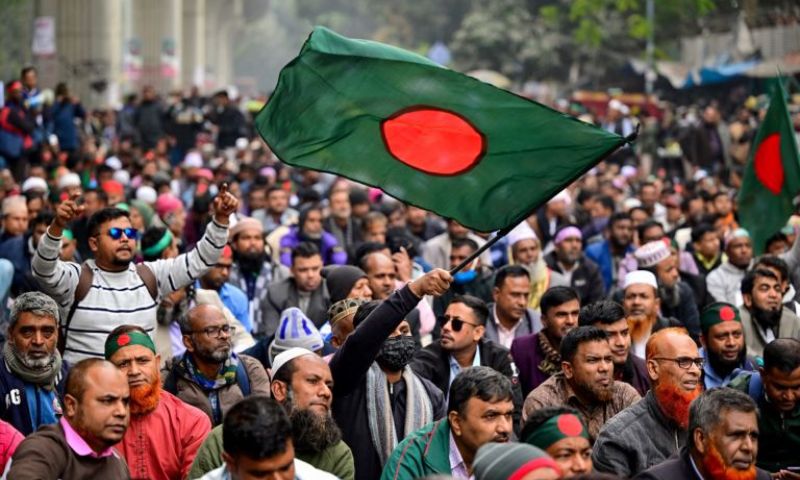
Bangladesh has been governed by an interim caretaker administration led by Nobel laureate Muhammad Yunus since August 2024, after months of unrest triggered by protests against a controversial civil service quota system.
What began as student demonstrations escalated into a nationwide movement that ultimately forced Hasina to resign and flee to India. She was later sentenced to death in absentia by a special tribunal over the crackdown on protesters — a move that remains highly controversial.
Key Issues: Economy and Governance
Corruption, inflation, employment, and economic development dominate voter concerns in a country grappling with rising living costs and slowing growth.
BNP leaders say their focus is on restoring democratic institutions and stabilising the economy after years of political turbulence. Jamaat leaders, meanwhile, say the party has restructured internally and is committed to democratic governance, anti-corruption reforms, and broader national inclusion.
Referendum Alongside Polls
In addition to the parliamentary election, voters are also deciding on the National Charter 2025, a governance framework drafted by the Yunus-led interim administration aimed at reshaping state institutions and setting long-term democratic foundations.
The outcome of both the parliamentary vote and the referendum is expected to determine the direction of Bangladesh’s political trajectory for years to come.