
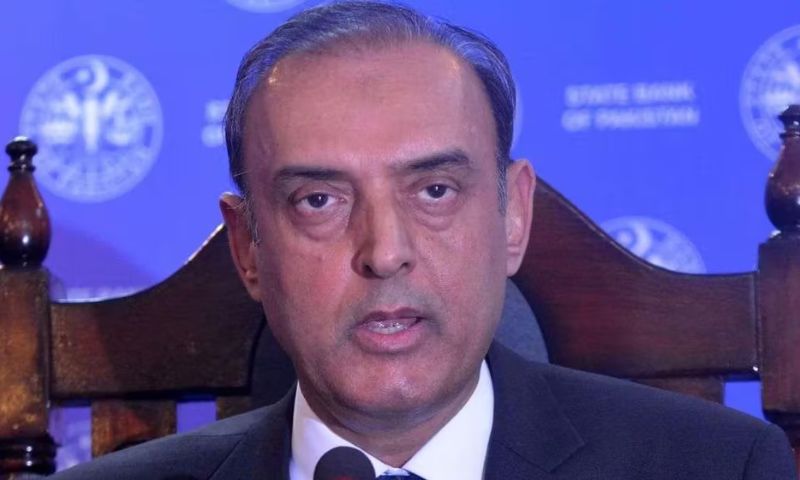
KARACHI: Pakistan’s central bank governor has projected stronger economic growth than the International Monetary Fund (IMF), saying the recovery is broader and more durable than recent data suggest.
State Bank of Pakistan (SBP) Governor Jameel Ahmad said the economy could grow by as much as 4.75 percent in the fiscal year ending June 2026, above the IMF’s latest estimate.
In written responses to Reuters news agency, the SBP chief said differences in projections were not unusual and largely reflected timing factors.
The SBP in January raised its FY26 growth forecast to a range of 3.75–4.75 percent, up 0.5 percentage points from its earlier projection.
“All these sources and indicators, along with FY26-Q1 data, point to a broad-based recovery in all three sectors of the economy,” Ahmad said.
He said agriculture had remained resilient despite last year’s floods and was performing better than official targets.
Policy easing and stability
The SBP Governor said financial conditions had eased significantly after the central bank cut its policy rate by a cumulative 1,150 basis points since June 2024.
He added that the full impact of the reductions was still feeding through the economy.
The easing cycle, he said, was supporting growth while maintaining price and macroeconomic stability.
Last month, however, the SBP kept its benchmark rate unchanged at 10.5 percent, surprising markets that had expected a further cut.
The divergence with the IMF comes at a sensitive time. Pakistan is emerging from a balance-of-payments crisis under a $7 billion IMF programme aimed at stabilising the economy and rebuilding reserves.
External pressures and reserves
Jameel Ahmad pointed to high-frequency indicators and six percent growth in large-scale manufacturing during July–November as signs of strengthening domestic demand.
While exports declined in the first half of the fiscal year, the SBP chief said the drop reflected lower global commodity prices and border disruptions rather than weaker economic activity.
He projected the current account deficit would remain within zero to one percent of gross domestic product.
Strong remittance inflows, he said, would offset the wider trade gap and help lift foreign exchange reserves above IMF programme targets.
Further inflows are expected around the Eid festival period, he added.
“Additionally, if the government decided to tap global capital markets for any debt issuance, then that would be on the upside of our current assessment,” Jameel Ahmad said.
Pakistan plans to issue panda bonds — yuan-denominated debt sold in China’s domestic market — around the upcoming Lunar New Year as part of efforts to diversify its external financing sources and broaden its investor base.
Ahmad said the central bank has been consistently purchasing dollars from the interbank market to strengthen foreign exchange buffers. The data, he noted, are published regularly.
He cautioned that while macroeconomic stability has improved, structural reforms remain essential to sustain higher growth and boost productivity over the longer term.