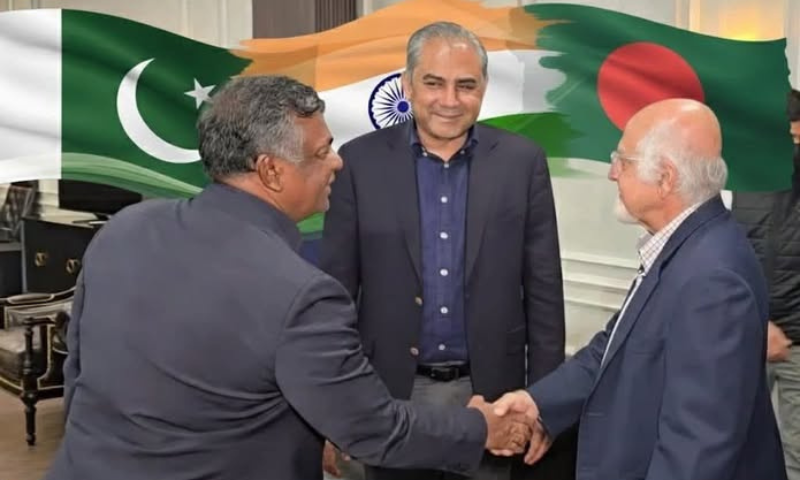



ISLAMABAD: Pakistan persuaded the International Cricket Council (ICC) to formally safeguard Bangladesh’s financial and institutional interests and commit to awarding Dhaka a future international tournament before agreeing to play its T20 World Cup match against India, officials said.
Pakistan’s initial decision to boycott the February 15 match was taken in solidarity with Bangladesh after the Bangladesh Cricket Board withdrew from the ICC Men’s T20 World Cup over security concerns related to playing in India.
Officials said Pakistan told the ICC it would not take the field against India unless firm assurances were given that Bangladesh’s withdrawal would not lead to financial loss, institutional damage or long-term marginalisation within global cricket.
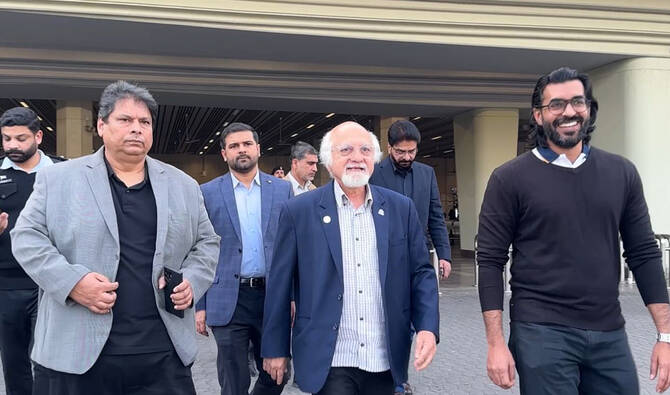
Pakistan agreed to play its scheduled ICC Men’s T20 World Cup match against India only after securing firm assurances from the International Cricket Council to protect Bangladesh’s financial and institutional interests following its withdrawal from the tournament, officials said.
PCB officials said Pakistan conveyed to the ICC that it would not take the field against India unless Bangladesh’s position was formally safeguarded and its withdrawal did not result in financial or sporting losses.
Following what the ICC later described as an “open, constructive and congenial dialogue” involving the ICC, PCB and BCB, the governing body issued a statement confirming that no financial, sporting or administrative penalty would be imposed on Bangladesh.
The International Cricket Council, Pakistan Cricket Board and Bangladesh Cricket Board have concluded an open, constructive and congenial dialogue.
Media Release: https://t.co/gLDIjB3JOp
— ICC (@ICC) February 9, 2026
ICC also expressed regret over Bangladesh’s absence from the tournament during internal discussions, acknowledging that the situation should not have long-term consequences for Bangladeshi cricket.
PCB officials said the assurances given to Bangladesh — including protection of its commercial standing and future hosting rights — were interpreted in Islamabad as a corrective step following the controversy.
As part of the understanding reached after Pakistan’s intervention, the ICC agreed in principle that Bangladesh would host an ICC event before the Men’s Cricket World Cup in 2031, subject to standard hosting requirements.
“Pakistan made it clear that participation in the India match could only happen after Bangladesh’s position was formally protected,” an official told reporters.
The ICC reaffirmed in its statement that Bangladesh remains a valued Full Member with a vital role in the growth of the global game and described the country as one of cricket’s most vibrant markets, with more than 200 million fans.
The ICC reaffirmed Bangladesh’s status as a valued Full Member with a proud cricketing history and stressed that the team’s absence from the tournament would have no long-term impact on cricket in the country. The governing body said it remains committed to supporting the growth of the game in Bangladesh, one of cricket’s most vibrant markets.
The ICC added that the discussions reflected a forward-looking alignment reached in good faith and did not alter the ICC’s constitutional autonomy, governance framework, or decision-making processes.
ICC Chief Executive Sanjog Gupta said Bangladesh’s absence from the T20 World Cup was “regrettable” but did not diminish the ICC’s long-term commitment to the country.
Sources said Pakistan’s boycott threat was also intended to highlight broader concerns that decision-making within world cricket is heavily influenced by commercial power, often disadvantaging smaller boards — a dynamic Islamabad believes is closely linked to India’s dominance of the sport’s global revenue streams.
Only after the ICC formally ruled out penalties for Bangladesh and confirmed future hosting opportunities did Pakistan agree to reverse its boycott and rejoin the tournament, PCB officials said.
Pakistan and India have not played bilateral cricket for more than a decade and meet only in global tournaments, where matches often carry political and diplomatic weight beyond sport.
“For Pakistan, this was not about confrontation,” a PCB source said. “It was about standing with Bangladesh and ensuring fairness before cricket resumed.”
No penalty for Bangladesh
ICC said it would impose no penalty on Bangladesh for opting out of the tournament and agreed in principle that the country would host an ICC event before the 2031 World Cup.
“Bangladesh’s absence from the ICC Men’s T20 World Cup is regrettable, but it does not alter the ICC’s enduring commitment to Bangladesh as a core cricketing nation,” ICC Chief Executive Sanjog Gupta said.
The ICC said the dialogue with PCB and BCB reflected a forward-looking alignment reached in good faith and did not alter the governing body’s constitutional autonomy or decision-making framework.
It added that Bangladesh retained the right to approach the ICC’s dispute resolution committee under existing regulations.
As part of the understanding, the ICC agreed in principle that Bangladesh would host an ICC event before the Men’s Cricket World Cup in 2031, subject to standard hosting processes and requirements.
Earlier this month, Pakistan had agreed to participate in the T20 World Cup but said it would not play India, a stance taken after Bangladesh withdrew over security concerns linked to strained relations with New Delhi. Scotland was subsequently drafted into the tournament.
Pakistan and India have not played bilateral cricket for more than a decade and meet only in global or regional competitions.
“No financial, sporting, or administrative penalty will be imposed on the BCB,” the ICC said, adding that the decision reflected neutrality and fairness.