
Key Points
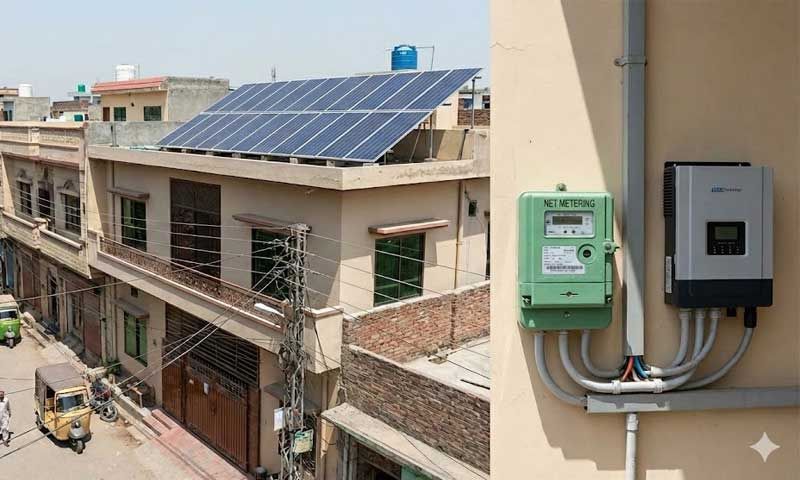
- Pakistan has replaced net metering with a net billing system for rooftop solar and other small renewables
- Consumers will buy electricity at retail tariffs and sell surplus power at a lower national average energy price
- Existing net metering contracts remain valid until expiry
- Payments for excess electricity may be settled quarterly
- The move aims to ease pressure on Pakistan’s financially strained power sector
ISLAMABAD: Pakistan has overhauled its rooftop solar policy after the National Electric Power Regulatory Authority (Nepra), the country’s power-sector regulator, notified new Prosumer Regulations that replace net metering with a net billing framework.
For households and businesses, the change alters a key financial incentive behind Pakistan’s rapid expansion in rooftop solar.
Electricity drawn from the national grid will continue to be charged at the full retail tariff. But surplus electricity exported, mainly from solar panels, will now be purchased at the national average energy purchase price, which is lower than consumer tariffs.
The regulations, issued under Pakistan’s Regulation of Generation, Transmission and Distribution of Electric Power Act, 1997, took effect immediately and repealed the Alternative & Renewable Energy Distributed Generation and Net Metering Regulations, 2015.
Why this matters beyond Pakistan
The policy shift is significant for international investors, climate analysts, and energy policymakers tracking how emerging economies balance renewable energy growth with grid stability and fiscal constraints.
Under the earlier net metering system, each unit of electricity exported to the grid offset one unit imported, effectively allowing consumers to hedge against rising power prices.
The new net billing model ends the unit-for-unit adjustment, a change that is expected to raise monthly electricity bills for many solar users.
Energy economists say the reduced buyback rate may slow new rooftop solar installations, particularly among middle-income households and small businesses, a group that drove much of Pakistan’s decentralised renewable growth in recent years.
Impact on households and consumers
Most rooftop solar adopters in Pakistan are urban middle- and lower-middle-income families who invested heavily to protect themselves from frequent tariff hikes and power shortages.
By changing the compensation structure, after those investments, the new rules raise concerns about policy predictability and consumer confidence, an issue closely watched by international lenders and development partners involved in Pakistan’s energy reforms.
Another practical change is the payment cycle. If exported electricity exceeds consumption, utilities may credit the amount to the next billing cycle or make cash payments quarterly, potentially affecting household cash flows.
What changes for solar users
Consumers generating electricity through solar, wind, or biogas facilities of up to 1 megawatt will be classified as “prosumers,” allowing them to both consume and sell electricity through the distribution network.
The notification explains that net billing is a system where electricity generated by a prosumer is purchased by the utility company. In this system, the consumer is billed for the electricity they use at the applicable tariff after receiving credit for the power they supply to the grid, which is valued at the national average energy purchase price.
Existing contracts protected
Nepra has allowed agreements signed under the repealed regulations to remain valid until the expiry of their term.
Consumers operating under the previous net metering framework will continue to be compensated at the national average power purchase price during the life of their contracts. Any renewal or extension must comply with the new regulations.
Grid stability and cost recovery
The regulations introduce defined timelines for approvals and impose technical limits, including a cap on distributed generation connected to any single transformer, to protect grid reliability.
Prosumers are also required to bear the cost of interconnection facilities and metering, a common feature in many international distributed generation frameworks.
From the government’s perspective, the policy aims to reduce cross-subsidies and contain mounting losses in Pakistan’s electricity sector, which has long relied on state support.
Critics argue that the adjustment shifts financial risk onto consumers instead of addressing structural inefficiencies such as high capacity payments and transmission losses.
The bigger energy debate
Pakistan’s experience reflects a broader global challenge: how to scale rooftop renewables without undermining grid finances or discouraging clean energy investment.
While Nepra describes the change as a regulatory realignment, for consumers it translates into costlier solar economics and weaker incentives — making the development a closely watched test case for energy policy in emerging markets.