


Key points
- Oman mediates first talks since conflict
- US imposes new sanctions despite dialogue
- Both sides agree to continue negotiations
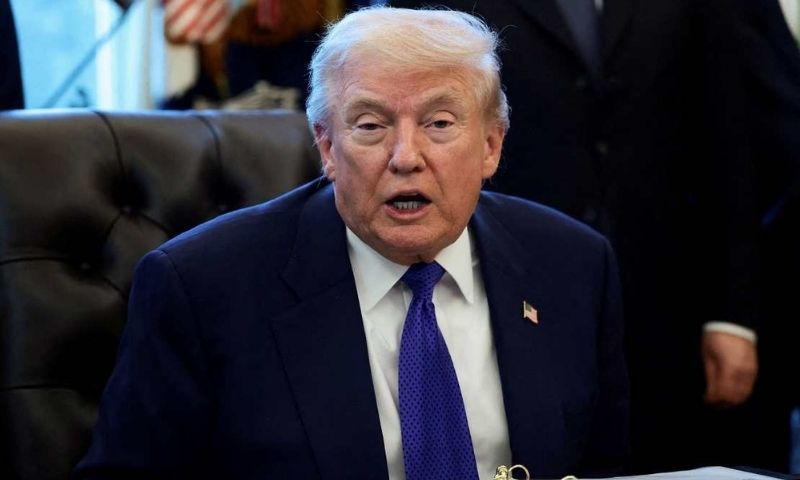
WASHINGTON: Indirect talks between the United States and Iran concluded on Saturday in Oman, with President Donald Trump describing the discussions as “very good” and both sides indicating that further negotiations are expected, despite Washington announcing new sanctions on Tehran shortly after the dialogue ended.
US President Donald Trump said Washington held “very good talks” on Iran after the two sides held an indirect dialogue in Oman.
Iran, for its part, said it expected to hold more negotiations with the United States, hailing a “positive atmosphere” during a day of talks in the Gulf sultanate, reports AFP.
With an American naval group led by an aircraft carrier in Middle Eastern waters, US and Iranian delegations held talks in Muscat mediated by Oman without publicly meeting face-to-face.
Shortly after the talks concluded, the US announced new sanctions against shipping entities and vessels, aimed at curbing Iran’s oil exports. But it was not clear if the move was linked to the talks.
The talks were the first between the two foes since the United States joined Israel’s war with Iran in June with strikes on nuclear sites.
“We likewise had very good talks on Iran,” Trump told reporters on board Air Force One en route to his Mar-a-Lago resort in Florida, adding, “we’re going to meet again early next week.”
However, as Iran warned against further threats after Washington raised the spectre of new military action, Trump said: “If they don’t make a deal, the consequences are very steep.”
Iranian nuclear programme
Foreign Minister Abbas Araghchi, who led Iran’s delegation in Muscat, said talks “focused exclusively” on the Iranian nuclear program, which the West believes is aimed at making an atomic bomb but Tehran insists is peaceful.
“In a very positive atmosphere, our arguments were exchanged and the views of the other side were shared with us,” Araghchi told Iranian state TV, adding that the two sides had “agreed to continue negotiations.”
Speaking to the official IRNA news agency, Araghchi expressed hope that Washington would refrain from “threats and pressure” so that “the talks can continue.”
Admiral Brad Cooper, the commander of US Central Command, was present at the talks, according to images published by the Oman News Agency.
Multiple sessions of talks in the morning and afternoon saw both sides shuttling to and from the residence of Omani Foreign Minister Badr Albusaidi.
The foreign ministry of US ally Qatar expressed hope the talks would “lead to a comprehensive agreement that serves the interests of both parties and enhances security and stability in the region.”
The White House has made clear it wants the talks to rein in Tehran’s ability to make a nuclear bomb, an ambition the Islamic Republic has always denied.
Maximum pressure
Trump initially threatened military action against Tehran over its crackdown on protesters last month and even told demonstrators, “help is on its way.”
Regional powers, including Turkiye, Saudi Arabia, and Qatar, urged the United States not to intervene, calling on Washington and Tehran to instead return to talks.
Those numbers are expected to climb because the magnitude of the crackdown has masked by the blanket internet shutdown imposed by the authorities for a fortnight, rights groups say.
Yet Trump’s rhetoric in recent days has focused on reining in the Iranian nuclear program, and the US has maneuvered a naval group led by the aircraft carrier USS Abraham Lincoln into the region.
Iran has repeatedly vowed it will hit back at US bases in the region if attacked.
The new sanctions to curb Iran’s oil exports come with Trump “committed to driving down the Iranian regime’s illicit oil and petrochemical exports under the administration’s maximum pressure campaign,” State Department spokesman Tommy Pigott said in a statement.