KEY POINTS
- Iran and US confirmed nuclear talks will be held in Muscat on Friday.
- Confusion earlier centred on disagreements over the venue and scope of talks.
- Regional countries lobbied Washington to keep the talks alive.
- Trump warned Khamenei that he should be “very worried”.
- Rubio said talks must cover missiles and governance, but Iran insisted negotiations would focus only on its nuclear programme.
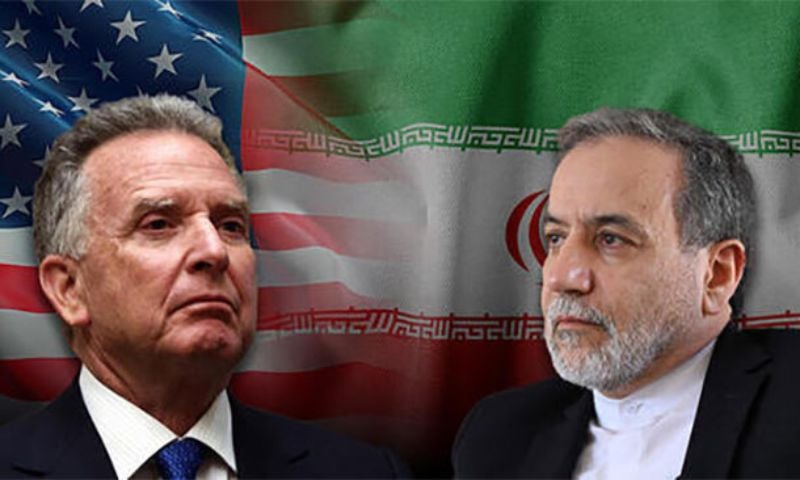
WASHINGTON: Iran and the United States confirmed on Thursday that nuclear talks will take place in Oman on Friday, easing uncertainty over the fate of negotiations even as President Donald Trump warned Iran’s Supreme Leader Ayatollah Ali Khamenei that he should be “very worried”.
The announcement followed hours of confusion after media reports suggested the talks were on the brink of collapse due to disagreements over their format, venue and scope.
Talks confirmed in Muscat
Iran’s Foreign Minister Abbas Araghchi on Thursday said the negotiations would be held in Muscat at around 10 am on Friday.
“Nuclear talks with the United States are scheduled to be held in Muscat,” Araghchi said in a post on X on Thursday, thanking Oman for facilitating the meeting.
Nuclear talks with the United States are scheduled to be held in Muscat on about 10 am Friday.
I'm grateful to our Omani brothers for making all necessary arrangements.
— Seyed Abbas Araghchi (@araghchi) February 4, 2026
A White House official separately confirmed to AFP that the talks would go ahead in Oman on Friday.
A US official also told Reuters that the negotiations were on track, despite earlier speculation that Washington was considering pulling out.
Confusion over venue and agenda
Diplomats had earlier indicated that the meeting would take place in Turkiye.
However, Axios reported that the United States had been close to withdrawing after Iran objected to both the venue and US demands that discussions include Tehran’s ballistic missile programme.
According to Axios, Washington rejected Iran’s request to change the format and location of the talks, with a senior US official quoted as saying: “We told them it is this or nothing.”
The outlet later reported that the talks were salvaged after urgent lobbying by several Middle Eastern countries, which warned the Trump administration against abandoning diplomacy.
At least nine regional states contacted the White House, Axios said.
Regional countries including Pakistan, Saudi Arabia and Turkiye have made efforts in preventing an escalation, according to reports.
However, Iranian officials told Pakistan’s Dawn newspaper that regional players were unlikely to participate directly at this stage.
Qatar’s prime minister may be involved alongside Omani mediators, the Iranian officials said.
Trump ramps up pressure
Earlier, Trump warned Tehran. “I would say he should be very worried,” Trump said of Iran’s Supreme Leader Ayatollah Ali Khamenei in an interview with NBC News on Wednesday. “As you know, they are negotiating with us.”
Trump also claimed Iran had been considering building a new nuclear facility after US strikes on Iranian nuclear sites during Israel’s war with Iran in June 2025.
“They were thinking about starting a new site in a different part of the country,” Trump said.
“We found out about it. I said, you do that, we’re going to do very bad things to you.”
The United States has deployed additional military assets to the region, including an aircraft carrier group.
One of its aircraft shot down an Iranian drone earlier this week, according to CENTCOM. Iran has warned it would retaliate against US targets in the region if attacked.
Dispute over missiles
US Secretary of State Marco Rubio said earlier on Wednesday that Washington was ready to engage Iran but insisted that talks must cover more than the nuclear programme.
“They will have to include certain things,” Rubio said, citing Iran’s ballistic missile range, its nuclear programme and its domestic governance.
Iran has repeatedly ruled out negotiations over its missile programme, describing it as a legitimate means of self-defence.
A senior Iranian official said the upcoming talks would focus solely on nuclear issues, with missiles “off the table”.
Rubio’s comments fuelled speculation of divisions within the US administration, with Trump’s envoy Steve Witkoff pursuing a narrower diplomatic track, while Rubio outlined a broader and more hawkish agenda.
Regional diplomacy intensifies
Egypt said it had stepped up diplomatic efforts ahead of the talks.
Its foreign ministry said “intense communications” had taken place between Egypt, Qatar, Iran, Oman and US envoy Witkoff.
Egypt’s Foreign Minister Badr Abdelatty stressed the “utmost importance” of reaching a peaceful settlement to avoid war and preserve regional stability, the ministry said.
Turkiye’s President Recep Tayyip Erdogan said Ankara was doing its utmost to prevent US-Iran tensions from triggering a wider conflict.
Speaking to reporters after a visit to Egypt, Erdogan said leader-level talks could help ease tensions.
Russia also warned of the risks of escalation. Foreign Minister Sergei Lavrov said the situation was “explosive” not only for Iran but for the entire Middle East, according to Russia’s TASS news agency.
“Iran is our close partner and neighbour,” Lavrov said. “There are too many time bombs waiting to be triggered.”
Meanwhile, Iran signalled it was prepared to confront any external threat.
Ali Akbar Velayati, a senior adviser to Supreme Leader Khamenei, said Iran was fully ready to stand against foreign enemies, including the United States and Israel, according to Iran’s IRNA news agency.