
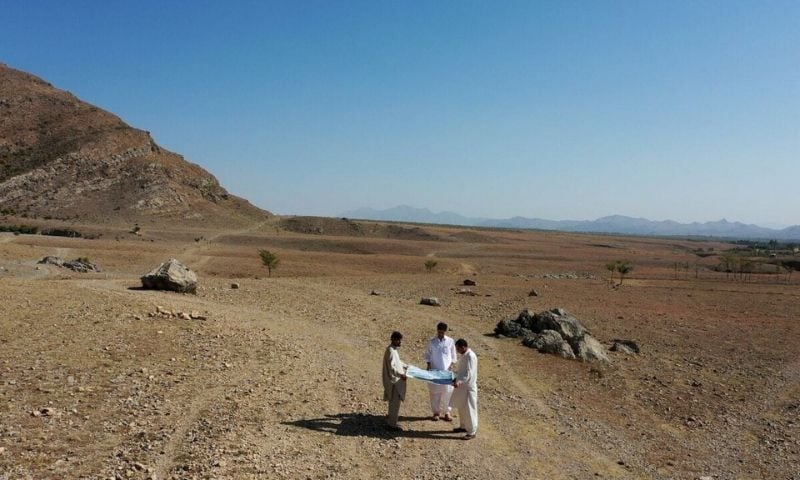
PESHAWAR, Pakistan: The sharp surge in land prices across Khyber Pakhtunkhwa has opened the floodgates to land-grabbing syndicates, with major urban centres emerging as prime hunting grounds.
In many cases, when original owners are unable to claw back possession of their land, they are left with little choice but to sell it to the very individuals or groups who seized it — the land grabbers.
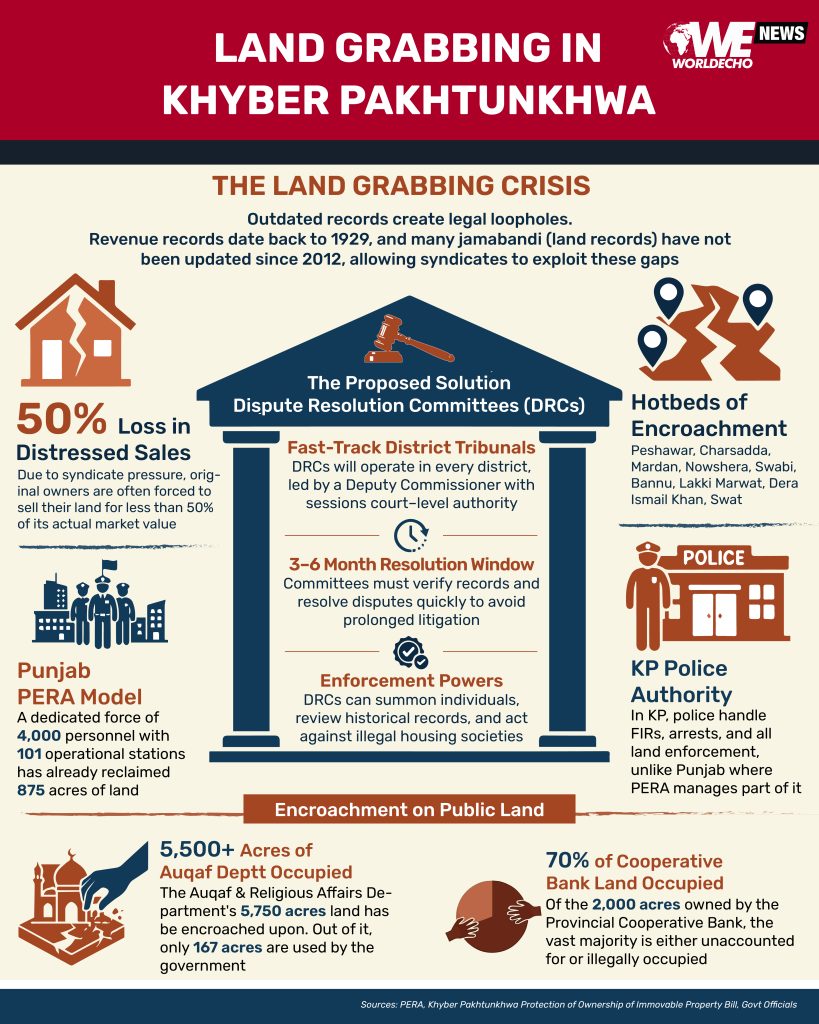
Such distress sales are typically concluded at throwaway prices, often fetching less than half of the prevailing market value.
Alamzeb Khan, 42, a resident of Khadrakhel — a suburban locality on the outskirts of Peshawar — is one such victim caught in a vicious cycle.
His ancestral land was illegally occupied by distant relatives, plunging him into years of costly and exhausting litigation.
Although the court eventually ruled in his favour, the verdict proved hollow, as he remained unable to secure the physical possession of the property. Despite repeated appeals, the police showed little appetite for enforcing the court decision.
“Even if the police had restored possession, holding onto it would have been a losing battle, as they [his influential relatives] would have reoccupied the land,” he says.
The dispute also carried the constant threat of violent escalation. To avoid bloodshed, Khan ultimately bowed to reality and, through a local jirga, sold the land to the occupants at a price far below market value — opting for peace over principle.
A new enforcement model
In contrast, the Punjab government has taken the lead by enacting the Punjab Enforcement Regulatory Authority (PERA) Act 2024, marking a decisive shift in enforcement policy, and granting enforcement powers to a newly established authority.
Even if the police had restored possession, holding on it would have been a losing battle, as they [his influential relatives] would have reoccupied the land.” – Alamzeb Khan, a resident
The Act envisages enforcement stations in all 154 tehsils of Punjab. To date, 101 stations have been established, while work on the remaining 53 is underway.
The PERA authority has been vested with sweeping powers, including the authority to register First Information Reports (FIRs), seal premises, and conduct searches.
PERA Director General Captain (Retd) Farrukh Atiq tells WE News English that whenever the government assigns a new responsibility to the authority, it is formally added to the Act’s schedule.
So far, enforcement powers under eight different laws — five of them linked to revenue matters — have been delegated to PERA, with room for further expansion.
“Around 4,000 personnel have already been deployed, comprising officers on deputation from various departments as well as newly recruited staff. The total sanctioned strength stands at 7,800, with 3,800 positions yet to be filled,” Atiq says.
PERA has so far reclaimed 87.5 acres of land from land-grabbing groups and it is also empowered to crack down on illegal housing societies.
Drafting a new regime
Taking a leaf out of Punjab’s book, the Khyber Pakhtunkhwa (KP) government has drafted similar legislation titled the Khyber Pakhtunkhwa Protection of Ownership of Immovable Property Bill.
If enacted, the law would shift land-related disputes from conventional courts to newly established forums.
According to the draft, a committee at the Deputy Commissioner level and a designated tribunal would be authorised to decide such cases, while the police will be directed to register FIRs where required.
Unlike Punjab, however, the draft does not envisage tehsil-level enforcement stations or the creation of a separate enforcement force akin to PERA.
Under the proposed framework, a Dispute Resolution Committee (DRC) would be formed in each district, headed by the Deputy Commissioner.
Its members would include the District Police Officer, SDPO, Additional Deputy Commissioner (Revenue), and the relevant Assistant Commissioner, with the option to co-opt an additional member if necessary.
A test of capacity
Senior officials, however, warn that this model may stretch district administrations to the breaking point.
A Deputy Commissioner, speaking anonymously, tells WE News English that he was already juggling a heavy workload and fears extra responsibilities could undermine efficiency.
“This will only add to our burden,” he says, questioning whether the arrangement would deliver results on the ground.
Around 4,000 personnel have already been deployed, comprising officers on deputation from various departments as well as newly recruited staff. The total sanctioned strength stands at 7,800, with 3,800 positions yet to be filled.” – Captain (Retd) Farrukh Atiq, Director General PERA
Land-related complaints would be filed before the DRC, which would be required to decide cases within three to six months.
The committee would exercise powers equivalent to a civil court, including summoning individuals, calling for records, verifying documents, and taking enforcement action.
Filing a false complaint could result in up to one year’s imprisonment and a fine of Rs100,000. Cases may either be decided by the DRC or referred to a tribunal.
The proposed law also provides for a district-level tribunal with power equivalent to a sessions court. Tribunal members may be appointed for a three-year term by the Chief Minister, the Chief Justice of the High Court, or the Chief Secretary.
Eligible members include retired Grade-20 officers, former district and sessions judges, or retired High Court judges.
While tribunals would have the authority to order arrests and land recovery, police assistance would be required for FIR registration, arrests, and enforcement.
Once a case is under trial before the tribunal, no court would be allowed to issue a stay order. During this period, the disputed land can neither be transferred nor gifted.
If illegal constructions occurred during the occupation, the tribunal may order recovery of all financial gains derived from the land — a decision challengeable before the Peshawar High Court.
Constitutional red flags
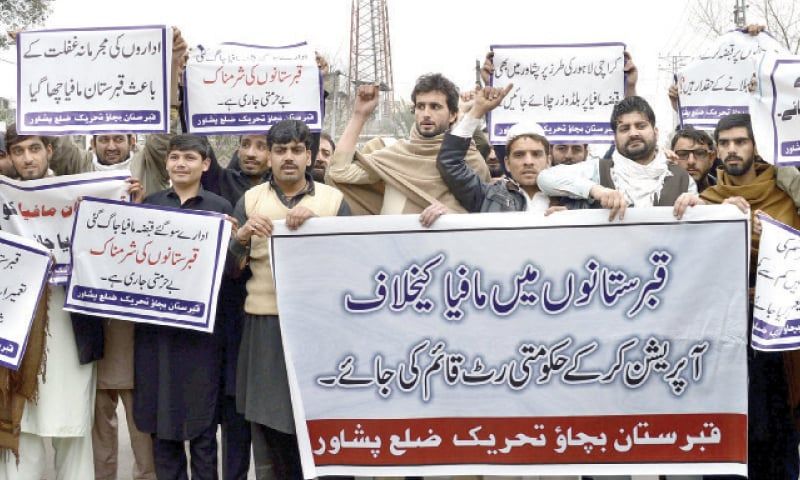
Peshawar-based senior lawyer Shabbir Hussain Gigyani, however, raises a red flag over the proposed framework, warning that it may run afoul of constitutional safeguards.
He points out that despite the existence of the Illegal Disposition Act 2005 — designed specifically to curb land grabbing — weak enforcement has rendered it largely toothless.
Granting extensive powers to tribunals risks transferring judicial authority to the executive, which is violative of the Constitution of Pakistan.” – Shabbir Hussain Gigyani, lawyer
“Granting extensive powers to tribunals risks transferring judicial authority to the executive, which is violative of the Constitution of Pakistan,” Gigyani contends.
He argues that conventional courts remain a safer option for citizens, as judges are less susceptible to influence, whereas tribunals may become a magnet for political interference.
“Influential figures are more likely to approach tribunals,” he says, casting doubt on the law’s promise of impartial justice.
System built to fail
Munsif Saeed — a former civil judge who currently practices law in Peshawar — traces the roots of the problem to outdated revenue records dating back to 1929.
He notes that although land records are legally required to be updated every four years through jamabandi — a periodic land revenue record maintained by the government — the process is more honoured in the breach than the observance.
According to Sadaqatullah, a girdawar — a mid-level revenue official — in Peshawar, jamabandis have not been prepared in the city since 2012, a delay perpetuated by successive government orders.
Although fresh instructions were issued last month directing officials to complete the process within three months, he calls the timeline wishful thinking.
Since 2012, thousands of land mutations have taken place in each area, making accurate updating within such a short span virtually impossible.
Proper completion, he argues, would require at least one and a half to two years, as even a minor error can open a Pandora’s box of disputes.
Despite the informal division of land among family members, revenue records continue to reflect joint ownership — a loophole that land grabbers are quick to exploit.
“They purchase partial transfers and forcibly occupy land belonging to other co-owners. Until formal partition takes place, boundaries remain unidentified, and only Khasra numbers [land survey numbers issued by Revenue Department] remain on paper,” Saeed explains.
He further points out that thousands of civil cases remain stuck in courts, clogging an already overburdened judicial system.
Lawyers often juggle 15 to 20 cases daily across different courts, with hearings frequently scheduled a month apart.
When patwaris — a frontline land revenue official — are summoned to produce records, frequent transfers mean that a new patwari must first be briefed, causing further delays.
They purchase partial transfers and forcibly occupy land belonging to other co-owners. Until formal partition takes place, boundaries remain unidentified, and only Khasra numbers remain on paper.” – Munsif Saeed, legal expert
Forty-eight-year-old girdawar Sadaqatullah, posted in Peshawar, says patwaris are drowning in work, handling scores of applicants daily while also attending court proceedings and performing additional government duties, including polio campaigns — making the timely completion of tasks increasingly elusive.
Sources in the Khyber Pakhtunkhwa Revenue Department concede that the government currently lacks comprehensive data on the extent of illegally occupied land in each district.
However, they believe the proposed tribunals could finally shed light on the scale of land grabbing.
State land under siege
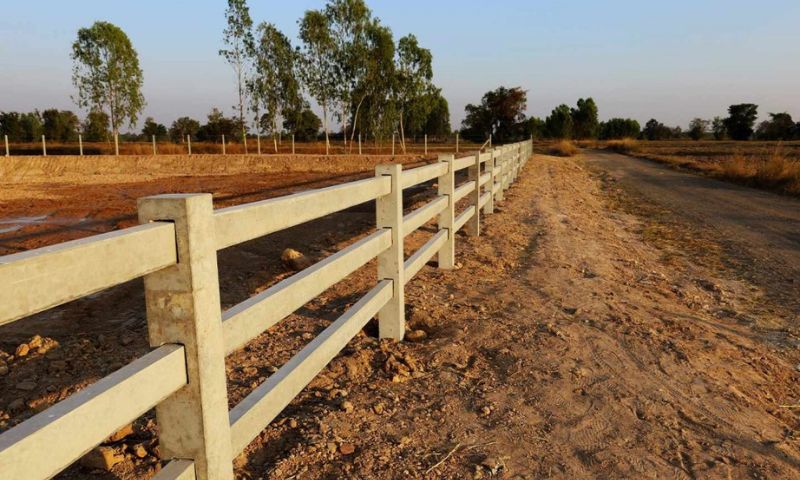
The depth of the crisis becomes even clearer when public land is examined.
The Provincial Cooperative Bank, established in 1943, had issued loans worth Rs1 billion by 1995. While 750 million rupees were recovered, 250 million rupees remained unpaid.
The bank was shut down in 2001 by the then Governor Lieutenant General (Retd) Syed Iftikhar Hussain Shah.
Although most of its assets were sold, around 2,000 acres of land across Charsadda, Peshawar, Dera Ismail Khan, Mardan, Nowshera, Swabi, Lakki Marwat, Bannu and Swat districts were occupied.
A former registrar says only 30 per cent of this land has been identified, while 70 per cent is still missing from official records.
A similar picture emerges from the Auqaf and Religious Affairs Department, which owns approximately 5,750 acres of land in the province.
Of this, around 187 acres are occupied by government departments, while the rest has been encroached upon by local residents, according to a former Auqaf administrator.
Sources further point out that while Punjab has delegated enforcement authority to PERA — confining police largely to crime-related duties — the police in Khyber Pakhtunkhwa are expected to retain substantial powers even after the new law is enacted.
Under the draft framework, tribunals and Dispute Resolution Committees may adjudicate land-grabbing cases, but the implementation of their decisions — including the registration of First Information Reports (FIRs), arrests, and recovery operations — would remain firmly in police hands.
Critics warn that this concentration of enforcement authority may perpetuate the status quo, as land grabbing has flourished despite existing police powers, fuelling fears of selective enforcement, delays, and potential abuse of authority.