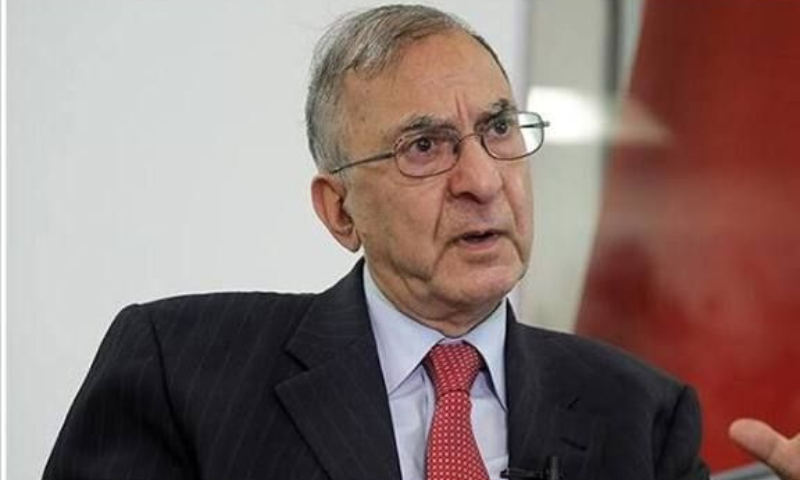
ISLAMABAD/WASHINGTON: Prominent Kashmiri leader and human rights activist Ghulam Nabi Fai on Thursday urged the global Kashmiri diaspora to intensify political lobbying in major world capitals, saying symbolic expressions of solidarity were no longer sufficient given what he described as a rapidly deteriorating situation in Indian Illegally Occupied Jammu and Kashmir (IIOJK).
In a video message issued on Kashmir Solidarity Day, Fai, a US-based Kashmiri leader, said overseas Kashmiris must engage directly with centres of power in Washington, London, Brussels, and other capitals to push for international intervention on the Kashmir dispute.
“The time has come to convert solidarity into tangible action,” Fai, Chairman of the World Forum for Peace & Justice, said. “The global diaspora must knock on the doors of power corridors.”
He warned that the Kashmir issue carried implications far beyond the region, recalling that India and Pakistan — both nuclear-armed neighbours — were pushed to the brink of confrontation last year.
Fai said international mediation remained essential, citing US President Donald Trump’s past offer to help defuse tensions and facilitate dialogue on Kashmir.
“The issue of Kashmir is not only about Kashmir,” he said. “It is about peace and stability in South Asia, which represents one-fifth of humanity.”
Describing conditions in IIOJK, Fai said Kashmiris were facing what he termed a sustained campaign of political, cultural, and religious suppression, warning that Kashmiri identity itself was under threat.
He alleged that India’s government was pursuing policies aimed at marginalising Muslim identity in the region, including restrictions on education, media, and religious expression.
“Kashmir today is facing educational degradation, cultural erasure and military occupation,” he said, accusing New Delhi of pursuing what he described as a strategy of “de-Islamisation”.
Fai cited reports by international organisations warning that independent journalism in Kashmir was nearing collapse, and referred to expert testimony presented to the US Congress, cautioning that the region was approaching a grave humanitarian crisis.
Calling for inclusive negotiations, Fai said any dialogue on Kashmir must involve authentic Kashmiri representation, noting that several senior Kashmiri leaders were currently imprisoned.
“The people who are meant to represent Kashmir at the negotiating table are behind bars,” he said, urging the United Nations and world powers to press India to release jailed Kashmiri leaders to allow meaningful talks.
He drew parallels with South Africa’s anti-apartheid struggle, saying imprisoned leaders could still play a decisive role in shaping a political settlement.
Fai concluded by calling for renewed international engagement to bring India, Pakistan and Kashmiri representatives into negotiations, saying a failure to resolve the dispute would continue to endanger regional and global peace.