ISLAMABAD: Pakistan on Thursday renewed its firm support for the Kashmiri people’s right to self-determination, accusing India of systematic repression and defiance of United Nations resolutions as Kashmir Solidarity Day was observed across the country and by Kashmiris worldwide.
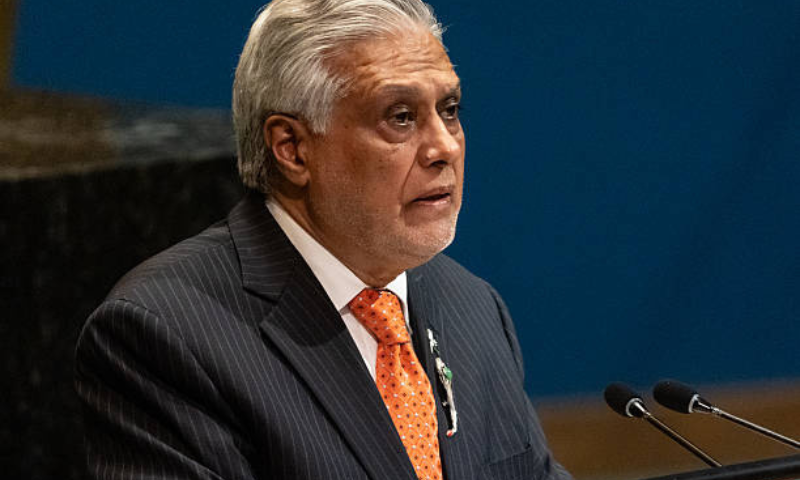
In a statement issued on the occasion, Deputy Prime Minister and Foreign Minister Ishaq Dar said Pakistan stood “politically, morally and diplomatically” with the people of Jammu and Kashmir, describing their struggle as just and legitimate under international law.
Dar said Kashmiris living under Indian control continued to be deprived of fundamental rights, but their resilience underscored the legitimacy of their demand for self-determination.
He said the core of the Kashmir dispute lay in India’s failure to implement United Nations Security Council resolutions that call for a free and impartial plebiscite to allow the Kashmiri people to determine their future.
India’s continued refusal to comply with those resolutions, he said, amounted to defiance of the UN Charter, the Security Council’s decisions, and the Fourth Geneva Convention.
Referring to conditions in Indian Illegally Occupied Jammu and Kashmir (IIOJK), Dar said the situation had moved beyond sporadic violations to what he described as a sustained system of repression.
He said that since India’s unilateral and illegal actions of August 5, 2019 — when New Delhi revoked the region’s limited autonomy — authorities had dismantled legal safeguards, weakened local institutions, and taken steps aimed at entrenching permanent control over the disputed territory.
These measures, he added, included attempts to alter the region’s demographic composition, restrictions on media, and the criminalisation of dissent.
Dar also criticised what he described as a Hindutva-driven framework of governance in IIOJK, alleging widespread discrimination against Muslims. He pointed to recent reports of profiling of mosques, where religious clerics were allegedly forced to provide personal details, photographs, and sectarian affiliations, calling it evidence of institutionalised Islamophobia.
The foreign minister said grave human rights violations — including extrajudicial killings, enforced disappearances, arbitrary detentions and restrictions on fundamental freedoms — continued unabated.
He cited recent observations by United Nations experts noting the arbitrary detention of nearly 2,800 people in IIOJK, including journalists, students, and human rights defenders.
Dar urged the international community to take what he called decisive and meaningful action to address the deteriorating human rights situation, ensure accountability for India’s actions, and press New Delhi to implement UN Security Council resolutions.
He reiterated that Pakistan would continue to pursue a peaceful and lasting resolution of the Jammu and Kashmir dispute in accordance with international law and the aspirations of the Kashmiri people.