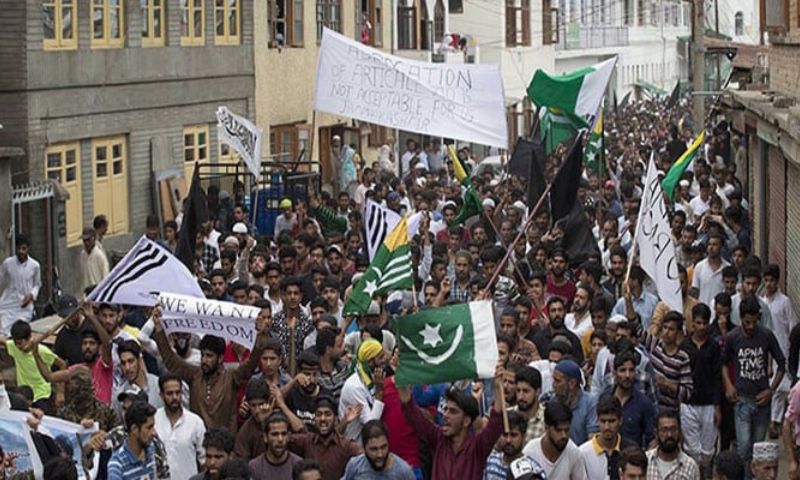
ISLAMABAD: Kashmir Solidarity Day is being observed on Thursday by Kashmiris across the world, on both sides of the Line of Control and throughout Pakistan, as calls intensify for the implementation of United Nations resolutions granting the Kashmiri people the right to self-determination.
The day is being marked with rallies, demonstrations, seminars, and prayer gatherings in Pakistan, Azad Jammu and Kashmir (AJK), and Indian Illegally Occupied Jammu and Kashmir (IIOJK), among Kashmiri diaspora communities across Europe, the Middle East, and North America. Human chains are being formed at several points along the Line of Control, including at the Kohala Bridge, symbolising unity between Kashmiris and Pakistanis.
In Islamabad, the government said the observance reflects Pakistan’s continued political, moral, and diplomatic support for the Kashmiri cause, while sharply criticising India for what it describes as a decades-long refusal to comply with binding United Nations Security Council resolutions on Jammu and Kashmir.
Jammu and Kashmir has remained an unresolved international dispute since 1947, with United Nations Security Council resolutions recognising the right of the Kashmiri people to decide their future through a plebiscite.
Pakistan says India has systematically blocked the process while consolidating control over the territory. The situation worsened in August 2019 when India unilaterally stripped the region of its special status, a step Pakistan says amounts to an illegal annexation in violation of international law.
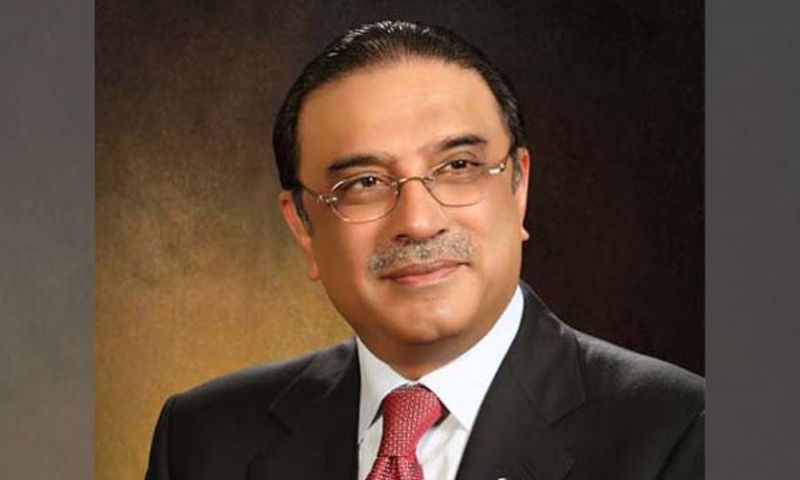
In his message, President Asif Ali Zardari said the people of Pakistan stand united with their Kashmiri brothers and sisters in their just struggle for self-determination, a right guaranteed under international law.
He urged the international community to press India to end human rights violations in Indian Illegally Occupied Jammu and Kashmir (IIOJK), saying the continued denial of political rights, use of force against civilians, and suppression of dissent remain a grave concern.
Zardari recalled that Kashmir Solidarity Day was initiated 36 years ago by former prime minister Benazir Bhutto following the 1989 uprising in Kashmir, describing it as a movement that continues despite mass arrests, curfews, and restrictions imposed by Indian authorities.
Prime Minister Shehbaz Sharif said in his message that Pakistan would continue to stand with the Kashmiri people until they achieved their internationally recognised right to self-determination.
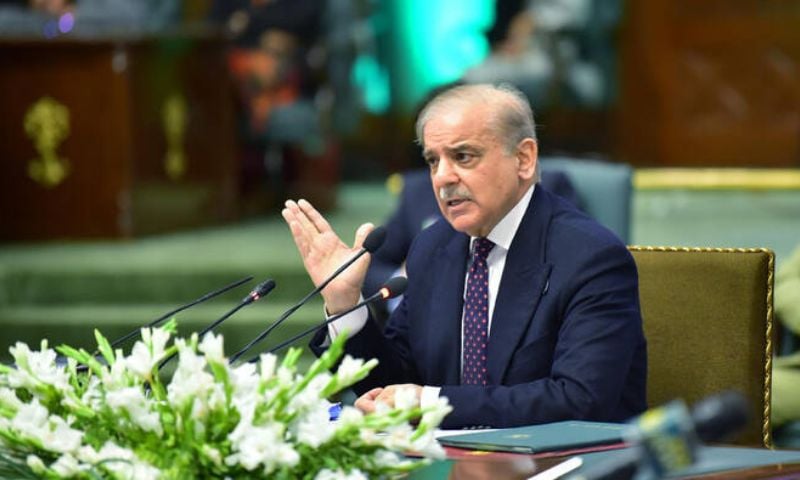
He announced that the government had increased the monthly per capita subsistence allowance for Kashmiri refugees to Rs5,000 and launched a pilot project to construct 750 residential houses for Rs3 billion.
Sharif said land for the housing project had been provided by the AJK government and stressed that the complete rehabilitation of Jammu and Kashmir refugees remained a national responsibility.
Pakistan’s military leadership also reaffirmed support for the Kashmiri cause. On behalf of the armed forces, Chief of Army Staff and Chief of Defence Forces Syed Asim Munir, along with the chiefs of the navy and air force, expressed unwavering solidarity with the people of IIOJK.
The Pakistan Armed Forces strongly condemned what they described as grave violations of human rights in IIOJK, including extrajudicial killings, enforced disappearances, arbitrary detentions, and attempts to alter the demographic and political landscape of the region, in blatant disregard of international law.
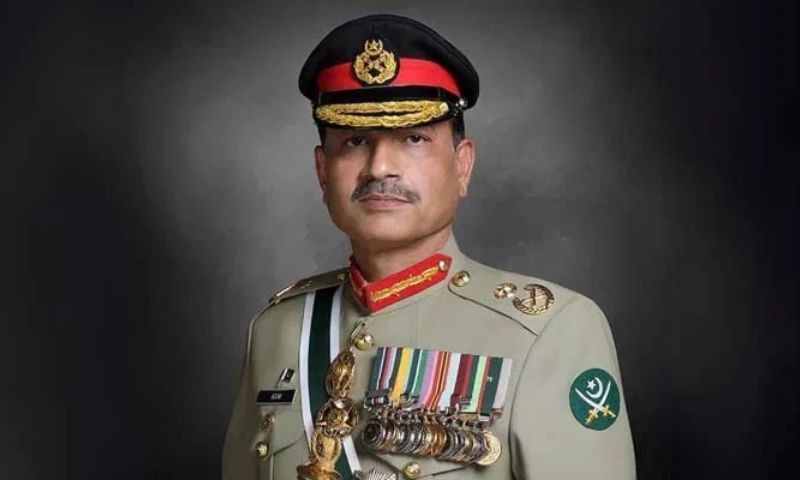
The statement said a just and peaceful resolution of the Jammu and Kashmir dispute, in line with United Nations Security Council resolutions and the aspirations of the Kashmiri people, remains essential for lasting peace and stability in South Asia, urging the international community to take concrete and meaningful action to end the suffering of Kashmiris.
National Assembly Speaker Sardar Ayaz Sadiq said the Kashmir dispute remains one of the unresolved consequences of the partition of the subcontinent, warning that lasting peace in South Asia cannot be achieved without resolving the issue in accordance with the wishes of the Kashmiri people.
Federal Minister for Kashmir Affairs Amir Muqam, speaking alongside leaders of the All Parties Hurriyat Conference, paid tribute to Kashmiris who have endured imprisonment, destruction of homes, and the loss of family members, saying their resilience remains unbroken.
AJK Prime Minister Faisal Mumtaz Rathore said political stability, democratic governance, and peace remain among his government’s top priorities, adding that efforts are focused on providing relief to the public.
Rallies and human chains
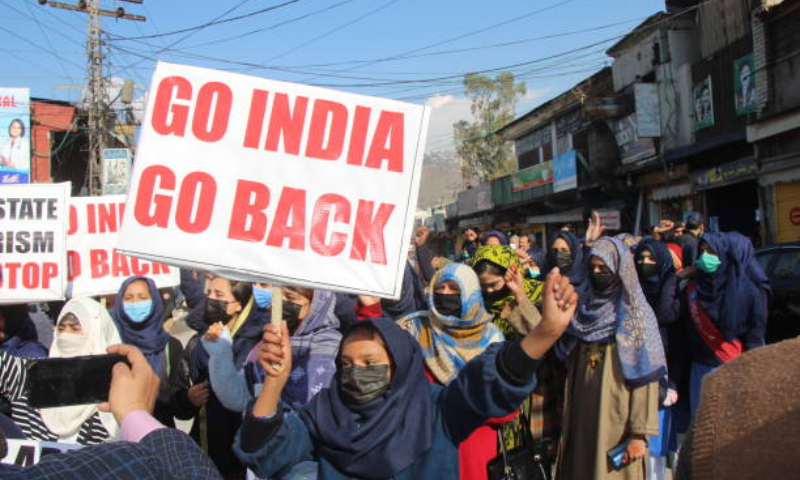
In Islamabad, the main solidarity walk will begin at China Chowk in the Blue Area and conclude at D-Chowk.
A one-minute silence will be observed nationwide at 10:00 am to honour those killed by Indian troops in Occupied Jammu and Kashmir.
Human chains will be formed at key entry points linking Pakistan with Azad Jammu and Kashmir, including Mangla and Kohala bridges, where participants from both sides will join hands to symbolise unity and fraternity.
Provincial chief ministers and federal ministers are scheduled to lead solidarity marches in their respective regions, officials said.
In Azad Jammu and Kashmir’s Mirpur district, a large rally will proceed to Mangla Bridge early Thursday morning, culminating in a public gathering addressed by political leaders from Pakistan and AJK, local authorities said.