KEY POINTS
- JICA has provided $0.312 million in advanced exhibition and conservation equipment.
- Japanese Ambassador highlighted spiritual and historical links between Japan and Gandhara civilization.
- Equipment will support scientific conservation, academic research, and public education of ancient artifacts.
- Reinforces the Japan-Pakistan cultural partnership and aims to boost heritage tourism and sustainable management.
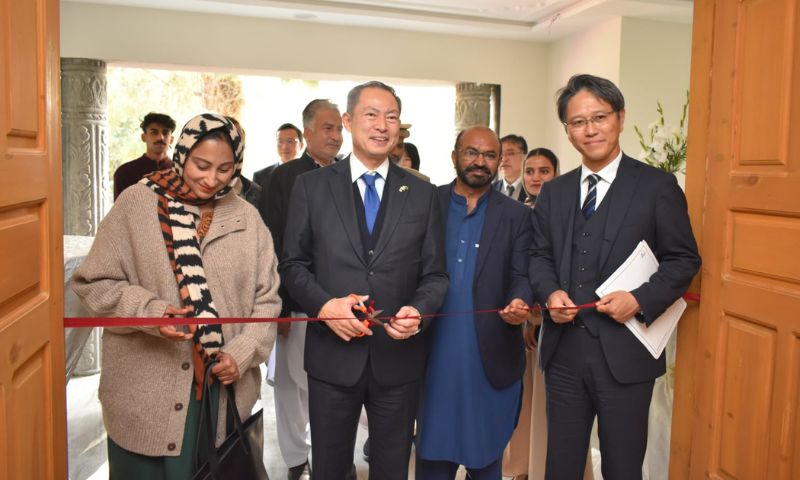
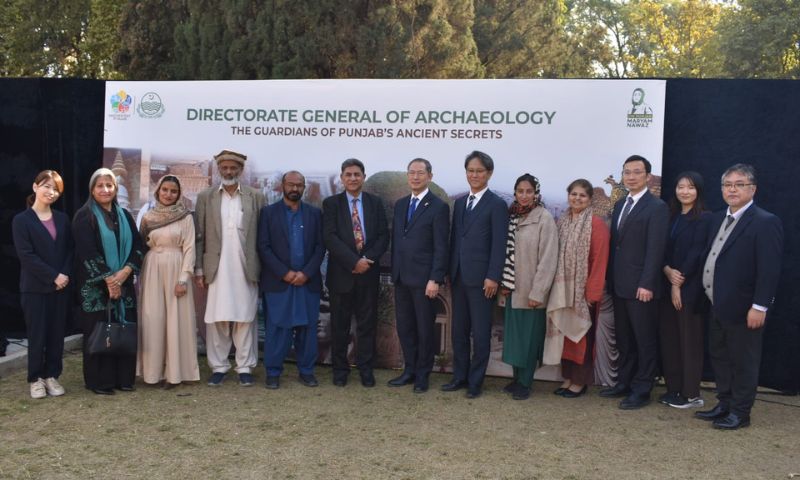
ISLAMABAD: Japan International Cooperation Agency (JICA) has formally handed over state-of-the-art exhibition and conservation equipment to the Taxila Museum, marking the successful completion of a vital cultural heritage grant project.
The assistance, valued at approximately $0.312 (48.8 million Japanese Yen), underscores Japan’s ongoing dedication to preserving Pakistan’s rich historical legacy.
The initiative, titled ‘Improvement of Equipment for Exhibition and Conservation of the Taxila Museum,’ aims to significantly upgrade the museum’s technical capabilities.
The new equipment is set to enhance the preservation, display, and study of the museum’s invaluable Gandhara civilization artefacts.
Nod to shared historical and spiritual bonds
At the handover ceremony, Ambassador of Japan to Pakistan, Akamatsu Shuichi, highlighted the profound cultural connections between the two nations.
He emphasised Taxila’s significance as a cradle of Gandhara civilization and its deep spiritual resonance in Japan.
The Ambassador expressed hope that this project would pave the way for future collaborative endeavours, including potential archaeological missions.
He reiterated Japan’s commitment to advancing the vision of the late Gandhara expert, Dr. Satoshi Naiki, in reviving efforts to discover, conserve, and promote this shared heritage.
Enhancing museum capabilities for future generations
Representing the Punjab Archaeology Department, Chief Conservationist Maqsood Ahmed Malik extended profound gratitude to the Government of Japan and JICA.
He stated that the advanced equipment would empower the museum to adopt modern exhibition techniques and scientific conservation methods, ensuring the long-term safeguarding of its collections.
“This support is instrumental not only for preservation but also for fostering academic research and enriching public education about our profound history,” Malik noted.
Museums as pillars of cultural understanding
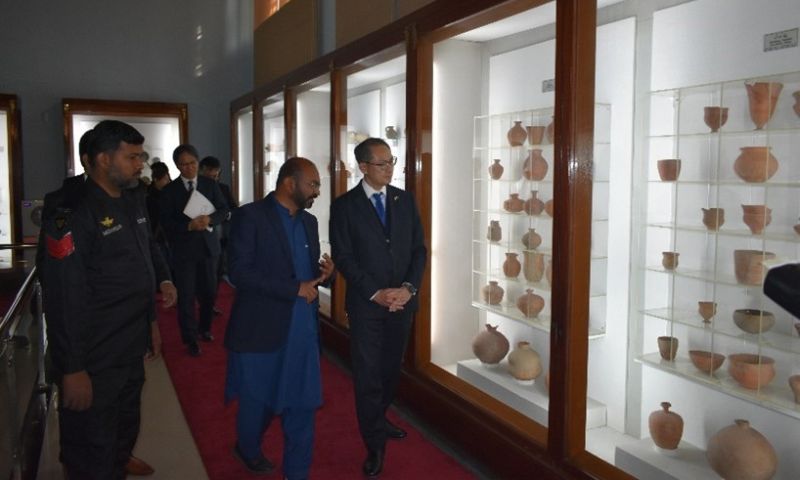
Toshio Miyata, Chief of JICA Pakistan Office, emphasised the critical role museums play as custodians of cultural identity and bridges for international understanding.
He expressed confidence that the project would elevate conservation standards, boost cultural tourism, and contribute to sustainable heritage management practices in Pakistan.
The ceremony served as a powerful reaffirmation of the enduring Japan-Pakistan partnership, built on a shared commitment to cultural cooperation, heritage conservation, and deepening people-to-people ties.
Brief History of the Taxila Museum
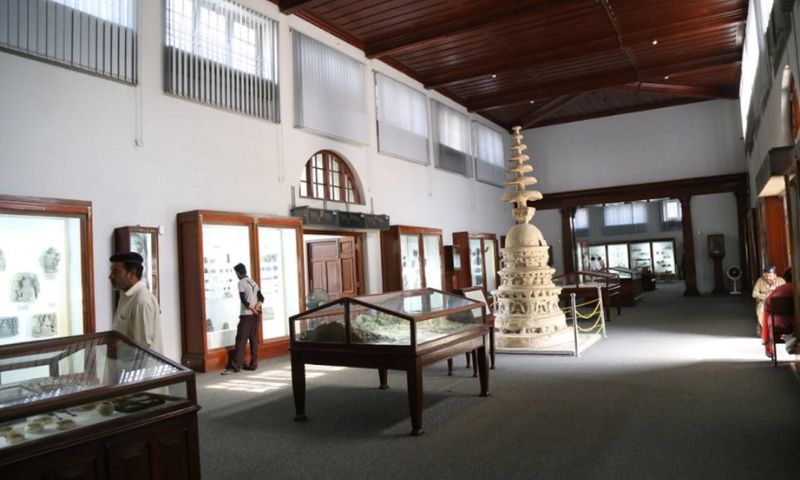
Nestled within the historic archaeological landscape of Taxila in Punjab, Pakistan, the Taxila Museum serves as the premier repository of Gandharan art and a custodian of the region’s layered past.
As a dedicated site museum, its collection is intrinsically connected to the nearby archaeological ruins dating back to 600–700 BCE.
Establishment
Construction began in 1918, initiated by Lord Chelmsford, Viceroy of India. The museum opened to the public a decade later in 1928, under the direction of Sir Muhammad Habibullah.
Its development was guided by the famed archaeologist Sir John Marshall. A new northern gallery was added in 1998.
The museum houses approximately 4,000 artifacts from 600 BCE to 500 CE.
These include stone, stucco, terracotta, and metal objects excavated from Taxila’s ancient cities, Buddhist monasteries, and Greek temples, reflecting the area’s Buddhist, Hindu, and Jain heritage.
Gandharan art & coins
It is globally renowned for its comprehensive collection of Gandharan Buddhist sculpture (1st–7th centuries CE), primarily unearthed by Sir John Marshall.
The museum also holds a significant numismatic collection featuring coins from the Indo-Greek to Kushan periods.
More than just a building, the Taxila Museum forms a living bridge between its 20th-century founding and the ancient civilizations it protects, making it a vital cultural destination in South Asia.