
KEY POINTS
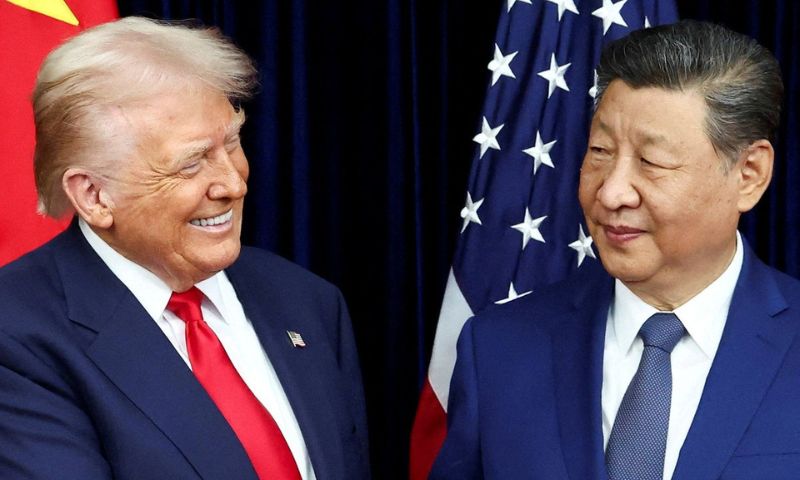
- Chinese President Xi Jinping and US President Donald Trump holds telephone conversation.
- Beijing said the call reflected continued high-level engagement between the two countries amid strained ties.
- No detailed readout was immediately released by Washington.
- Contact comes against a backdrop of persistent tensions over trade, technology, Taiwan and regional security.
ISLAMABAD: Chinese President Xi Jinping and US President Donald Trump spoke by phone on Wednesday, according to Chinese state media, in the latest direct contact between leaders of the world’s two largest economies as they seek to manage a complex and often fraught bilateral relationship.
China’s state broadcaster CCTV reported the call without providing details of the discussion.
There was no immediate public comment from the White House, in line with recent practice where Washington has often issued limited or delayed readouts of leader-level exchanges.
The phone call comes as relations between Beijing and Washington remain under strain, shaped by deep disagreements over trade policy, technology controls, Taiwan, human rights and security dynamics in the Indo-Pacific region.
Despite these tensions, both sides have maintained periodic high-level contacts, signalling a shared interest in preventing rivalry from escalating into open confrontation.
Since Trump’s return to office, the United States has upheld a tougher stance on China across several fronts, including stricter export controls on advanced technologies, scrutiny of Chinese investment, and a push to rebalance trade ties.
Beijing has repeatedly criticised what it describes as US “containment” efforts and has warned against interference in issues it considers core national interests.
Chinese officials have consistently argued that stable China-US relations are essential not only for both countries but for global economic stability.
In previous interactions, Beijing has urged Washington to respect China’s development path and political system, and to manage differences through dialogue rather than confrontation.
From the US perspective, successive administrations have described China as a strategic competitor, accusing Beijing of unfair trade practices, military assertiveness and attempts to reshape the international order.
At the same time, Washington has said it remains open to cooperation with China on global challenges such as climate change, public health and financial stability.
The latest call also comes ahead of an expected visit by Trump to China later this year, which diplomats and analysts say could prove a key test of whether the two sides can stabilise ties or whether strategic rivalry will continue to dominate the relationship.