


KEY POINTS
- Pakistan’s boycott is an act of solidarity with Bangladesh and protest against ICC.
- The cancellation threatens a financial crisis, with the match valued at $500 million.
- Indian broadcasters facing potential losses exceeding INR 300 crore in advertising revenue.
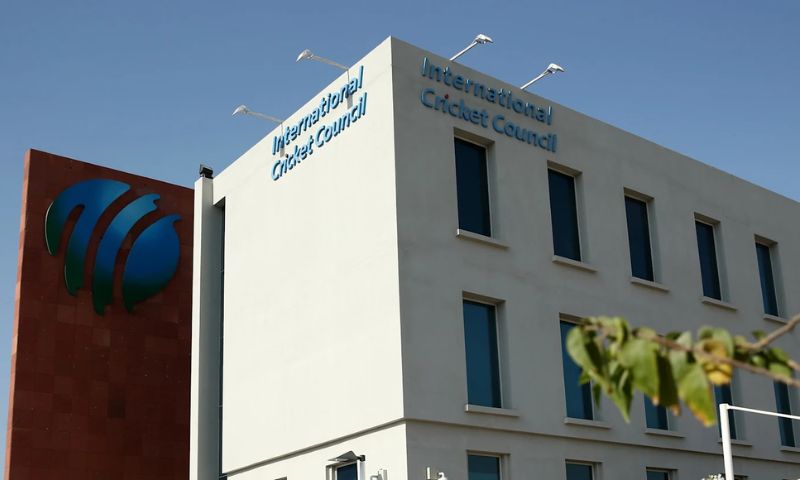
ISLAMABAD: The International Cricket Council (ICC) has opened backchannel talks with Pakistan in an effort to prevent a boycott of the India–Pakistan group match at the ICC Men’s T20 World Cup, following Islamabad’s decision to boycott the February 15 fixture in Colombo.
This confidential move follows the Pakistani government’s formal announcement that its national team will boycott the February 15 fixture in Colombo.
According to an Indian news outlet, NDTV, ICC Deputy Chairman Imran Khwaja has been tasked with opening discreet dialogue with the Pakistan Cricket Board (PCB).
Khwaja, representing the Singapore Cricket Association, is viewed within the council as a neutral intermediary capable of engaging all parties.
His mandate is to persuade Pakistan to reverse its decision and take the field against its arch-rival.
Boycott rooted in regional solidarity
Pakistan’s decision, announced Sunday, is framed by officials as an act of solidarity with Bangladesh, which was removed from the tournament by the ICC.
The cricketing governing body replaced Bangladesh with Scotland after rejecting the Bangladesh Cricket Board’s request to move its matches outside India, a request stemming from the controversial removal of Bangladeshi pacer Mustafizur Rahman from the Indian Premier League.
Pakistan’s protest extends beyond solidarity. PCB chairman Mohsin Naqvi alleged that the ICC, under the leadership of Chairman Jay Shah, has exhibited a ‘biased stance and applied ‘different standards to different countries.’
ICC issues public plea
While engaging in private diplomacy, the ICC has also issued a public statement expressing hope that the PCB will work toward a ‘mutually acceptable resolution.’
The council acknowledged the prerogative of national governments but argued the boycott ‘harms the sport and its global fanbase, and is not ‘in the interest of the global game or the welfare of fans worldwide, including millions in Pakistan.’
Billion-dollar financial blow
The potential cancellation carries staggering commercial consequences.
The India-Pakistan fixture is the tournament’s financial engine, driving broadcast valuations, sponsorship premiums, and global advertising revenue.
Industry analysts estimate the total commercial value of a single such match at approximately $500 million.
Indian broadcasters face the most immediate crisis. Advertising slots for the marquee clash command between INR 25-40 lakh for a 10-second spot, premiums far exceeding those for other matches, including knockout games.
The loss in advertising revenue alone is projected to exceed INR 300 crore, with the Board of Control for Cricket in India (BCCI) facing an estimated immediate loss of INR 200 crore.
Pakistan’s schedule
Pakistan is slated to play all its Group A matches in Sri Lanka under the ICC’s ‘Fusion Formula,’ designed to facilitate tournaments without direct travel between India and Pakistan.
The Green Shirts begin their campaign against the Netherlands on February 7, followed by matches against the USA on February 10 and Namibia on February 18.
The outcome of the ICC’s covert negotiations will now determine the fate of world cricket’s most watched, and lucrative sporting contest, with mere days remaining before the tournament’s opening ceremony.