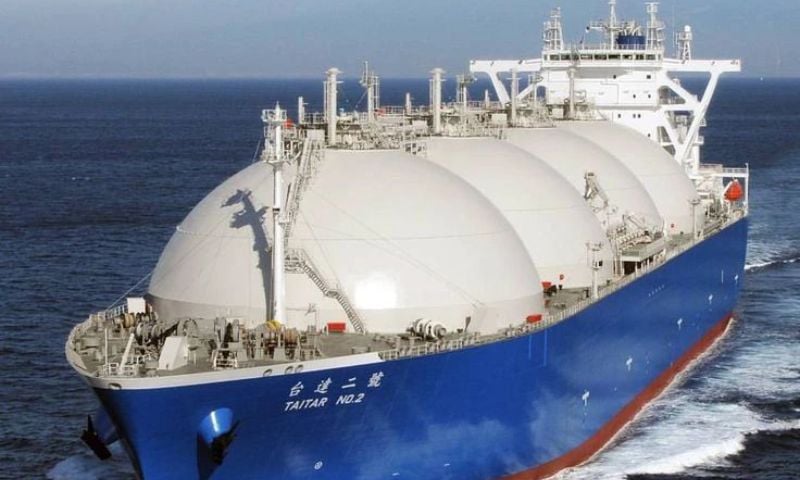



TOKYO: Japanese energy firm JERA announced Tuesday that it has signed a 27-year agreement to purchase liquefied natural gas (LNG) from QatarEnergy, as Japan faces pressure to reduce Russian imports while ensuring sufficient supplies for its power-hungry data centres and artificial intelligence infrastructure.
Under the deal, JERA will procure 3.0 million tons of LNG annually from Qatar beginning in 2028. The financial terms were not disclosed by the Japanese company, though the Nikkei business daily estimates the agreement could be worth up to 250 billion yen ($1.6 billion) per year.
Resource-poor Japan relies heavily on imported energy, particularly from the Middle East, to meet its electricity needs. At the same time, the country is working to increase the share of nuclear power in its energy mix, 15 years after the Fukushima disaster, according to AFP.
The move also comes as Japan anticipates a surge in electricity demand due to energy-intensive projects such as data centres and semiconductor manufacturing, both crucial for AI technologies.
JERA has been expanding its energy sources beyond Qatar. In June, the company finalized 20-year agreements to buy up to 5.5 million tons of LNG annually from the United States, tripling its current U.S. LNG imports.
In September, JERA announced it is considering LNG purchases from a proposed major Alaskan gas project championed by former U.S. President Donald Trump.
“As Japan expects an increase in electricity demand driven by the expansion of data centres, semiconductor manufacturing, and other energy-intensive infrastructure, gas-fired power generation will continue to play a critical role in maintaining Japan’s energy stability,” JERA stated.
Historically, JERA procured up to 6.2 million tons of LNG per year from Qatar, but volumes fell to 700,000 tons annually during price and contract renegotiations, according to Japanese broadcaster NHK.