


Key Points
- National Assembly unanimously adopts resolution demanding strong action against external sponsors and internal facilitators of terrorism
- Lawmakers condemn coordinated attacks targeting civilians, including women and children
- Parliament expresses concern over alleged cross-border support to militant networks
- Political parties urge unity, diplomacy, and long-term policy measures to address rising violence
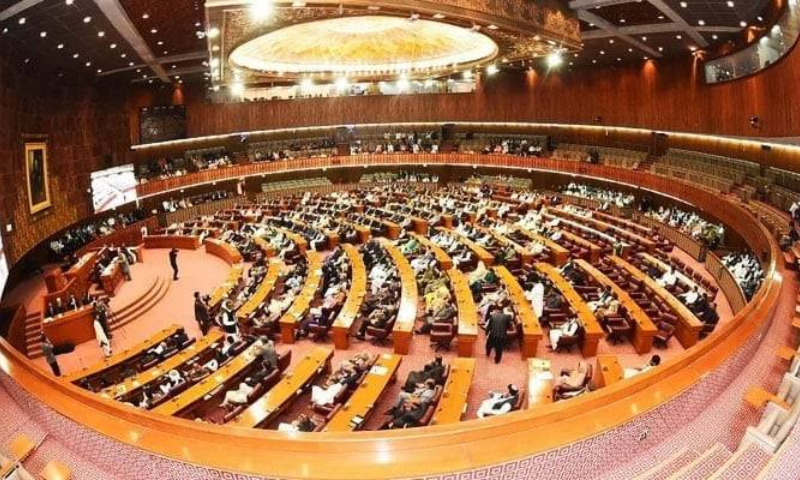
ISLAMABAD: Pakistan’s National Assembly on Tuesday unanimously adopted a resolution calling for an “aggressive, coordinated and effective” national response against the external sponsors and internal facilitators of terrorism, following a series of deadly militant attacks in the southwestern province of Balochistan.
The lower house of Parliament was debating the deteriorating security situation in the province after coordinated assaults struck multiple districts, targeting both civilians and security forces.
The resolution condemned the attacks in the strongest terms, describing the tactics used as “heinous and inhumane,” including the exploitation of women in acts of violence.
Lawmakers demanded an immediate national strategy bringing together political, diplomatic, military, intelligence and legal instruments to dismantle funding channels, smuggling routes and propaganda networks linked to militant groups.
The resolution stated that available evidence in several cases pointed to external sponsorship and raised serious concerns about support structures operating from neighbouring countries.
It also alleged logistical facilitation, financial assistance, training and propaganda backing for militant activity beyond Pakistan’s borders.
Parliament expressed deep sorrow over the loss of civilian lives and reaffirmed a policy of zero tolerance toward terrorism, declaring attacks on women, children and non-combatants to be unforgivable crimes requiring decisive state action.
The House also praised the response of security forces, law enforcement agencies and provincial authorities.
The move came days after large-scale coordinated attacks across Balochistan, including the provincial capital Quetta and several coastal and inland districts.
Security operations that followed killed scores of militants, according to official figures, after attackers targeted public infrastructure, transport routes and populated areas.
Members from across the political spectrum warned that the surge in violence posed a serious national challenge.
Several lawmakers stressed the need to examine the root causes of unrest, strengthen democratic processes and ensure equitable development to prevent alienation in conflict-prone regions.
Some legislators called for greater diplomatic engagement with neighbouring states to address cross-border security concerns, arguing that regional stability was closely tied to trade and economic interdependence.
Others urged dialogue with local stakeholders and questioned how militant networks were able to coordinate attacks across multiple locations, pressing for a comprehensive security review.
Government representatives told the House that Balochistan receives substantial federal financial support and has seen expanded infrastructure, education and health facilities in recent years.
They argued that attacks on public institutions ultimately harm ordinary citizens rather than advance legitimate grievances.
Officials also maintained that militant groups attempt to project instability to disrupt economic activity and international confidence, stressing that the state would not allow such objectives to succeed.
The unanimous passage of the resolution signalled rare political convergence on national security, with lawmakers emphasising that a unified narrative and sustained policy response are essential to counter militancy and preserve stability.