Key Points
- KP highlights funding needs for merged districts and displaced families
- Federal government pledges support under NFC and related fiscal frameworks
- Both sides emphasise coordination to strengthen stability and development
- Meeting signals cooperative approach despite political differences
ISLAMABAD: Pakistan’s central government on Tuesday pledged financial and institutional support for its terror-hit northwestern province of Khyber Pakhtunkhwa. Khyber Pakhtunkhwa is ruled by the opposition Pakistan Tehreek-e-Insaf (PTI), led by former prime minister Imran Khan.
The assurance came during talks between federal and provincial officials on funding needs for merged districts and displaced families, signalling cooperation despite political differences between Islamabad and the opposition-led province.
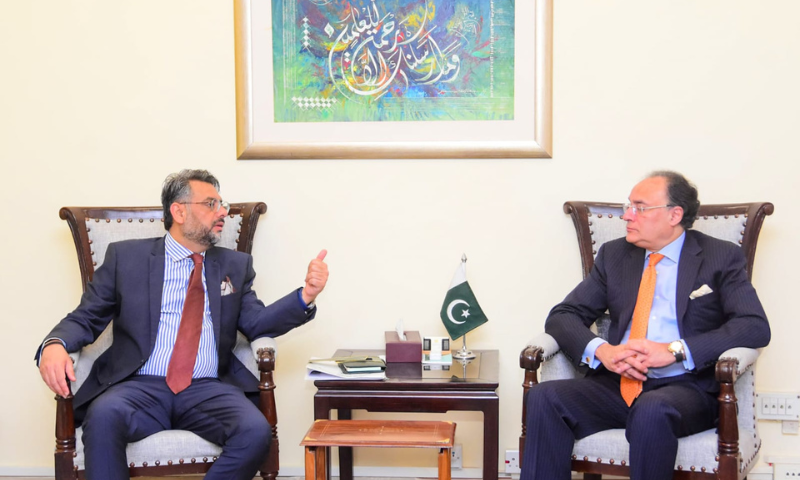
The meeting between Finance Minister Muhammad Aurangzeb and KP Finance Advisor Muzamil Aslam at the Finance Division enabled a joint review of the funding requirements for merged districts and rehabilitation support for temporarily displaced persons.
Khyber Pakhtunkhwa, which borders Afghanistan, has remained one of the regions hardest hit by militant violence, which the government terms as Fitnat-ul-Khawarij, which refers to violent extremist groups espousing takfiri ideology and armed rebellion against the state.
According to officials, sustained financial flows are critical to maintaining public services, rebuilding infrastructure, and preventing security gains from eroding.
The provincial team highlighted operational and development imperatives in the merged districts. They stated that predictable, timely releases were essential to keep ongoing schemes on track and address urgent ground realities.
They also pointed to pending obligations related to displaced families that require streamlined coordination.
Aurangzeb reaffirmed the federal government’s commitment to cooperative federalism and constructive engagement with all provinces. He also assured the KP delegation of support in facilitating its rightful allocations under the National Finance Commission (NFC) and other relevant heads in accordance with the agreed frameworks.
He noted that effective coordination and timely reconciliation of accounts remain an essential measure for transparent fund transfers. The federal government is mindful of the unique development and security-related challenges confronting Khyber Pakhtunkhwa, particularly in the merged tribal districts.
The meeting also reviewed ongoing consultations on NFC-related matters. Both sides emphasised the importance of sustaining technical discussions to build consensus on key fiscal issues.
Analysts view such engagement as significant given Pakistan’s broader fight against militancy, where economic stability and development spending are increasingly seen as integral to long-term counterterrorism efforts.
Both sides agreed to maintain close coordination through institutional forums to resolve outstanding matters on priority and ensure that fiscal arrangements support service delivery, development objectives, and regional stability.
The meeting concluded on a positive note, with officials expressing a shared commitment to regular engagement and joint efforts in the national interest.