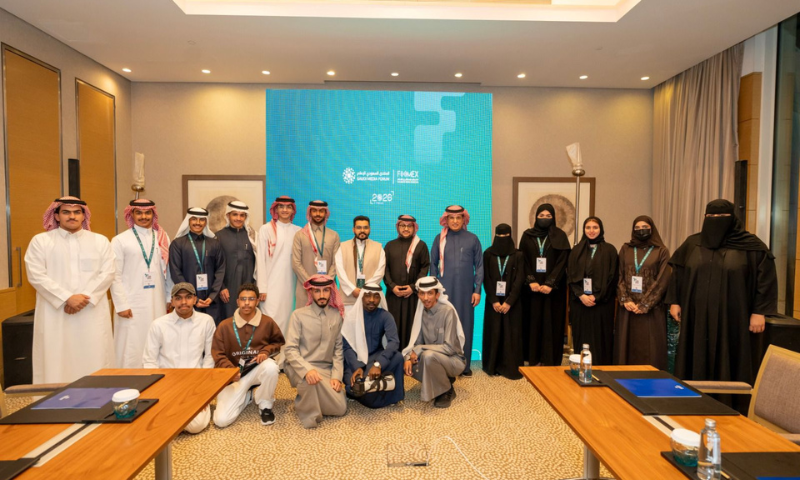



RIYADH: The Saudi Media Forum 2026 opened on Monday in the Saudi capital, bringing together hundreds of journalists, editors, academics, and media executives to debate how rapid digital transformation is reshaping global media, public opinion and news sustainability.
Held under the theme “Media in an Evolving World,” the three-day forum has drawn more than 300 participants from across the Arab world and beyond, with discussions focusing on alliances in media, declining traditional revenue models, artificial intelligence, misinformation, and the growing need for financially independent and audience-driven journalism.
A highlight of the forum was a high-level panel discussion moderated by Arab News Editor-in-Chief Faisal Al-Abbas, titled “How do alliances shape global public opinion?” The session explored the realities behind media influence, public opinion, and the sustainability of news organizations in today’s digital era, according to the Arab News.
Vincent Peyregne, former CEO of the World Association of Newspapers and News Publishers, emphasized that media do not control narratives—they document and interact with them.
“We don’t shape narratives, they shape us,” he said, noting that editorial independence increasingly depends on financial self-sufficiency rather than state subsidies.
Ben Smith, cofounder and editor-in-chief of Semafor, echoed Peyregne’s perspective, warning traditional media against waiting for government intervention to reclaim audiences or revenue.
“Media must adapt to the digital ecosystem rather than seeking compensation,” Smith said, highlighting the competitive pressure from new digital players.
The panel examined how alliances, platforms, and partnerships affect media reach and sustainability, alongside commercial pressures and shifts away from traditional revenue models.
A key discussion point was the decline of state support and the necessity for publishers to take responsibility for their own survival instead of blaming regulators or tech platforms like Google and Facebook.
Peyregne also outlined a three-pillar revenue model for sustainable media, advocating a move away from over-reliance on advertising toward a balanced mix of advertising, paid content, direct audience relationships, and diversification through events, data, and digital agencies.
The forum overall will host over 150 sessions over three days, tackling issues such as combating misinformation, the influence of social media and artificial intelligence, and the balance between freedom of expression and digital responsibility.
The event reflects the Kingdom’s ongoing efforts to foster media innovation, strengthen public trust, and enhance cross-cultural understanding throughout the Arab world.